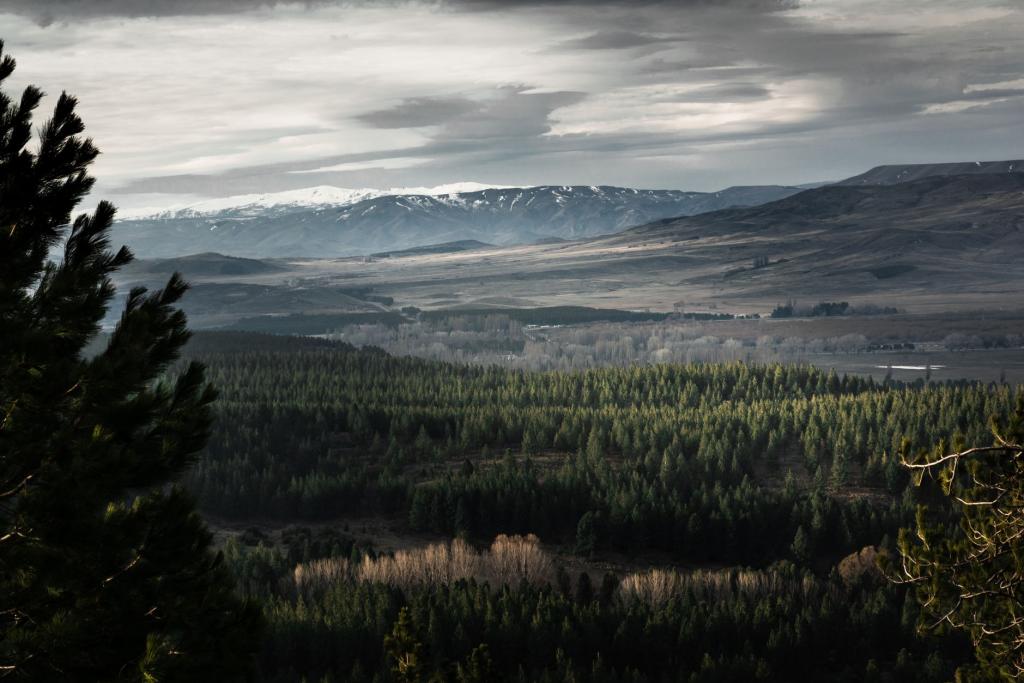
Scotland's Cairngorms are growing trees again, and researchers now have the numbers to prove it. A University of Cambridge-led team has used aerial laser scans to map every single tree across a huge stretch of the Cairngorms National Park, producing an unusually detailed picture of the Cairngorms woodland expansion now under way.
The team flew a light aircraft about 600 metres above the ground, collecting LiDAR data across 569 square kilometres of the Cairngorms Connect partnership area in the Scottish Highlands. A new AI-supported method of analysing the scans picked out more than six million individual trees and measured the exact height of each one. The project is documented in detail in the University of Cambridge's full report on the survey. According to the University of Cambridge, just over 40 percent of the mapped trees were under five metres tall, a sign that fresh woodland is spreading naturally into places where native forest has been missing for centuries.
That recovery follows a landscape-scale approach to deer management across the partnership's 60,000 hectares. Red deer numbers in Scotland have long kept young saplings from surviving, since browsing deer eat shoots before they can grow. With deer numbers reduced, the scans show young trees establishing on their own, without any planting.
What the maps revealed
The detail in the maps surprised even the people who made them. Most of the small regenerating trees grow near the edges of existing forests, where seeds fall most easily, but some were found more than half a kilometre from the nearest forest edge. That distance suggests seeds are travelling further than expected, carried by wind and animals into open ground.
Habitat matters too. The maps show fewer new trees establishing in boggy areas than in dry heathlands, which gives restoration teams a practical guide for where recovery is most likely to take hold. "The ability to map regenerating trees so precisely, at such a huge scale, is a breakthrough for monitoring nature restoration at a landscape scale," said Dr Aland Chan of the University of Cambridge's Centre for Landscape Regeneration, who co-led the work. "It means we can effectively map young trees, assess whether restoration targets are being met, and inform future restoration work."
Ground measurements were also taken to check the scans, and researchers report that the field data confirmed what the aerial maps showed.
Why deer made the difference
The Cairngorms Connect partnership has spent years reducing deer pressure across its 60,000 hectares. Scotland's native woodlands once covered much of the country, but centuries of grazing and land use stripped them back to fragments. Young trees stood little chance when deer could browse freely through open ground.
With fewer deer, the woodland is now doing the work itself. Researchers say the new trees are spreading naturally rather than being planted, which is exactly the outcome the partnership was aiming for. Scientists elsewhere are trying a different route to the same goal, priming oak tree immunity so trees fight disease faster. Natural regeneration tends to produce forests better matched to local conditions than plantations, because the trees that survive are the ones already suited to the soil, exposure and climate of the site. The Cairngorms woodland expansion is a practical example of that idea working at a landscape scale, and it follows other recent research into how forests respond to changing conditions, including work showing that conifer growth rate, not longer summers, controls wood gain.
The method behind the discovery could matter as much as the trees themselves. Dr Pip Gullett, a co-author from the Cairngorms Connect partnership, said the LiDAR-based approach is also suited to tracking where new woodlands are establishing across the landscape and for measuring the impacts of fires, which are increasing in severity with climate change. For conservation groups working across large areas, being able to count young trees tree by tree makes it far easier to show whether restoration money is actually working.
For Scotland, the maps are early evidence that one of Europe's most ambitious nature restoration projects is delivering. The Cairngorms have also endured severe wildfires and damage linked to over-tourism, according to Countryfile, so the scale of the regrowth stands out against those setbacks. The woodland is not back everywhere, and the scans show plenty of open ground where nothing is growing yet. But the direction is clear: cut the browsing pressure, and the forest starts to plant itself.
Comments 0
No comments yet. Be the first to share your thoughts!
Leave a comment
Share your thoughts. Your email will not be published.