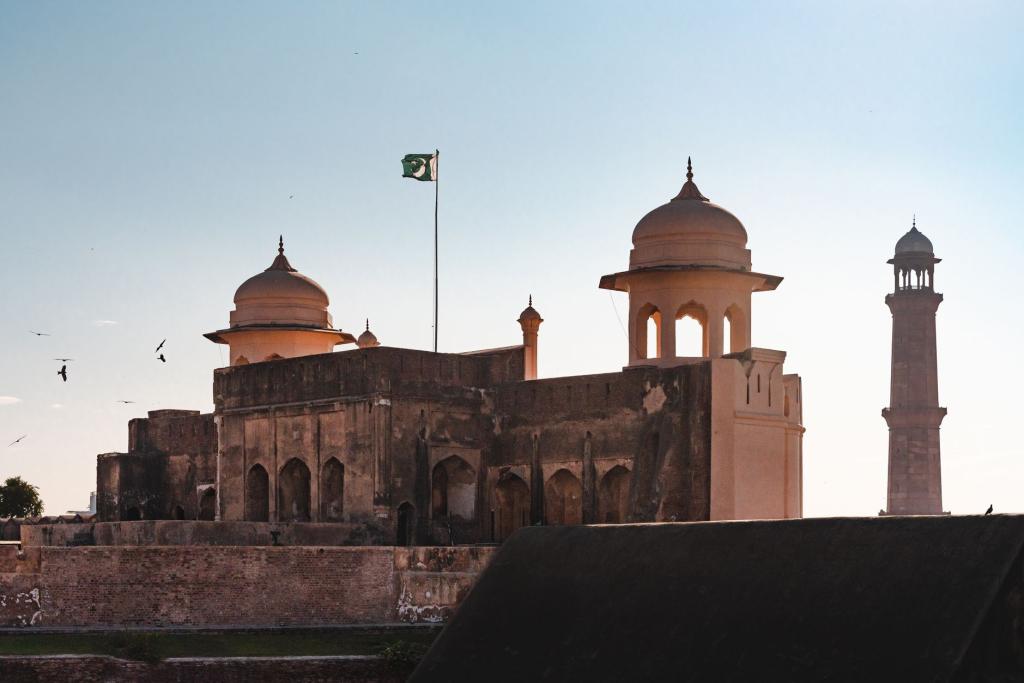
At least 31 people, including 16 police personnel, were killed when a suicide bomber struck a mosque inside a police headquarters in Kohat during Friday prayers in northwestern Pakistan. The Kohat mosque bombing unfolded on Friday in the Khyber Pakhtunkhwa province bordering Afghanistan, as worshippers gathered inside the compound for prayers. An explosives-laden vehicle was driven into the entrance of the mosque, setting off a powerful blast that badly damaged the building and brought down part of the police compound's outer wall. Dozens more were wounded, with rescue officials reporting that the number of injured could exceed 75, and hospital staff treating people in critical condition. The attack was followed by a gun battle after armed attackers tried to storm the police headquarters, and security personnel killed at least six of the assailants in the exchange of fire, according to reporting by Open Chronicle and Al Jazeera.
Residents said the explosion was heard from a considerable distance, and smoke rose over the site as emergency crews rushed the dead and wounded to nearby hospitals. Dr. Tahir Shah told the German news agency dpa that at least 15 bodies and more than 50 injured people had been brought to hospital after the attack. Senior rescue official Bilal Faizi said most of the injured were worshippers who had come for Friday prayers, and that most of those killed were police officers attending the service. The dead included police personnel, their family members, and civilians who were inside the mosque when the blast went off. The fact that the explosion hit a place of worship inside a heavily guarded police facility has underscored the persistent vulnerability of security installations in a region that has endured repeated militant violence.
A coordinated assault claimed by a Taliban-linked faction
The militant group Ittehad-ul-Mujahideen Pakistan, a faction linked to Taliban commander Hafiz Gul Bahadur, claimed responsibility for the suicide bombing. The group is associated with Tehreek-e-Taliban Pakistan, known as the Pakistani Taliban, which has carried out numerous attacks against Pakistani security forces and government institutions. Provincial police chief Zulfikar Hameed confirmed that the explosion was a suicide attack, telling reporters that the attacker rammed an explosives-laden car into the outer wall of the police facility while people were praying at the mosque inside. The bombing was followed by an attempt by armed gunmen to enter the compound, and a gun battle raged for hours afterward, with at least one assailant wearing an explosives-laden vest killed during the fighting, according to Reuters. The coordinated nature of the assault, combining a vehicle-borne bomb with an armed ground attack, points to the operational capacity of militant groups active along the border.
The Pakistani Taliban is organizationally separate from the Afghan Taliban, which returned to power in Afghanistan in August 2021, although the two movements maintain longstanding ideological and operational ties. Islamabad has repeatedly accused militant groups operating near the Afghan border of using territory inside Afghanistan to plan and launch attacks against Pakistan. The Afghan Taliban government denies providing sanctuary to groups responsible for cross-border violence and insists that militancy is Pakistan's domestic problem. Michael Semple, a visiting professor at Queen's University Belfast and a former European Union representative in Afghanistan, told Al Jazeera that attacks of this scale require extensive planning, logistics, and training, and described the bombing as consistent with a broader pattern of militant organizations attempting to destabilize the Pakistani government. The dispute between the two neighbors over responsibility for border-region militancy has fueled intermittent military confrontations along the frontier, further complicating an already strained relationship.
Violence surges across Pakistan's northwest
The bombing occurred just one day after a roadside explosion killed six Pakistani soldiers traveling in a security forces convoy in the neighboring Hangu district. On Thursday, Pakistani military and police authorities also reported killing ten suspected Taliban fighters during security operations in the region, including operations in Hangu and North Waziristan. Militancy in Pakistan's border areas has risen sharply in recent months, with attacks aimed mainly at the military and the police. Kohat occupies a strategically important position in northwestern Pakistan, connecting several districts affected by militant activity, including North Waziristan, Bannu, and Dera Ismail Khan. The wider region has faced a cascade of security and energy shocks this month, including the strikes on oil tankers in the Strait of Hormuz that have rattled global markets, as covered in GenZ NewZ's reporting on the tanker attacks.
Pakistani leaders condemned the bombing and pledged a forceful response. Prime Minister Shehbaz Sharif expressed sorrow over the casualties, directed authorities to accelerate rescue operations, and instructed officials to ensure that those injured received medical assistance. The Interior Ministry denounced the attack, declaring that militant violence would not weaken the country's determination to confront armed groups. President Asif Ali Zardari also expressed regret over the casualties and wished the injured a swift recovery, saying the elimination of militant groups operating with foreign backing was essential for national security. Security forces continued their response in the hours after the explosion and the subsequent gun battle, and investigators were working to identify the remaining attackers. For communities in Khyber Pakhtunkhwa, the bombing represents another devastating episode in a conflict that continues to claim the lives of civilians and security personnel alike, with no sign of the underlying tensions easing.
Comments 0
No comments yet. Be the first to share your thoughts!
Leave a comment
Share your thoughts. Your email will not be published.