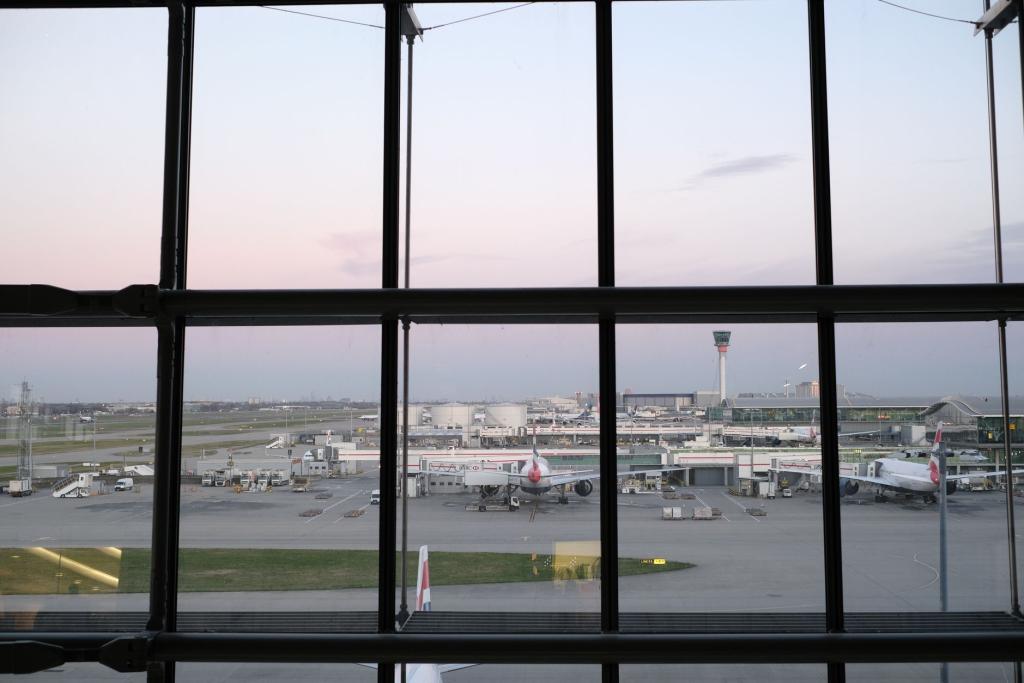
Britain's air traffic control operator has finally explained how a tiny software defect grounded thousands of flights earlier this month. According to NATS, a NATS software glitch on September 8 corrupted flight data after a critical sequence that unfolded within a single millisecond, and the disruption that followed left more than 2,000 flights delayed, cancelled or diverted over two days.
The preliminary report into the NATS software glitch, released on September 18, is the company's first detailed account of what happened. The outage hit major UK airports, including Heathrow, Gatwick, Manchester and Birmingham, and affected more than 300,000 passengers, as reported by Sky News. NATS chief executive Martin Rolfe has apologised, but he is refusing to resign, and Ryanair is demanding he go anyway.
What the investigation found
The report traces the failure to the National Airspace System, the software that manages UK airspace and assigns radar identification codes to individual aircraft so controllers can follow them on screen. While a controller was manually requesting one of those codes, the system received a message for a higher-priority task. The request was briefly interrupted, and when it tried to resume a fraction of a second later, a previously unknown defect corrupted the output.
The corrupted output kept spreading through later flight data updates until the connection between London Area Control and the National Airspace System broke down. Controllers lost part of their automated flight information and fell back on manual coordination with neighbouring control centres. NATS cut the number of aircraft entering the affected sectors, temporarily stopped departures from UK airports, and held back incoming flights while engineers restarted the system and reloaded flight data.
Rolfe said the fault had been traced to one small part of the program. "This was a software issue in a specific part of our flight data system, that we have traced to a small subsection of the software," he said in a statement. "The issue has been identified and mitigation is in place while a permanent fix is safety tested and deployed." The 18-page document is the first full technical account of the NATS software glitch, and the official findings are published on the NATS website.
The fallout for passengers and airlines
The airspace restrictions lasted only about six hours on September 8, and NATS operations were back to normal that evening. But the damage from the NATS software glitch was already done: aircraft and crews were scattered across different airports, and airlines needed more than two days to clear the backlog of delayed and stranded passengers. Ryanair says 260 of its flights were cancelled, affecting 48,000 passengers and costing the carrier at least £3 million. British Airways cancelled nearly 200 flights.
Airlines are still counting the cost of the NATS software glitch. Because responsibility for the disruption rests with NATS rather than the carriers, the cancellations count as "extraordinary circumstances" under passenger rights rules, which means airlines are unlikely to owe cash compensation on top of refunds. They must still look after stranded travellers, and the industry's bill for repositioning crews and aircraft ran into millions of pounds.
The political reaction to the NATS software glitch has been fierce. Heidi Alexander, the Transport Secretary, called the disruption "completely unacceptable" and ordered an independent review by the UK Civil Aviation Authority into how resilient the system really is. Ryanair renewed its long-running call for Rolfe to resign once the report was published. Rolfe apologised again to travellers, saying the company was "devastated" when things go wrong, and insisted that safety was never in question at any point.
A problem Britain keeps having
The NATS software glitch was not the first failure of its kind. In August 2023 a separate system fault disrupted nearly 700,000 passengers and cost airlines around £100 million. A smaller technical problem in July 2025 caused 150 cancellations. NATS says the September outage is unrelated to the 2023 incident, but the repeat has put the company's reliability under harsh scrutiny.
NATS says it has invested more than £1 billion in systems and technology over the past decade, and it plans to ask the regulator to approve another £1 billion of investment before the end of 2033. The Civil Aviation Authority's independent review will now decide whether that is enough to stop it happening again.
Comments 0
No comments yet. Be the first to share your thoughts!
Leave a comment
Share your thoughts. Your email will not be published.