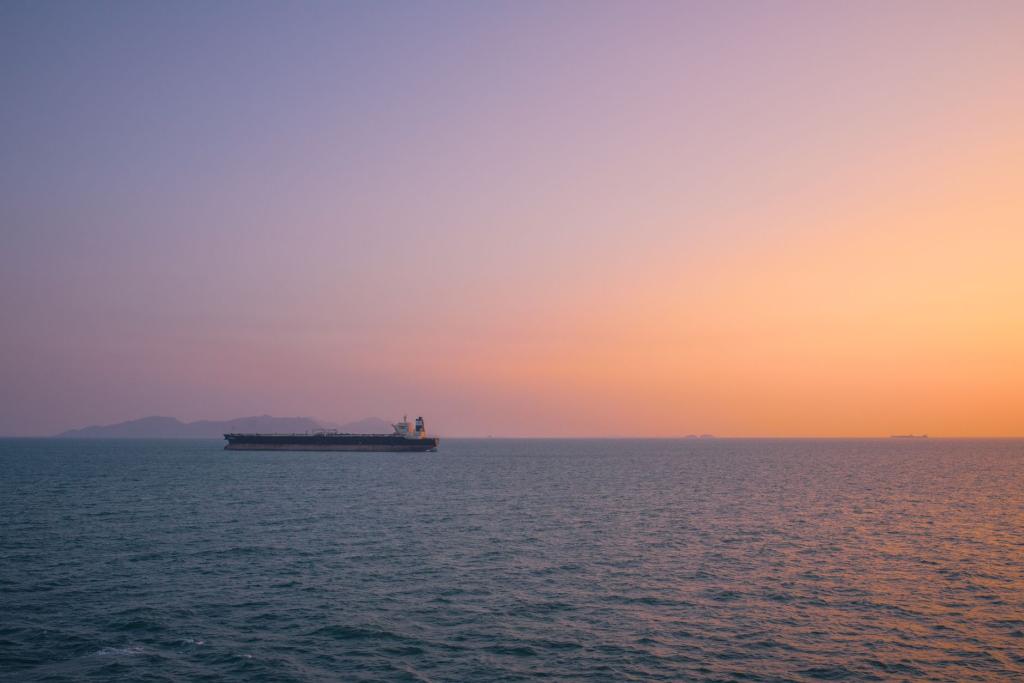
Two oil tankers came under projectile attack in the Strait of Hormuz early Friday, according to the British navy's maritime monitoring agency, in the latest assault on shipping through the world's most important oil chokepoint. The strikes landed just as President Donald Trump said he is nearing a major decision on whether to launch an assault aimed at annihilating the Iranian regime, a move that would mark the sharpest escalation yet of the six-month-old war between the United States and Iran.
Iran claimed responsibility for striking at least one of the vessels, saying the ship had attempted what it called an illegal crossing of the strait. Tehran's move, paired with Trump's warning, pushed one of the world's busiest shipping lanes further toward a full confrontation, with global oil markets watching every development.
Two ships hit within 48 hours
The United Kingdom Maritime Trade Operations office said a second tanker was struck by a projectile in the Strait of Hormuz early Friday, only hours after it reported another vessel coming under attack in the same waters. Maritime security firm Vanguard and maritime intelligence outlet Riviera Maritime Media reported that the first vessel, the tanker Trend, was hit by an Iranian projectile while transiting eastbound through the Omani corridor of the strait. The impact caused damage and a fire that forced the ship to stop, and it was last reported anchored about 2.6 nautical miles northeast of Ras Makhbuq, according to Riviera Maritime Media.
A separate late report described an attack on a Panama-flagged tanker on September 16. The vessel was struck by an unidentified projectile while transiting outbound through the Strait of Hormuz, though it continued on its way, and the exact time and location remain unconfirmed. Then, at 00:40 UTC on September 18, a Marshall Islands-flagged tanker was hit by another projectile during an outbound transit. The blast breached the hull and set off a fire on board that was later extinguished. All crew members on the affected vessels were reported safe, but damage assessments and any environmental fallout have not yet been disclosed.
Trump faces a big decision
Trump told Axios on Thursday that he is poised to make what he described as a big decision on whether to order a major assault intended to annihilate the Iranian regime. He said anything could happen, speaking ahead of a planned meeting with Persian Gulf leaders next week. The comments signaled that Washington may be preparing its most aggressive action of the war so far, after weeks of tit-for-tat strikes on ships, oil infrastructure, and military targets.
The escalation has already squeezed global energy flows. U.S. Central Command says its blockade on the Strait of Hormuz has redirected 105 commercial vessels heading into or out of Iranian ports, with more than 30 million barrels of Iranian or likely Iranian crude held inside the Persian Gulf. Another 60 million barrels, worth nearly 9 billion dollars, are sitting on sanctioned vessels outside the gulf, unloading at a much slower pace than normal. Earlier this month, after the United States sank five Iranian tankers and Iran said it had attacked ten ships in retaliation, benchmark Brent crude futures broke above 100 dollars a barrel for the first time since July, according to Reuters.
Oil markets and the wider war
Data from maritime tracking firm Kpler shows how thoroughly shipping has thinned out. The number of cargo vessels passing through the Strait of Hormuz has fallen to about ten per day, the lowest on record, and no large ships have crossed since early September. Kpler counted 27 missile strikes in the waterway between July 6 and early September. Iran has said it will soon release maps of an enlarged off-limits zone at sea that could extend as far as Chabahar on the country's far southeastern coast near Pakistan, a step that would further redraw the boundaries of safe navigation.
The Strait of Hormuz crisis is only one front in a war that is spreading across the region. A U.N.-commissioned panel of human rights experts said Thursday there were reasonable grounds to believe two early U.S. strikes on Iran constituted war crimes, including an attack on a school in the southern city of Minab. On the Arabian Peninsula, Saudi Arabia carried out 26 strikes against Houthi positions in 24 hours, while the Houthi offensive that seized Yemen's Mokha port has choked Saudi exports through the Bab el-Mandeb strait as well. With both of the Middle East's critical shipping arteries under pressure, Friday's tanker attacks and Trump's warning have left diplomats, shippers, and markets bracing for what comes next.
Comments 0
No comments yet. Be the first to share your thoughts!
Leave a comment
Share your thoughts. Your email will not be published.