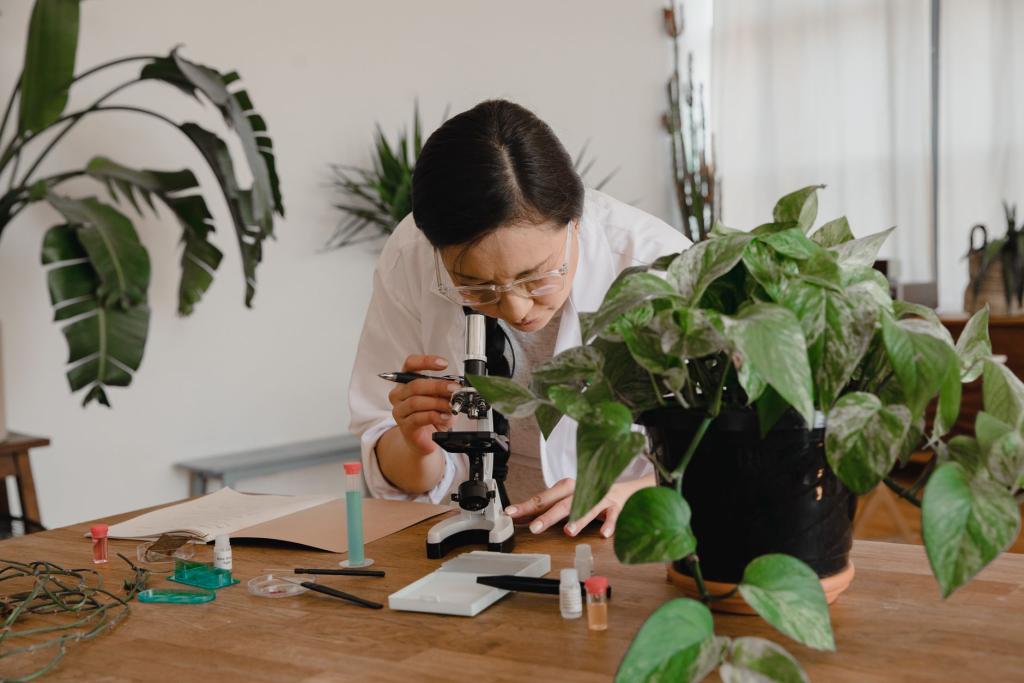
Your plants have an immune system — and scientists in Singapore just figured out how to supercharge it. Researchers at Nanyang Technological University re-engineered the plant immune system by controlling how its threat-detecting receptors group together on the surface of cells, and the upgraded plants fought off bacterial infection far more effectively than ordinary ones. In lab tests, plants with the enhanced receptor arrangement showed 53 percent less bacterial growth than unmodified control plants, according to the university’s announcement of the study, which was published in the journal Science Advances.
The trick comes down to teamwork. Plant cells carry receptors on their surfaces that work like guards at a watchtower, scanning for signs of harmful bacteria and other microbes. The NTU team, led by Professor Miao Yansong of the university’s School of Biological Sciences, focused on one such sensor — a receptor that detects flagellin, a protein carried by many bacteria. Using synthetic protein engineering, they precisely controlled how these receptors clustered together on the cell surface, then watched the results with single-molecule imaging to see which arrangements actually worked.
Tuning the plant immune system, pair by pair
Two turned out to be the magic number. An arrangement of two threat sensors plus two partner receptors produced the strongest sustained immune response, the researchers found — while still letting the cell remove and replace used sensors normally after they had done their job. Packing in more sensors backfired: it triggered a strong initial reaction but interfered with the receptors’ normal renewal, costing the plant its long-lasting defense. As Professor Miao put it, the right number of guards makes it easier to spot an intruder and respond quickly, but too many get in the way.
Importantly, the immune boost came without a growth penalty. The engineered plants developed normally, which matters because cranking up a plant’s defenses often stunts its growth — a trade-off farmers cannot afford. The team has filed patent applications covering two technologies behind the result through NTUitive, the university’s commercialization arm: the protein-engineering method itself, and a live-cell imaging platform that counts how individual receptors assemble on a living cell’s surface.
From a lab weed to leafy greens
So far the work exists only in a humble lab plant. The experiments ran on Arabidopsis thaliana, a small flowering weed that biologists use as the standard model for plant genetics because its cellular machinery is so well mapped, as phys.org reported. Many discoveries first made in this species have later translated to food crops, and the NTU team is now aiming at the vegetables people actually eat — Chinese cabbage, chye sim, kai lan and kale. The catch is that each crop would need its own receptor arrangement identified, engineered and tested before anything reaches a field, a process the researchers say still requires years of further work.
There is also a second path that skips genetic modification entirely. The team is developing designer stimulants — additives farmers could apply directly to crops already growing — that would nudge the plant’s existing receptors into the optimal arrangement. That version, if it works, could move faster than engineered seeds, since it would not require rewriting any plant’s DNA. The research sits inside Singapore’s SingFarmS indoor-farming programme, a collaboration with Wageningen University in the Netherlands, where disease resistance matters enormously: in vertical farms, thousands of genetically similar plants grow shoulder to shoulder, so a single pathogen can sweep through an entire harvest, according to the NTU team.
Why it should matter to you
Here is the reader payoff. Crop disease ranks among the costliest threats to harvests worldwide, according to the university’s researchers — and the standard answer has been chemical: spray more pesticide. A plant that defends itself better could mean fewer chemicals on food, more reliable harvests and steadier prices at the grocery store — outcomes that land directly in a young renter’s budget. For the indoor-farming industry now supplying city supermarkets, built-in disease resistance could be the difference between a viable business and a wiped-out crop.
The honest caveats are real. Nothing here has left the laboratory, the headline figure comes from controlled infection assays rather than a real farm, and the patents already filed mean the technology’s future will be shaped by commercial licensing as much as by science. Genetic modification of food crops also remains a regulatory and cultural minefield in many countries, which is one reason the spray-on stimulant route may matter more in practice. Still, the principle is now proven: a plant’s defenses can be tuned like an instrument, and researchers finally know which arrangement plays the strongest note. For more stories from the plant world, browse our Plants and Trees topic page — including the Sycamore Gap stump pushing out new growth three years after the famous tree was felled. The original announcement is worth a read in full on NTU Singapore’s news page.
Comments 0
No comments yet. Be the first to share your thoughts!
Leave a comment
Share your thoughts. Your email will not be published.