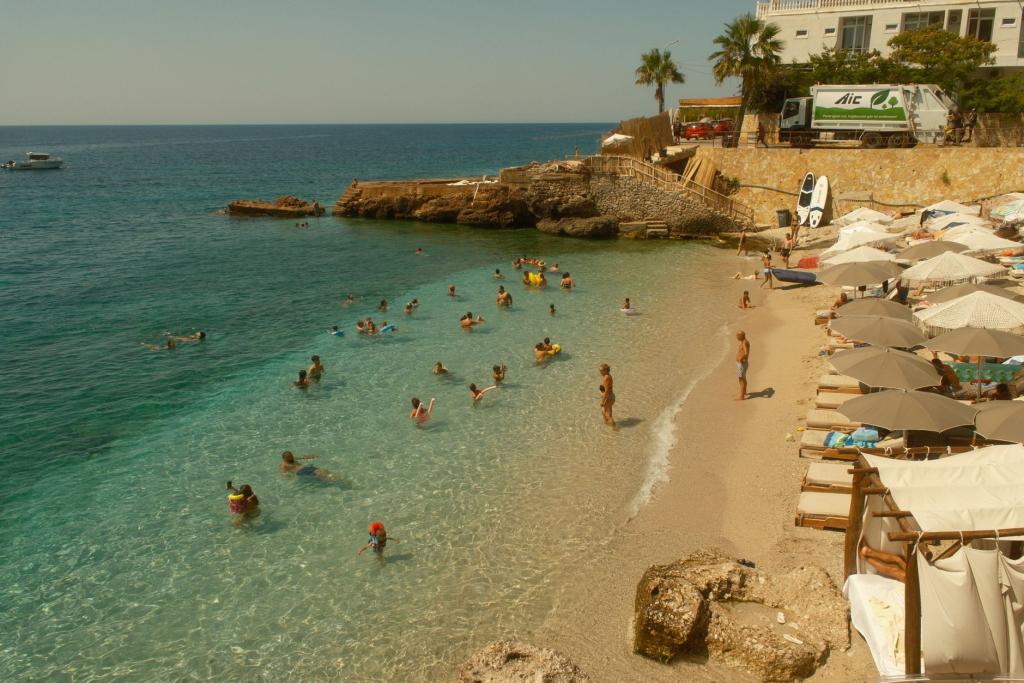
The most influential travel trend of 2026 does not involve a new app or a secret fare-hacking trick. The dupe destinations playbook is simpler than that: skip the overcrowded, overpriced hotspot and book its cheaper, quieter lookalike instead. Greece becomes Albania. The Amalfi Coast becomes the Albanian Riviera. City-break prices in Prague and Vienna meet their match in the medieval streets of Romania. And the numbers show Gen Z is not just posting about this idea — they are actually going.
New figures from the UK Civil Aviation Authority, analyzed by Manchester Airports Group (MAG), show travel among travelers aged under twenty-five to Albania, Bulgaria and Romania is up ninety-seven percent since 2023, according to Aerospace Global News. Long-haul city travel is surging too: among the same age group, trips to Mumbai have grown two hundred and forty-five percent since 2019. These are not marginal blips. They mark a generation rewriting the rules of where — and how — young people travel, with dupe destinations at the center of the plan.
Dublin now sits in the top three destinations for travelers aged under twenty-five, alongside Amsterdam and Barcelona — replacing Tenerife, the last island getaway in the ranking a couple of years ago. The message is that city breaks are overtaking the old beach-and-party circuit. And this is not a UK-only quirk. Across the Atlantic, young American travelers are quietly redrawing the map in the same way, hunting for places that deliver the vibe of a famous hotspot at a fraction of the price — classic dupe destinations behavior.
The Data Behind the Dupe Shift
Why now? The simplest answer is cost. According to Skyscanner, more than sixty percent of young travelers are now searching for budget-friendly, less crowded alternatives to famous sights, as reported by Travel And Tour World. When they find them, they want something real: American Express Travel reports that seventy-eight percent of millennials and Gen Z prefer places offering authentic cultural experiences over traditional tourist circuits. That combination — cheaper and more genuine — is the entire logic of the dupe destinations trend.
The trade-off goes beyond money. A Deloitte survey this summer found that fewer than half of Americans plan a vacation with paid accommodations — the weakest reading in six years — while a separate eSIM marketplace study found that many Americans are rethinking visits to classic European hotspots specifically because of crowding, even as Italy and Portugal hold their appeal, as reported by TravelersToday. In other words, the crowds themselves have become a cost. Travelers are pricing in the selfie-stick queues and the elbow-to-elbow beaches, and deciding the exchange rate is terrible. That calculus is exactly what is pushing more young travelers toward dupe destinations every season.
That is where the swap begins. Instead of paying top prices to squeeze into Greece, travelers are exploring Albania, which offers similar coastlines and a similar Mediterranean culture. Instead of absorbing Paris or Barcelona price tags, they are weighing up cities in Eastern Europe that deliver medieval architecture, nightlife and food scenes at a fraction of the cost.
Albania vs Greece: How the Dupe Playbook Works
Albania has become the poster child for the dupe destinations movement. Its Ionian coastline — turquoise coves, cliffside villages and limestone headlands running south from Vlorë toward the Greek border — has been compared to the Amalfi Coast for years. What changed is access and price: daily budgets of roughly eighty to one hundred thirty euros a day for a mid-range trip represent fifty to seventy percent less than a comparable Italian or Greek coastal stay, according to the outlet's breakdown. Tirana's airport now handles more than eleven million passengers a year after budget-airline expansions, and a new tunnel has cut the drive south to the Riviera to about two and a half hours.
Bulgaria has earned its place on the dupe destinations map by playing several roles at once. MAG's analysis calls it a stand-in for Spain, Italy, Austria and even Switzerland — beach resorts on the Black Sea, ski slopes in the Pirin mountains, and a Sofia nightlife scene, all at Eastern European prices. Romania, meanwhile, is pitched as another strong entry on the dupe destinations map: the answer to Austria, Germany, Prague and parts of Switzerland: Transylvanian fortress towns, dramatic mountain landscapes and folklore that scratch the same itch as Central Europe's medieval cities, without the crowds.
Further afield, the dupe destinations pattern repeats. Vietnam delivers a Thailand or Bali style trip at roughly forty to eighty dollars a day, with an e-visa system that now covers travelers from every country. Morocco offers the Andalusian or Turkish experience at around sixty to one hundred ten euros daily, about three hours from London by budget airline. Saudi Arabia is the wildcard: its Red Sea coastline and heritage sites position it as the luxury alternative to Dubai and Petra, with comparable current stays running an estimated thirty to forty percent below UAE prices.
Airports Are Getting the Memo
The shift is visible long before travelers reach the gate. MAG's retail data shows matcha sales up one hundred sixty-five percent year-on-year across its three airports, with the strongest growth at London Stansted. Across the same terminals, one in four passengers under twenty-five has used, or plans to use, AI tools such as ChatGPT to plan holidays — from destination ideas to full itineraries.
Social media is moving into the terminal too. Sales of face masks at airport Boots and duty-free outlets have nearly quadrupled as sheet-mask routines go viral on creator feeds, while the oversized water bottles that became a TikTok obsession multiplied sales sixfold in twelve months. Andrew MacMillan, MAG's chief strategy officer, said the data shows how younger passengers are reshaping both airport retail and the destinations airlines are being asked to serve — a digital-first, trend-driven generation that expects the travel experience to start the moment they arrive at the airport.
How to Plan a Dupe Trip Without Ruining It
The golden rule of dupe destinations is to travel like a local, not like a loophole hunter. Go in the shoulder season — May, early June or September — when prices drop further and the beaches are actually enjoyable. Fly into Tirana if Albania is the target: Vlora's brand-new international airport is still stuck in certification disputes, so the Riviera remains a drive south from the capital for now. And budget honestly. The whole point is stretching money, so build a daily budget in advance and leave room for the unplanned dinner that becomes the trip's best story. Read more travel coverage on the Travel beat for how young travelers are hacking costs across the board.
Most importantly, treat the dupe as a destination in its own right. The travelers getting the most out of dupe destinations are the ones who show up for the place itself — the fortress towns, the food markets, the mountain roads — not the ones measuring it against the hotspot it replaced. That mindset is also what keeps the economics working: local guesthouses and family restaurants stay cheap when visitors spread out and spend locally.
The Dupe Paradox: When the Secret Gets Out
Here is the catch the trend's marketing language tends to skip. Tourism researchers have documented a consistent pattern: heavily promoted "discovery" destinations follow a predictable arc from modest visitor numbers to rapid growth, rising prices, crowding complaints, and eventually the same carrying-capacity problems that drove travelers away from the originals. That is the central tension of the dupe destinations economy: the attention that makes a place worth discovering is the same attention that eventually prices it out. Albania's Riviera beaches are already drawing infrastructure-pressure warnings from municipal planners. Morocco is pouring four billion dollars into new hotel capacity and co-hosting the 2030 World Cup, targeting twenty-six million visitors by that year — a market being rebuilt for tens of millions of annual arrivals.
Europe's established hotspots are also pushing back, which changes the math for everyone. Spain is taxing holiday rentals harder, Venice is charging day-trippers, and Santorini has capped daily cruise-ship arrivals. None of that makes the old favorites affordable again — it just confirms that the pressure is real on both sides of the swap. Every dupe destination risks becoming the thing it replaced. The travelers arriving this year are catching Albania, Vietnam and Morocco at the hinge point: low prices, low crowds, genuine discovery. That value proposition is not a permanent condition. It is a feature of a specific moment — which is exactly why dupe destinations have become Gen Z's favorite way to travel: the trick only works if you arrive before the crowds do.
Comments 0
No comments yet. Be the first to share your thoughts!
Leave a comment
Share your thoughts. Your email will not be published.