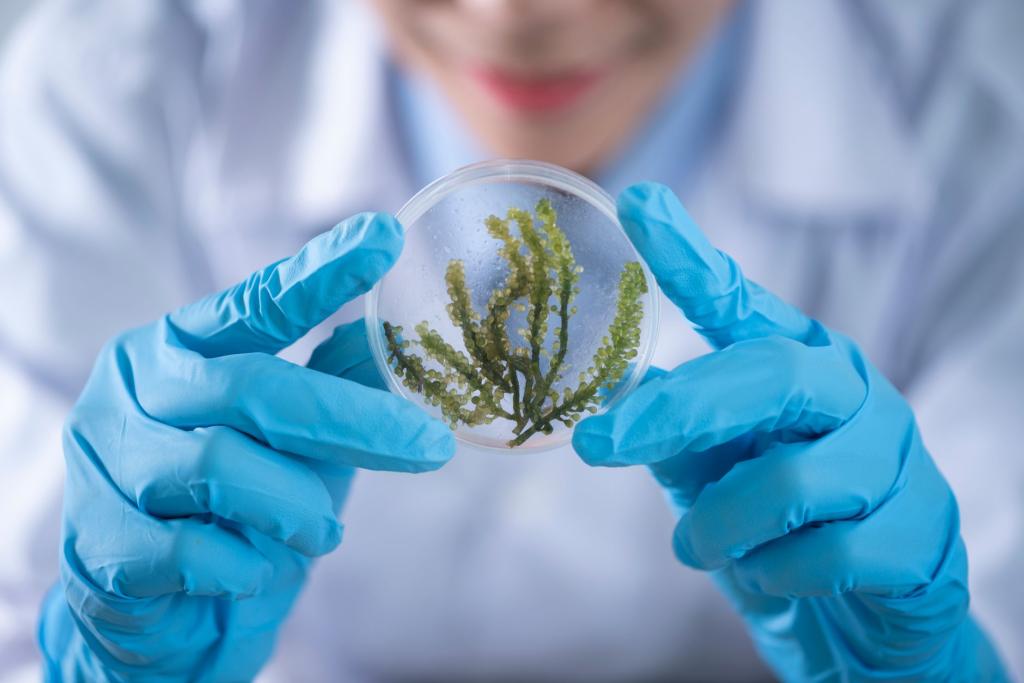
Scientists at the University of Georgia have identified nearly a dozen flatworm brain regeneration genes — the genetic instructions that let a tiny flatworm regrow its brain — a discovery that could one day point toward new treatments for Parkinson's disease and traumatic brain injury. The findings were published in Nature Communications and announced by the university on September 30, offering one of the clearest pictures yet of how nature programs brain regeneration.
The animal in question is the planarian, a flatworm famous in biology labs for a superpower that sounds like science fiction: it can rebuild tissues, muscles, and even an entire brain from a small fragment of its body, thanks to a supply of versatile stem cells. What researchers didn't fully understand — until now — was the genetic recipe that tells those stem cells exactly which neurons to make and where to put them. The newly mapped flatworm brain regeneration genes answer exactly that question.
According to a UGA press release, the newly identified genes instruct stem cells to become dopamine-producing neurons and guide those new neurons to the correct locations in the worm's body. Dopamine is a chemical messenger with a key role in controlling movement, and its loss is the central problem in Parkinson's disease, where low dopamine causes tremors and stiffness. When the researchers disabled some of the identified genes, the flatworms struggled to produce dopamine neurons and moved more slowly — mimicking the movement effects of low dopamine in people and other mammals.
The genetic recipe
The study, led by corresponding author Rachel Roberts-Galbraith, an associate professor in UGA's Franklin College of Arts and Sciences and a member of the university's Regenerative Bioscience Center, mapped how combinations of genes specify both a neuron's identity and its address. First authors Kendall Clay and Taylor Medlock-Lanier, along with co-authors Rachel Grimes, Olabamibo Oke, Brice Hudson, Macey Wilson, and Nikolay Filipov, traced the process in a paper titled "Combinatorial mechanisms specify cellular location and neurotransmitter identity during planarian neurogenesis."
The details of the flatworm brain regeneration genes are technical — genes with names like irx4/6, fli1-2, and soxB1-2 work in combination to assign both a neurotransmitter type and a physical destination to each new neuron — but the concept is intuitive: the worm has a construction manual for building a brain, and scientists just decoded a critical chapter of the flatworm brain regeneration genes.
"We figured out the genetic recipe for making these cell types in planarians," Roberts-Galbraith said, according to the university's announcement. "We're hoping this work helps others figure out how to create dopamine-producing neurons from stem cells that can be more effectively transplanted into patients."
Why flatworm brains matter for human medicine
The most striking line from the research reframes the whole problem of brain repair. "It's not an inherent property of brains that makes them bad at regeneration. It's something specific to humans," Roberts-Galbraith said. In other words, regenerating a brain isn't biologically impossible — it's just something our species lost or never developed, and a worm that fits on a fingertip still knows how to do it.
That reframe matters because it shifts the research question from "can damaged brains heal?" to "what instructions are humans missing?" If flatworm genes reveal a transplantable recipe for dopamine neurons, treatment for Parkinson's — a condition that affects millions of families — could one day shift from managing symptoms with drugs to actually replacing the lost cells.
The team's stated goal is to use the findings to develop lab-grown dopamine-producing neurons that could be transplanted into Parkinson's patients, with potential spillover into better therapies for traumatic brain injuries. That is a long road — cell-transplant therapies must clear years of safety testing — but every such therapy starts with exactly this kind of fundamental discovery.
Why Gen Z should care
Parkinson's is often framed as a disease of older people, but brain injury and neurodegeneration touch every generation: athletes, car-crash survivors, and anyone with a family history of Parkinson's has a stake in regenerative medicine. And there is a bigger idea here worth sitting with — that a humbling little worm, studied in a university lab, may hold instructions for one of medicine's hardest problems.
Science moves in these quiet steps: a flatworm paper on a Tuesday, a clinical trial years later, a treatment after that. Following the story at the flatworm stage means you understand the breakthrough before it becomes a headline.
Read the University of Georgia's official announcement and WUGA's full report on the discovery. For more on this story and others like it, follow our latest science coverage.
Comments 0
No comments yet. Be the first to share your thoughts!
Leave a comment
Share your thoughts. Your email will not be published.