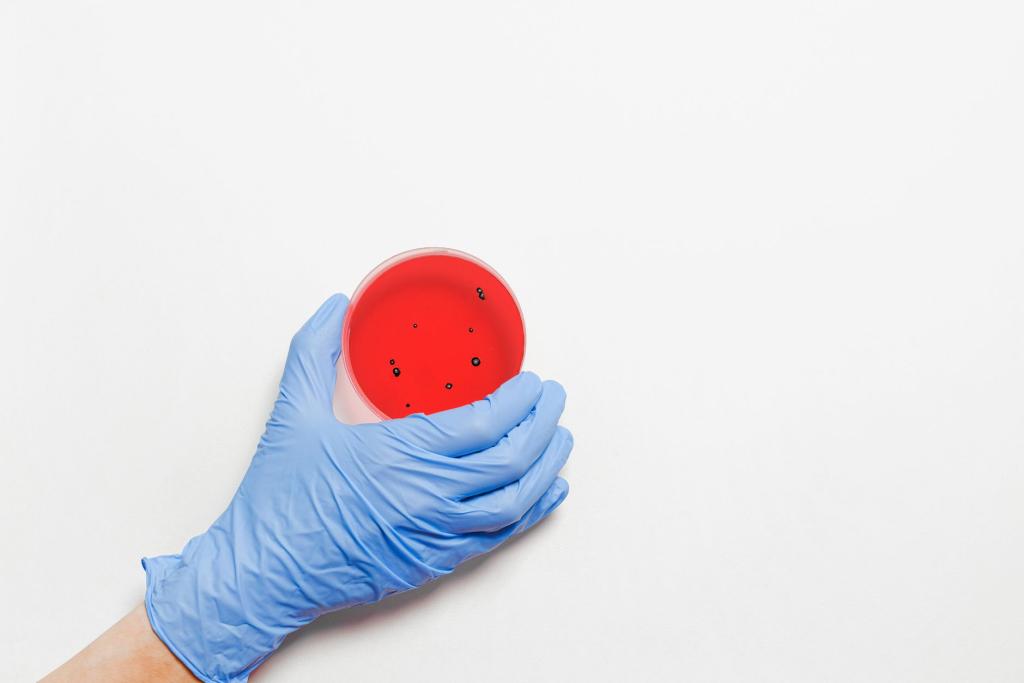
Athens, Georgia — Scientists at the University of Georgia have tracked down the genetic instructions behind one of nature's most astonishing feats: flatworm brain regeneration. The team found a set of genes — nearly a dozen in all — that tell stem cells to become dopamine-producing neurons and then steer those young neurons to the right spots in the animal's body, according to UGA's announcement.
When researchers disabled some of the genes, the flatworms struggled to produce the new neurons and moved noticeably more slowly — a response that mirrors the effects of low dopamine in people and other mammals. The result hints that the brain's poor self-repair is not a built-in flaw of nerve tissue itself, but a gap specific to species like ours.
The animal in question is the planarian, a small flatworm found in fresh water, salt water, and on land. Planarians have no circulatory or respiratory systems, yet they carry stem cells throughout their bodies that can convert into whatever tissue is needed. Cut into fragments, they can rebuild tissue, muscle, and even a full brain.
The genetic recipe behind new neurons
In the study, first authors Kendall Clay and Taylor Medlock-Lanier worked with corresponding author Rachel Roberts-Galbraith to untangle how newborn neurons settle on both their chemical identity and their location. They reported that distinct genes — including irx4/6, fli1-2, soxB1-2, foxA, app-L1, and lmo1/3-1 — each promote the regrowth and upkeep of dopamine-making neurons in different parts of the worm's central, peripheral, and feeding nervous systems.
The researchers describe the mechanism as combinatorial: separate instructions govern what kind of neuron a stem cell becomes and where it ends up. "We figured out the genetic recipe for making these cell types in planarians," Roberts-Galbraith said in the university's announcement, adding that she hopes the work helps others create dopamine-producing neurons that transplant more successfully into patients.
The peer-reviewed findings appear under the title "Combinatorial mechanisms specify cellular location and neurotransmitter identity during planarian neurogenesis," and the authors note that the same combinatorial logic — matching cell type to location — could sharpen lab-made neuron transplants aimed at localized injuries. The study grew out of Roberts-Galbraith's cellular biology lab within the university's Regenerative Bioscience Center, an interdisciplinary hub devoted to regenerative medicine.
Why flatworm brain regeneration matters for medicine
Dopamine is often called the brain's feel-good chemical, but it does far more than deliver pleasure. It helps neurons signal one another and plays a central role in controlling movement. When dopamine runs low — as in Parkinson's disease — the result is tremors and stiffness. Today, doctors have few reliable ways to repair that kind of damage, a problem that extends to Alzheimer's and traumatic brain injuries.
People also carry stem cells, but ours cannot turn into new neurons effectively enough to mend a damaged brain. That contrast is exactly what makes the flatworm interesting: its body-wide stem cells readily convert into fresh neurons. Because the two species share many of the same genes, the research team believes human biology may harbor pathways that could one day be switched back on.
The long-term payoff could be practical — lab-grown dopamine neurons tailored for transplant into patients. But the researchers frame this as a foundation, not a finish line. A planarian's nervous system is far simpler than a human brain, and moving from worm genetics to working human therapies will demand years of further study. "It's not an inherent property of brains that makes them bad at regeneration," Roberts-Galbraith said — in her view, that limitation is something specific to humans.
The finding moved quickly from lab to headlines: the peer-reviewed paper appeared in September 2026, the university's public announcement followed, and the results reached wider audiences this week, as reported by Phys.org. Roberts-Galbraith's larger ambition, she said, is finding ideas for how to better empower the human brain to regenerate itself. If the blueprint holds, flatworm brain regeneration could one day guide therapies that coax damaged human brains to heal themselves.
More from our science desk: browse the science topic page, and read our related report on what brain scans really reveal about ADHD.
Comments 0
No comments yet. Be the first to share your thoughts!
Leave a comment
Share your thoughts. Your email will not be published.