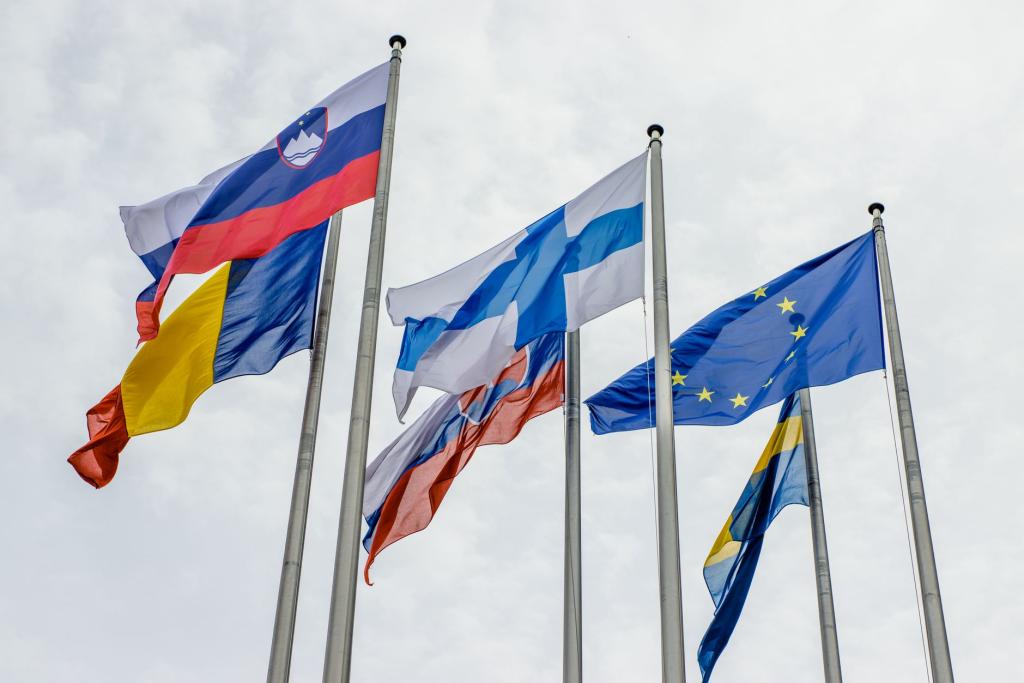
On September 16, 2026, Ursula von der Leyen used her State of the Union address in Strasbourg to make an offer the European Union has never made to any country. With Canadian Prime Minister Mark Carney sitting in the chamber as the first foreign head of government ever invited to the annual address, she said she wanted to work with him on opening the door for Canada to become the first associate member of the EU. According to TDot News, her framing pitched it as an invitation with the details still to come: the status of EU associate member does not exist anywhere in the EU treaties today.
Two weeks later, the proposal is still being argued over in Brussels, Ottawa, and Washington. It drew applause in the Strasbourg chamber, a welcome from Carney, and a tariff threat from U.S. President Donald Trump. Here is what the EU associate member idea actually covers, what it would mean in law, and why it is happening now.
An EU associate member offer with no paperwork yet
The legal reality is simple: there is nothing to sign. The EU associate member status does not exist anywhere in the bloc's legal framework, so all 27 member states would have to agree to create a brand-new legal structure defining its rights and obligations. That negotiation has not started, and no draft text exists.
It would not amount to EU membership either. Article 49 of the EU treaties reserves full membership for European states, and both sides have said Canada is not applying to join. According to the Prime Minister's Office readout of Carney's bilateral meeting with von der Leyen, Ottawa welcomed her proposal to move beyond the existing Canada-EU trade deal toward a far stronger and more ambitious alliance, covering critical minerals, defence industrial capacity, artificial intelligence and computing, energy security, space, financial services and payments, plus a move toward seamless digital trade in non-agricultural goods and a wide range of services. Notably, the official readout never uses the phrase associate member.
The idea did not come out of nowhere. According to TDot News, the Wall Street Journal reported on September 13 that Carney was already exploring associate member status in private, three days before von der Leyen put it on the record in front of the European Parliament.
What the EU associate member alliance would cover
Von der Leyen described the goal as moving from CETA, the Canada-EU trade agreement, to what she called an Alliance for the Future meant to create a shared space of prosperity and economic security. The sectors she named cover intelligent manufacturing, a tech alliance, integrated defence industrial bases, the Arctic, energy, critical minerals and batteries, and artificial intelligence, quantum computing, cybersecurity, and economic security.
The trade foundation is already deep. According to TDot News, von der Leyen said trade in goods between the EU and Canada has grown by 75 percent in less than a decade under CETA. The EU associate member concept would sit on top of cooperation that already exists, including CETA itself, the Horizon Europe research program, and a Security and Defence Partnership dating from 2025.
Why it is happening now
The timing is about Washington. Canada is locked in a tariff dispute with the United States, which as of August 2026 was imposing duties of up to 50 percent on some Canadian goods, according to IndexBox. Trump has also repeatedly floated the idea of Canada becoming the 51st state, a suggestion Ottawa treats as hostile.
Trump's answer to the EU proposal was hostile in return. According to TDot News, citing the Associated Press, he called the idea laughable, described Canada as a terrible trade partner, and suggested the EU move could be a hostile act that might bring heavy American tariffs on Europe. His recent trade and media moves keep drawing scrutiny at home too: Trump's taxpayer-funded ad draws legal fire from Congress.
Carney has said the EU associate member push is not aimed at picking fights. The day after the Strasbourg address, he spoke to the European Parliament and welcomed the proposal, saying it was not intended to position the two sides as a third pole against major powers, according to The Signal. He also told parliamentarians the proposal would be debated and put to a vote in Canada's Parliament.
Ottawa's diversification push kept moving on September 28. Carney spoke with Singapore's Prime Minister Lawrence Wong about a Canada-Singapore Economic Partnership Framework and about concluding talks on a Canada-ASEAN free trade agreement, which the Prime Minister's Office says would add nearly two billion dollars to Canada's GDP and create nearly fourteen thousand Canadian jobs. It is the same playbook as the EU offer: fewer eggs in the American basket. The shift comes as younger Canadians and Americans rethink what economic security means; Gen Z lifemaxxing redefines the American Dream, SoFi survey finds.
What has to happen next
For the EU associate member idea to become real, every one of the member states would need to agree on a new legal framework, and the Canadian Parliament would need to debate and vote on the proposal. No timeline has been set, and no draft text exists.
Trump's tariff threats hang over the whole exercise. He has shown a willingness to punish allies over trade and diplomacy moves he dislikes, and heavy duties on European exports would be a real cost for the bloc. The EU associate member debate will also run alongside Canada's tariff fight with the United States, which shows no sign of ending.
For now, the offer is exactly what von der Leyen described: an open door. No draft text exists, no timeline has been set, and whether the EU associate member status ever gets a legal definition is a question for the capitals and parliaments to decide.
Comments 0
No comments yet. Be the first to share your thoughts!
Leave a comment
Share your thoughts. Your email will not be published.