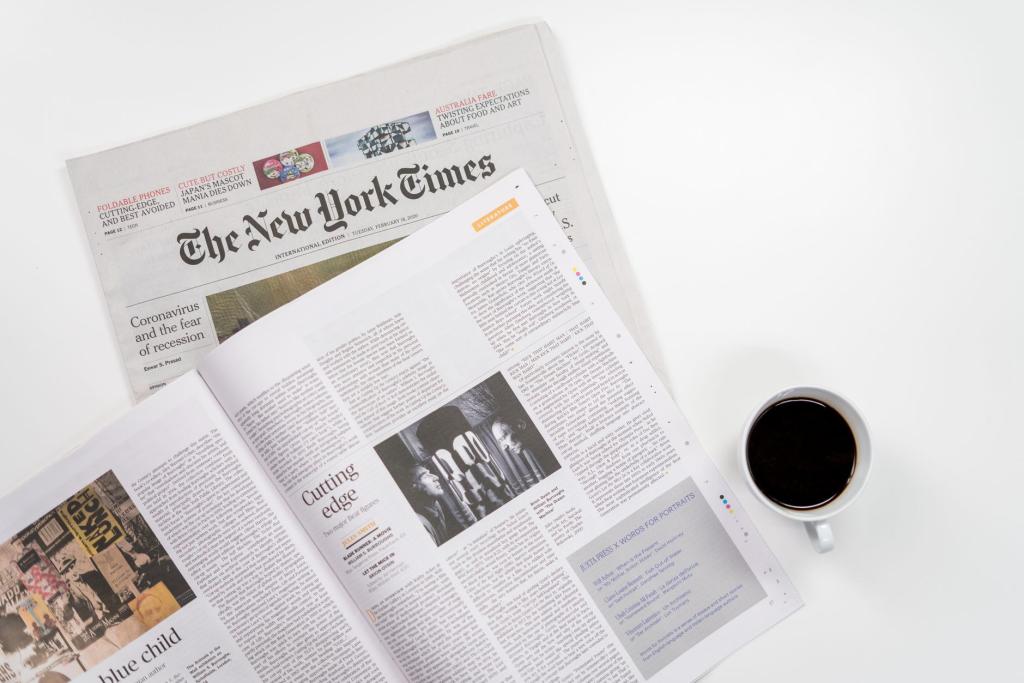
It is among the strangest sentences a Canadian prime minister has ever said about the United States. Sitting down with the New York Times during United Nations General Assembly week in New York, Mark Carney said his government has spent the past year examining the "extreme tail risk" of American military action against Canada. Not tariffs. Not tweets. Military action. Carney insisted it was not the expected outcome, but his choice to say any of this out loud is the story.
"I think you have a responsibility in these roles to look at extreme tail risk," Carney told the newspaper, borrowing the language of financial risk managers to describe a geopolitical worst case. "That's just risk management. That's not a base case, but it would be irresponsible not to" prepare. He would not detail what the preparations involved, according to the New York Post's report on the interview, and the phrasing left plenty of room for the possibility to be vanishingly small. He did not have to mention it at all. He chose to.
Why he is saying it now
The context for the extreme tail risk comment is a year of open hostility between Ottawa and Washington that has made old assumptions about the alliance look naive. President Donald Trump has repeatedly floated the idea of Canada becoming America's fifty-first state, ruled out military annexation early on, and then pivoted to "economic force" instead. Trade talks collapsed in August, and in late August the United States imposed punishing new duties on close to thirty billion dollars of Canadian goods, including beer, cheese, and electronics, according to Canada's Department of Finance. Canada answered in early September with retaliatory tariffs on roughly the same value of American imports, spanning steel, dairy products, appliances, and agricultural equipment. Trump then barred Canadian firms from federal contracts. An earlier report on the escalating tariff war shows how fast the spiral has moved.
The rupture goes beyond tariffs. Ursula von der Leyen proposed making Canada an associate member of the European Union shortly before the interview, a move Trump reportedly described as a "hostile act," language that made Carney's extreme tail risk framing feel less abstract. Canada's EU bid is part of a wider pivot away from its southern neighbor. Carney told the Times he has reduced his country's reliance on American technology in what he described as meticulous detail, from reconsidering the purchase of eighty-eight American stealth fighters to phasing out Elon Musk's Starlink satellite systems. And yet Carney and Trump have spoken frequently, even since the talks broke down, a tense relationship Carney described as evolving rather than broken.
A country re-engineering its dependence
What makes the extreme tail risk interview different from the usual diplomatic drama is that it describes a government methodically rebuilding itself to survive its neighbor. The defence build-out has been striking: Ottawa contracted German shipbuilder TKMS for a fleet of as many as a dozen submarines, opened a consulate in Nuuk, Greenland, and plans another in Anchorage, Alaska. A poll of northern residents conducted for the Observatoire de la politique et de la sécurité de l'Arctique found nearly half regarded the United States as the greatest threat facing the Arctic region, ahead of Russia and China. Defence Minister David McGuinty has urged calm, telling Canadians that militaries routinely plan for scenarios that never happen, according to reporting by The Canada Report.
Carney's central-banker past is visible in every line of the interview. He ran both the Bank of Canada and the Bank of England before becoming prime minister, and for a former central banker the extreme tail risk framing is muscle memory: model the catastrophic outcome and price it in. "There's certain things, once you've seen them, you can't unsee them," he said of Canada's exposure to American pressure. The old model was forty years of deepening integration, a relationship Carney has called easy business built on overreliance. That era, he argues, is finished. His parallel outreach to Vietnam shows the same diversification logic at work.
For younger Canadians and Americans, the exchange lands oddly because the alliance was treated as permanent background. NORAD has watched the Arctic together for generations, and troops from both countries serve side by side in NATO operations. The scale gap makes the scenario Carney contemplated surreal on paper: American forces number more than two million active-duty and reserve personnel, while Canada's ranks run to roughly a tenth of that size, according to their governments. Nobody in Ottawa believes an invasion is coming, and Carney says his goal is the opposite of confrontation. "We will be a better partner for the US because of what we are doing," he told the Times. The bet is that a Canada less dependent on Washington can argue with Washington more honestly.
Whether that bet pays off will be decided in trade rooms and procurement contracts, not on battlefields. But the interview marks something new: a Canadian prime minister publicly admitting that an extreme tail risk of American military action made the contingency list. For a country that defined itself for generations by not needing to think about its neighbor at all, that admission changes the conversation.
Comments 0
No comments yet. Be the first to share your thoughts!
Leave a comment
Share your thoughts. Your email will not be published.