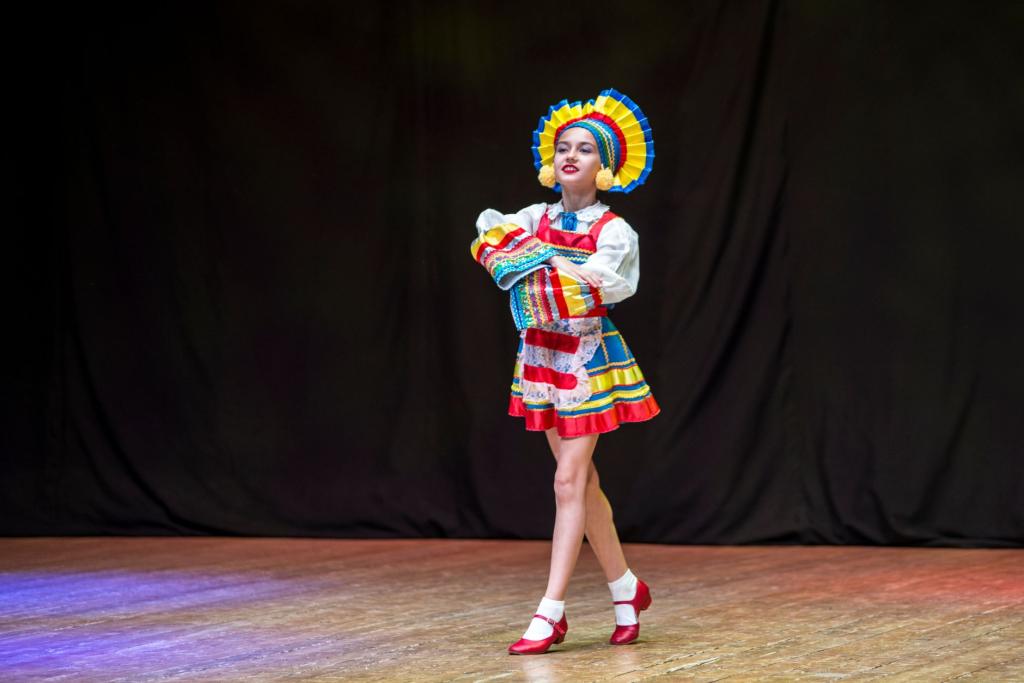
A dance drill filmed for Chinese dance students in the 1990s is now one of the biggest memes in the world. The Flash Step Dance, a rapid side-to-side folk-dance move, has racked up more than eight billion views on a single short-video platform, according to Chinese media figures reported by The Ledger Asia — and most of the people doing it have never taken a dance class.
The move, known in Chinese as shanshenbu, is exactly what it sounds like: the dancer shifts weight quickly from side to side while twisting the body and extending the arms. It comes from the Flower Drum Lantern, a folk tradition from Anhui province that China lists as a national-level intangible cultural heritage. The version going viral was demonstrated by veteran teachers Zhao Tiechun and Ming Wenjun in a professional teaching recording produced by the Beijing Dance Academy, where the step was taught as a serious drill for balance, posture and rapid changes in the body's center of gravity.
From classroom drill to comedy gold
The trend took off when users started dropping the move into everyday situations. In short comedy clips, the flash step became a way of "dodging" unwanted work, slipping out of awkward conversations or escaping crowded rooms. Young creators began mixing the instructors' original instructional audio with workplace jokes, relationship skits and other familiar social-media formats. The contrast does the heavy lifting: the teachers' precise, formal demonstrations play against the absurd modern situations, and the gap between the two is the joke.
The move did not go viral alone. Two companion steps from the same teaching tradition have ridden the same wave: one loosely translated as "prodigal kicking the ball," a flexible hopping kick with the arms extended, and another called "black bear shaking fur," a vigorous full-body shake drawn from the drum-beating yangge folk dance of Shandong province. Their unusually vivid names have become part of the fun. A professor of ethnic and folk dance at the academy, Tian Lu, has explained that the colorful names already existed inside the traditional forms — they were not invented for the meme. The flash step and its hopping companion both belong to the Anhui tradition, while the bear-shake move comes from the Shandong one.
Then the celebrities arrived. Chinese entertainment figures including Lay Zhang Yixing and actress Li Yitong joined the trend, and German fitness influencer Pamela Reif was also linked to recreations of the moves. The craze crossed borders into merchandise: images of the dance instructors have been turned into keychains, decorative tape and other inexpensive goods sold on Chinese e-commerce platforms, typically for about ten to twenty yuan. That is a familiar pattern in China's fast-moving online culture — once a meme is widely recognized, sellers turn its visual references into low-cost products within days. What makes this one unusual is the source material. It is not a celebrity performance, a television drama or a commercial campaign. It is a rediscovered educational recording.
The moves are harder than they look
The apparent simplicity of the Flash Step Dance has caused real problems. Medical professionals have warned that the choreography demands considerably more strength and control than short clips suggest — the movement loads the core, gluteal and thigh muscles, while poor technique can strain the knees and ligaments. The affiliated hospital of Yangzhou University issued a warning after orthopedic and sports-medicine clinics in several regions reported treating young people injured while attempting the trend. A light-hearted challenge built from professional dance training is being attempted by people without the conditioning that originally accompanied it.
That warning has not slowed the spread, but it has added a second act to the story. The same clips that treat the flash step as a joke are now carrying a serious footnote: warm up, learn the mechanics, and do not copy the teachers' full-speed version on your first try. For anyone tempted, the safest entry point is the comedy format itself — the step reads just as well at half speed, and the dodge-the-boss joke lands either way.
There is a bigger lesson in the craze for anyone who works with culture. The flash step succeeded without a marketing campaign. Social media users discovered existing cultural material, reframed it through humor and gave it an entirely new audience. Archives that once looked relevant only to specialists can become valuable digital assets when younger audiences meet them in a format they want to share. And the most successful reinterpretations have not erased the origins: as the trend spread, viewers started learning that the moves came from recognized folk traditions and professional dance education. Humor first, cultural discovery afterwards — that sequence may explain why the Flash Step Dance traveled so far, and why a thirty-year-old classroom drill is now teaching the internet about heritage.
Sources: trend figures, history and the injury warning from The Ledger Asia's report; one widely shared compilation of flash-step clips. Related GenZ NewZ coverage: the Six Seven dance, the shrinking pine cone video, and the Winter Arc trend.
Comments 0
No comments yet. Be the first to share your thoughts!
Leave a comment
Share your thoughts. Your email will not be published.