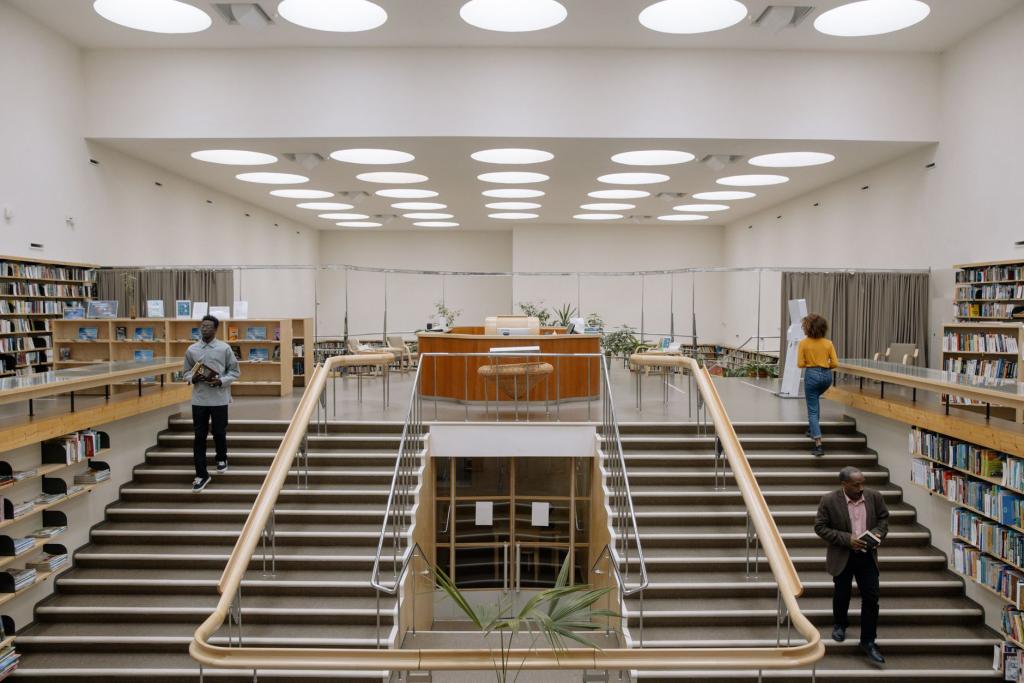
Libraries have stopped asking you to be quiet. Library Raves are spreading from New Jersey to Tokyo, where public libraries are throwing after-hours parties with DJs, themed dance floors and cocktails, all in the name of getting young people through the door. The reading room is becoming the dance floor, and the trend is working.
The flagship example sits across the river from Manhattan. The Jersey City Free Public Library turned its main branch into a multi-floor nightclub for "Rave at the Library," a 21-and-over fundraiser where each floor had a different theme, including a 90s and Y2K nostalgia floor with a Scholastic Book Fair throwback and a hip-hop and Top 40 dance floor. After a sold-out-feeling debut in December, the event returned on May 23, with tickets priced at twenty-five dollars and a VIP "Restricted Section" reserved for library cardholders. In its press release, the library said the goal was to spark new card sign-ups, especially among millennials and Gen Z, while raising money for programs, according to Hoboken Girl's coverage of the event.
New York is not waiting for a reason to party either. The Stavros Niarchos Foundation Library on Fifth Avenue hosts a Halloween Teen Takeover on October 31, 2026, where teens take over the branch after hours for scary karaoke, a costume contest, oversized games and dancing on the rooftop with DJ-spun tunes, all free with proof of age, according to the New York Public Library's events listing. Upstate, the Manlius Library's "Library After Dark" on October 23, 2026 promises mocktails, music, crafts and tarot readings for adults eighteen and older, with advance registration required. The formula repeats across the country: dim the lights, hire a DJ, and let a generation that treats the library as a living room do what it does at parties.
Reading as a club night
Tokyo may have the purest version of the idea. The JUCY book rave gathers readers in a carpeted club on Saturday mornings, where the first three hours belong to silent reading and the final hour opens up for talking about the books, swapping them or simply dancing. Organizers told reporters that another edition is in the works, with an outdoor session in Yoyogi Park among the options, according to Asian Entertainment and Culture. The write-up framed it less as a youth reading boom than as proof that people who already read will happily pay a cover charge for a room that treats reading as the main event.
That framing matters, because the numbers behind it are genuinely surprising. Two-thirds of Gen Z visited a public library in the past year, up sharply from just over half in 2022, according to a Library Journal analysis of nationwide survey data summarized by Super Library Marketing. The Public Library Association's 2026 findings added that the overwhelming majority of young respondents want gathering spaces outside their homes, and that libraries remain one of the country's last free third spaces. The demand is visible on the ground too: Arlington Public Library in Virginia announced this fall that it had passed one hundred thousand active cardholders, recovering from a pandemic-era dip and then some, with residents reporting near-universal satisfaction.
The third-place playbook
The strategy is deliberately social rather than literary. Coffee raves and run clubs have already shown that young people will rearrange their weekends around morning dance floors and wellness hangouts, as GenZ NewZ reported in its coffee rave coverage, and library directors are reading the same memo. Library Raves are not just programming; they are a billboard. Every ticket sold and every social post from a packed stacks dance floor advertises that the building exists, that it is free most days, and that it belongs to people who never thought of themselves as library people.
Not everyone is dancing along. Traditionalists grumble that turning reading rooms into nightclubs trades the library's core promise of quiet refuge for a gimmick, and there are practical questions about noise, drinks near collections and what happens to regulars when the stacks become a venue. Librarians counter that the alternative is a slow fade into irrelevance, and that a generation reporting record loneliness needs gathering places more than it needs silence. The lonelier young people are, the less they use libraries today, which is exactly why the events exist.
What to do with all this: check your own library's events calendar before you assume it closes at six. The after-hours party, the rooftop disco, the silent-reading club night are all versions of the same invitation, and the price of admission is usually a library card you can get for free. The library spent a century as the quietest room in town. Its loudest chapter might be the one that saves it.
Related reading on GenZ NewZ: Your Library Card Is the Ultimate Free Life Hack, Room Rotting: The Getaway Where Doing Nothing Is the Point and Coffee Rave Culture Is Rewriting the Nightclub.
Sources: Hoboken Girl, New York Public Library, Asian Entertainment and Culture and Super Library Marketing.
Comments 0
No comments yet. Be the first to share your thoughts!
Leave a comment
Share your thoughts. Your email will not be published.