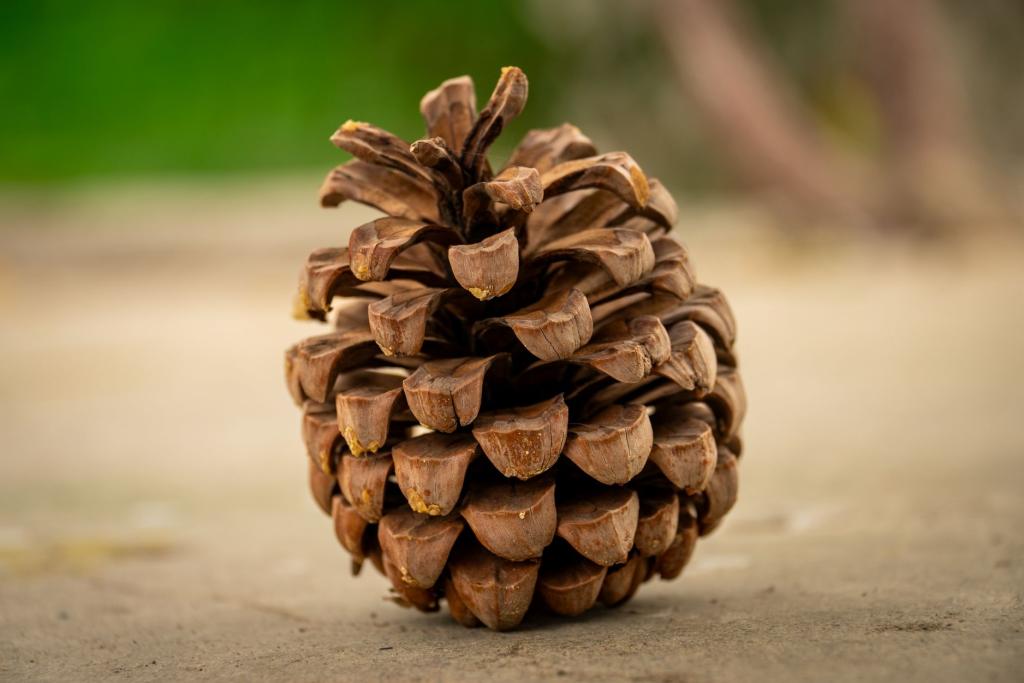
The shrinking pine cone video showed up on For You pages everywhere this week, and at first glance it looks like a magic trick. A pine cone sits in a bowl of water, and its scales visibly pull shut, the whole cone drawing inward until it looks smaller and sealed. Scroll the comments and you will find the same reaction over and over: people who had no idea a pine cone could do that.
According to Revid's TikTok trend tracking, updated on October 12, the shrinking pine cone video from the account @majimero.1217 gained more than eleven million views in a single day and has passed forty-one million total views, only four days after it was posted. That made it one of the fastest-growing clips on the platform this week, riding a wave of nature content that is quietly outperforming dance challenges and lip-syncs right now.
The clip comes from @majimero.1217, an account known for visual trick-style videos, and the shrinking pine cone video fits that lane perfectly: it looks like an illusion right up until the science checks out. That tension is what keeps people watching. Viewers arrive expecting a filter or an edit, then stay for a botany lesson.
The science hiding inside a pine cone
What the shrinking pine cone video shows is not editing. Pine cones are built to move like this. When conditions turn wet, the scales on a cone curve upward and the cone closes, tucking its seeds safely inside. When the air dries out, the scales bend back down and release the seeds to the wind. Botanists call this hygroscopic movement, which is a technical way of saying the cone's tissues swell and shrink with moisture. The cells in a mature cone are dead, so the whole motion is passive, and the cone spends no energy doing it.
The mechanism is surprisingly precise. Research published in Scientific Reports describes how dozens of seed scales on each cone react to humidity through their structure alone, closing under wet conditions that would be bad for wind dispersal and opening when dry air gives the seeds their best shot at traveling. A team at the University of Freiburg went further, reporting in the journal Advanced Science that several tissue layers in each scale absorb moisture and drive the closing motion, and engineers have studied the cone as a model for moisture-responsive building materials. In plain terms, the pine cone is a tiny machine that runs on rain. The basic finding is not new, either: researchers reported in the journal Nature back in nineteen ninety-seven that the scales gape open when dry and close up when damp, confirming with the Monterey pine what backyard experiments keep rediscovering today.
Why this clip broke through
TikTok loves a reveal, and the shrinking pine cone video delivers two of them. First comes the visual payoff of watching the cone tighten in real time. Then comes the second reveal in the comments, where viewers learn that what they just watched is ordinary plant biology. That double hit is the same formula behind other recent breakouts, from the two fishes trend that had creators deadpanning nonsense with total sincerity to the Halloween costume formats taking over October feeds.
It also helps that this viral moment survives the skepticism it invites. Plenty of viral claims fall apart on a second look, as recent debunked stories have shown. The shrinking pine cone video is the opposite case: the more you check it, the more real it gets. And unlike a dance challenge, anyone can test it. Drop a dry, open pine cone in a bowl of water and check back over the next stretch of hours. The cone will perform the trick for you, no account required.
The feed rewards genuine wonder when it finds it. A clip with tens of millions of views about dead plant tissue doing physics is proof of that, and scientists are still mapping exactly how those scale tissues coordinate their movement. For anyone whose curiosity survived the shrinking pine cone video, recent science coverage keeps turning up new reminders that the natural world is stranger than the timeline makes it look.
Comments 0
No comments yet. Be the first to share your thoughts!
Leave a comment
Share your thoughts. Your email will not be published.