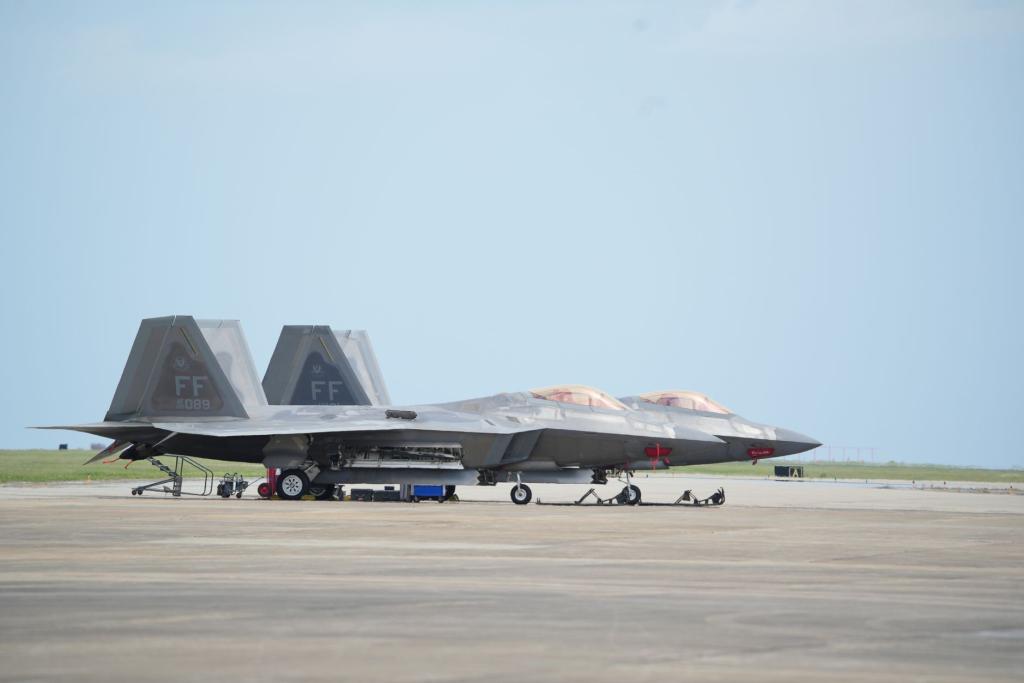
China obtained F-35 parts after a routine shipment from Australia to the United States took an unexpected detour through Hong Kong, according to reports this week. The Pentagon has confirmed the incident and says it is now investigating how the components wound up in Chinese hands.
Bloomberg reported on September 23 that China obtained F-35 parts, a cockpit canopy and a weapons bay door, after the package was unexpectedly diverted to Hong Kong while traveling from Australia to the United States for repair or disposal months ago. Both components are coated with a radar-absorbing material, the stealth coating that helps keep the F-35 difficult to detect, the New York Post reported.
The shipment was supposed to be ordinary. The parts came off an Australian military F-35 and were headed to the US for inspection and possible repair or disposal, according to the Post, which reported that the package was traveling by UPS. The plane carrying it stopped in South Korea along the way and was then routed to Hong Kong, where the Chinese government took possession of the components in May. It is still not clear why the plane was diverted to Hong Kong or whether the rerouting was an accident. What is clear is that China obtained F-35 parts in the process.
The Pentagon is trying to get the parts back
The F-35 Joint Program Office confirmed it is aware of what it called a shipment issue involving F-35 components. "We are actively working with US authorities and industry partners to retrieve these components, investigate the incident, and place safeguards to avoid a future occurrence," the office said in a statement, according to an Associated Press report.
The statement came from the Pentagon body that manages the F-35 program alongside prime contractor Lockheed Martin. The office described the parts as unserviceable, meaning they were not flight-ready components pulled from an active jet, but the Pentagon still wants them back.
Australia says the parts are not sensitive
Australian Defense Minister Richard Marles acknowledged on September 22, a day before reports emerged that China obtained F-35 parts, that the jet components had ended up in Hong Kong when he answered reporters' questions, but he denied that the missing parts counted as sensitive equipment. "My understanding is that there is a sense of comfort, and we're not talking about sensitive equipment here or sensitive parts," Marles said, according to the AP. He added that Australia is working with the United States and Lockheed Martin on the matter, while leaving the investigation to the Americans.
Australia is one of several countries whose militaries operate the stealth fighter, the AP reported. That is why the shipment existed at all: partner nations send worn or damaged F-35 parts back to the United States for inspection, repair, or disposal, and this particular package simply did not make it home.
Awkward timing for a state visit
News that China obtained F-35 parts surfaced just as Chinese President Xi Jinping arrived in Washington for a state visit with President Donald Trump, a trip that included a formal White House state dinner. China's Foreign Ministry said it was not aware of the incident, and the Hong Kong government said it would not comment on specific cases, according to the AP. Lockheed Martin did not immediately respond to requests for comment.
The timing hands an already delicate visit one more issue to manage behind closed doors. It also follows a different US-China military scare: an AI hallucination in a US intelligence report nearly led American forces to board a Chinese ship in the Middle East, as GenZNewZ reported.
Why two small parts matter so much
A canopy and a bay door might sound minor, but the radar-absorbing coating on them is part of what makes the F-35 the most advanced fighter in the American fleet, as the AP described it. The Post reported that the way China obtained F-35 parts has raised concerns that Beijing could gain insight into the classified technology behind the stealth aircraft.
The F-35 is built by Lockheed Martin and flown by the United States and allied militaries, including Australia's, according to the AP. Its stealth depends on a combination of shape and skin, and the radar-absorbing coating on its outer surfaces is part of what keeps it off enemy radar. That is one reason partner nations route worn parts back to the United States rather than scrapping them locally.
Until the investigation reports back, the episode shows how a shipping manifest can turn into a diplomatic problem. The Xi state visit dominated the headlines this week, as GenZNewZ covered, while the fate of two misplaced aircraft parts played out in the background.
The Pentagon says its priority is getting the components back from Hong Kong and putting safeguards in place so a future shipment does not end up in the wrong country. How China obtained F-35 parts that were not meant to leave allied hands is the question the investigation still has to answer.
Comments 0
No comments yet. Be the first to share your thoughts!
Leave a comment
Share your thoughts. Your email will not be published.