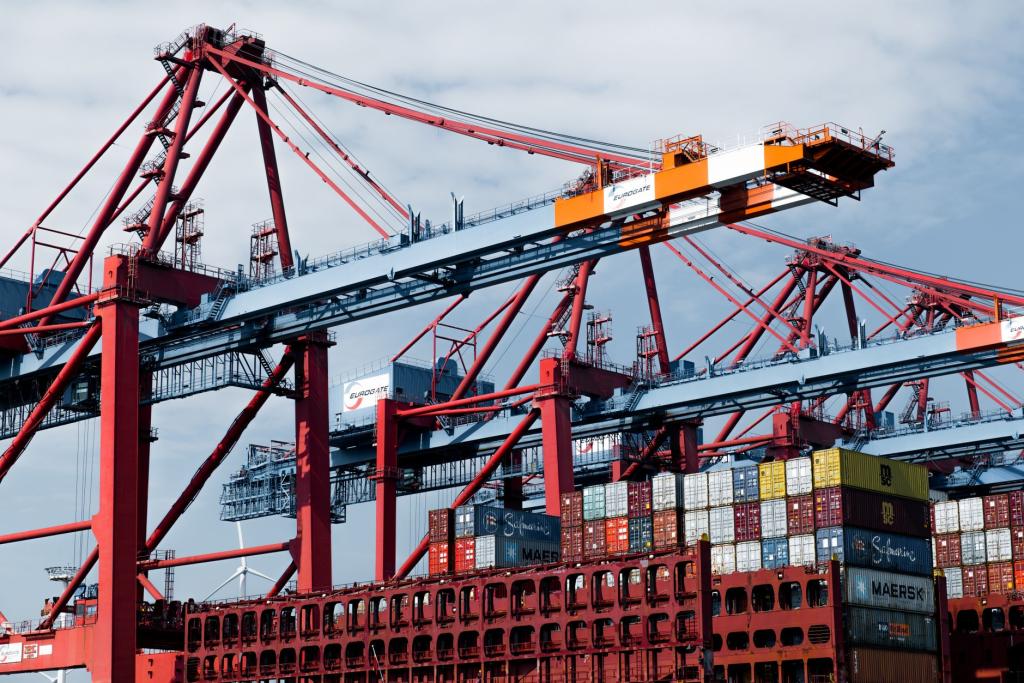
At 12:01 a.m. Eastern time on Tuesday, the United States banned a swath of Canadian imports — from whiskey and wine to dairy products and motorcycles — in the sharpest escalation yet of the second-term trade war between the two countries. The Canada import ban, reported by the Associated Press via the Reflector, turns what was already a tariff fight into something more blunt: certain Canadian goods simply may not be imported at all.
The banned list covers dozens of product lines under proclamations President Donald Trump signed September 8: beer, wine, cider and other fermented drinks; whiskey, vodka, rum and other major spirits categories; non-alcoholic beer; whey products and molasses; certain dairy products; and motorcycles, mopeds and cycles with internal-combustion engines over 800 cc, according to a detailed breakdown of the September 29 measures. Not every Canadian spirit will vanish from American shelves overnight, but the flow of new stock stops now.
By one estimate, the ban covers about $967 million worth of Canadian imports based on 2025 trade figures — and 87 percent of that is alcoholic beverages, according to Jacob Jensen, director of trade policy at the American Action Forum. That concentration is no accident: several Canadian provinces pulled American liquor from store shelves in response to Trump’s earlier tariff moves, and Washington aimed its retaliation squarely back at Canada’s alcohol industry.
The Canada import ban is punishment for fighting back
The latest sparring began over the summer, when Trump reached for a Depression-era law to impose 50 percent tariffs on roughly $20 billion worth of Canadian imports, charging that Canada discriminates against American dairy, auto and alcohol producers. Canada promptly counterpunched with its own tariffs of 15, 25 or 50 percent, matching American imports dollar for dollar. The September 29 import bans are the punishment for that retaliation — a second blow for answering the first.
Trump showed no sign of backing down on Monday. “They call us all the time. The problem is they’ve treated the U.S. very unfairly,” he told reporters in the Oval Office, according to reporting by IANS. He predicted Canada would return to the negotiating table within “three or four weeks” and insisted “a deal will be made, but it’s going to be a fair deal” — without announcing any meeting, proposal, or signing timeline.
Trade experts are skeptical that the ban changes the economics much. “For a lot of these goods, the 50 percent was already acting as a de facto ban by making importation from Canada into the United States uneconomical,” said trade attorney Patrick Childress, a partner at Holland & Knight and a former U.S. trade official. He added that the import ban “certainly won’t do anything to help the trade tensions between the United States and Canada.” In other words, Washington has banned goods that were already priced out of the market.
And the numbers put the fight in perspective: the banned goods represent less than one percent of the roughly $880 billion in annual two-way trade between the neighbors. The economic damage is minimal; the diplomatic message is the point.
What the Canada import ban means for shoppers
For consumers, the impact will show up on shelves gradually rather than all at once. Goods already sitting in American warehouses are not banned — they remain subject to the 50 percent duty rate rather than the outright prohibition, because the operative date is the customs entry date, not the ship date. So your favorite Canadian rye or craft beer may simply get pricier and scarcer over the coming weeks as existing stock runs down.
Businesses on both sides of the border are bracing for more whiplash. The same provinces that yanked American booze off shelves are now watching their own producers lose their largest export market overnight, while American distributors, bar owners and motorcycle dealers scramble to figure out which shipments are legal. It is a vivid case study in how quickly a trade war stops being abstract policy and starts being somebody’s order sheet.
For the bigger picture on how economic pressures are reshaping everyday life, see the Canadian News topic page and related coverage of the money trends hitting young wallets, like the Gen Z ETF era.
What happens next
Three legal and diplomatic fronts are now open: challenges at the World Trade Organization and under USMCA, possible fights in American courts over the use of Section 338 of the Tariff Act of 1930 — a law not invoked this way in nearly a century — and Trump’s own prediction of a deal within weeks. None of them move fast. Until one does, the rule at the border is simple and unprecedented in the modern U.S.-Canada relationship: some Canadian goods can cross, and some simply cannot.
Comments 0
No comments yet. Be the first to share your thoughts!
Leave a comment
Share your thoughts. Your email will not be published.