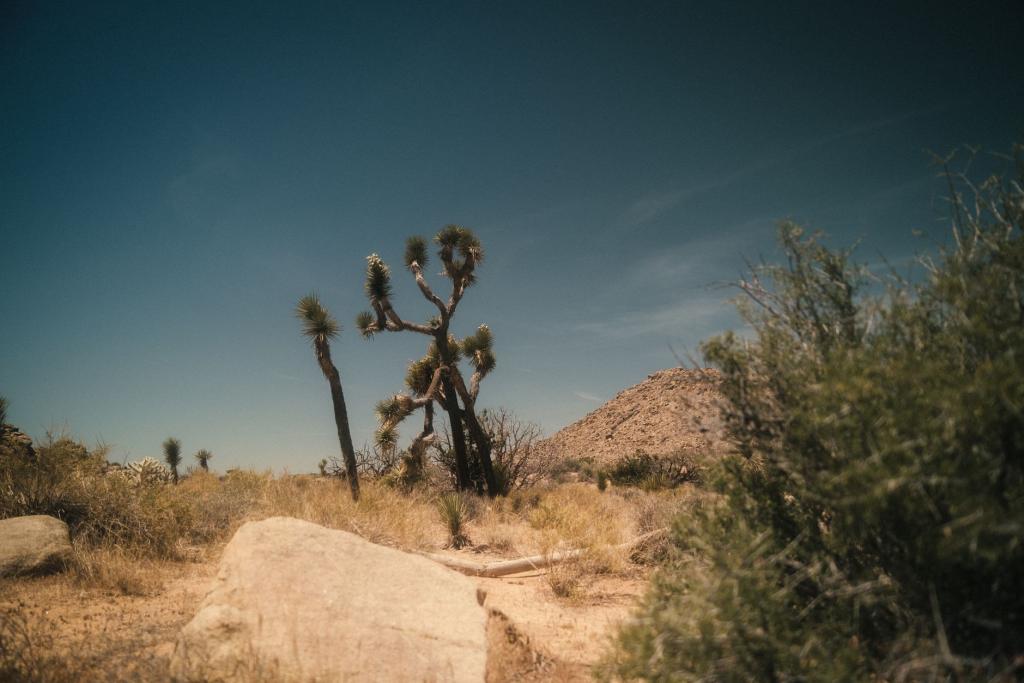
The California Joshua tree law just got its first major revision, and desert homeowners have been waiting for it. On Tuesday, Gov. Gavin Newsom signed two bills, Assembly Bill 1663 and Assembly Bill 1808, that rewrite parts of the Western Joshua Tree Conservation Act, the law that made the spiky desert icon a protected species three years ago. One bill makes it simpler to get a permit to remove a dead or hazardous tree. The other opens the door wider for Native American tribes to use the trees in cultural traditions. Together, they keep the protections in place while sanding down the paperwork that frustrated the people living closest to the trees.
The changes were three years in the making. When the conservation act passed in 2023, it set up a permitting system meant to balance new development with the survival of a species whose suitable habitat is expected to shrink substantially by 2100. But homeowners, tribes, and local governments in the high desert soon found the system hard to navigate, according to reporting by the Desert Sun. Property owners could already remove certain dead or hazardous western Joshua trees without paying mitigation fees, but they had to manage the approval process themselves, a real hurdle for anyone who does not live at the property full time.
The first bill, from Assemblymember Greg Wallis, a Republican from Bermuda Dunes, targets that paperwork problem directly. Property owners can now designate an authorized agent, such as a contractor or property manager, to handle the permit process. The law also drops the requirement that the owner or a desert native plant specialist separately certify that the tree is dead. And it expands the California Department of Fish and Wildlife's authority to let tribes buy, sell, take, and possess western Joshua trees for cultural purposes.
The companion measure, from Assemblymember Juan Carrillo, a Democrat from Palmdale, goes further for routine property work. Owners of single-family homes can now trim or remove up to 10 trees near structures or construction footprints without fees or mitigation. Public works projects can take down up to 40 trees for maintenance, repair, or replacement of existing infrastructure without extra fees. A breakdown published by the Joshua Tree Gallery Association lays out the same numbers for both bills. Both measures amend the California Joshua tree law and take effect at the start of 2027.
Why the fix matters for the desert
Joshua trees are in a strange position: protected because they are disappearing, yet common enough that the paperwork touched everyday life. The species is expected to lose much of its suitable habitat this century as the climate warms, especially across the southern part of its range, and research cited by the Desert Sun suggests the western Joshua tree would largely be unable to survive in its namesake national park by the end of the century. The original law was California's attempt to get ahead of that slide. Supporters of the revisions say they keep the California Joshua tree law's protections intact while making those protections livable for the communities that share the desert with the trees.
What changes for tribes
The tribal provisions are the part of the bills getting the least attention, and they may matter the most. Joshua trees have deep cultural roots for the desert's first peoples, and the original permitting system gave tribes limited room to work with the trees for traditional purposes. The new law gives the state wildlife agency broader authority to approve tribal cultural use, including the purchase and sale of trees. The change marks the first time the California Joshua tree law has been updated since it was adopted. For tribal communities that have watched their ancestral landscapes shrink, that is a practical win: a legal path to keep traditions alive alongside a conservation law designed to protect the species itself.
"Joshua Trees are part of what makes our desert home," Wallis said in a press release Tuesday. "A homeowner with a dead tree leaning on the house can now get a permit without extra hoops, and tribes have more room to use these trees in their cultural traditions." Homeowners with a dead tree on their lot can start using the streamlined process as soon as the law takes effect. Conservation groups will be watching how the California Joshua tree law performs once the streamlined permits kick in, with early permit data likely to shape the next round of debate.
Comments 0
No comments yet. Be the first to share your thoughts!
Leave a comment
Share your thoughts. Your email will not be published.