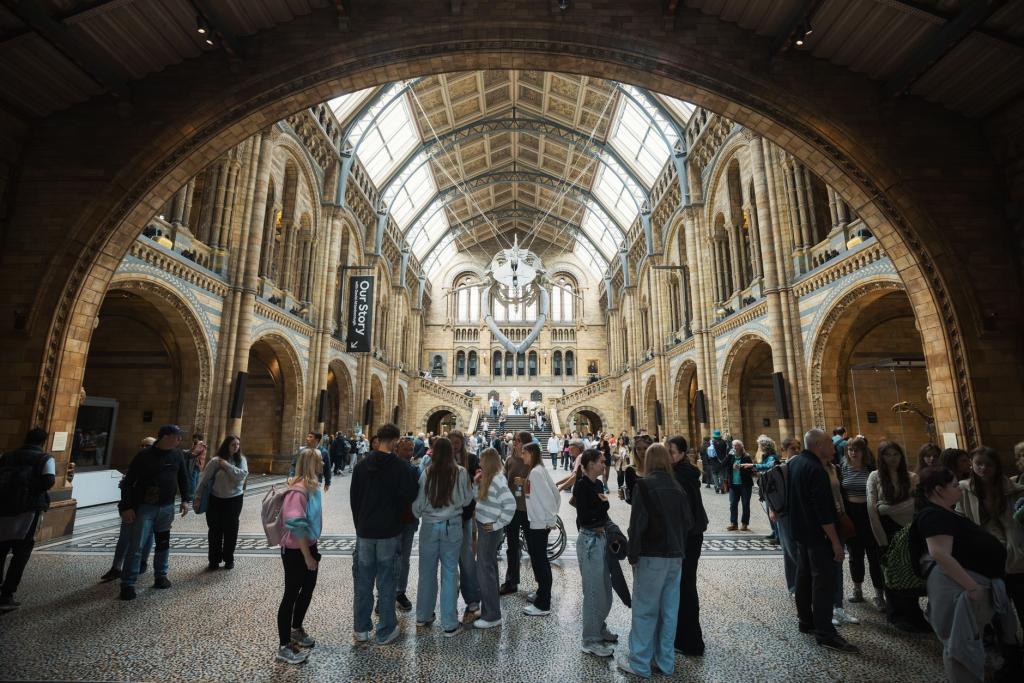
The British Museum opened its first major presentation of Korean art in more than four decades on Thursday. The Korea exhibition, unveiled at the Joseph Hotung Great Court Gallery, gathers one hundred works spanning more than two millennia of Korean creativity, from Iron Age bronzes to contemporary pieces, drawn from the collection of the late Samsung chairman Lee Kun-hee. It is the collection's European debut after stops in Washington and Chicago.
Those works come from the National Bequest of the Lee Kun-hee Collection, a gift of more than 23,000 artworks donated to South Korea's national museums by his family in 2021, a year after his death. The Korea exhibition is organized jointly by the British Museum, the National Museum of Korea and the National Museum of Modern and Contemporary Art, Korea, and most of the works are on loan from those two institutions. The curators built the selection as a single narrative about how Korean aesthetic values were formed and reinterpreted across generations, according to the organizers.
A gala on September 30 marked the opening. Samsung Electronics Executive Chairman Jay Y. Lee attended alongside members of the Samsung family and Britain's Princess Anne. Lee told the guests that his family has held a guiding principle across generations: that art and culture "should be preserved and shared". He described the exhibition as "a gateway into Korean culture", and said he hoped it would let visitors "see Korea a little differently", for its "beauty, its depth and its resilience", in a statement published by Samsung. About 240 guests from government, business, academia and the arts attended the event, including executives from European semiconductor companies such as ASML, Merck, ZEISS and imec, as reported by Aju Press.
One hundred works, from bronzes to Nam June Paik
The selection includes ten National Treasures and thirteen Treasures of Korea, and more than twenty pieces are being shown internationally for the first time. The Korea exhibition opens its ancient end with Bronze Artifacts from Bisan-dong in Daegu, early Bronze Rattles, and a Celadon Incense Burner with a Girin-shaped lid, a mythical beast set on a well-known Korean ceramic form. The modern and contemporary section includes Nam June Paik's Brahms, Lee Jungseop's Bound People and Park Rehyun's Woman, according to The Luxe Review.
Buddhism's arrival in Korea anchors the early centuries, with statuettes of bodhisattvas and sutras from the years that followed its introduction. Goryeo-period celadon, the pale green glazed ware long prized across Asia, features prominently. The Korea exhibition's contemporary section includes Yeesookyung's piece from the Translated Vase series, a sculpture assembled from shards discarded by potters and framed as a meditation on the beauty of imperfection. Another highlight is Suh Do Ho's thread drawing Self-Portrait, which reflects on home, migration and belonging, as reported by Reuters.
The show also includes the work of Lee Jung-seop, the painter separated from his family during the Korean War who etched images into the foil lining of cigarette packets when he could not afford paint or canvas. His small scratched surfaces are among the show's most direct records of the war's human cost.
From folding screens to KPop Demon Hunters
The Korea exhibition opens to an audience that largely knows Korea through its pop culture. Curator Sang-ah Kim told Reuters that most young people in Britain "know about Korea through its popular culture" but may not realize the country holds more than two thousand years of "creativity, resilience and technical skill". Netflix's animated hit KPop Demon Hunters draws directly on traditional Korean imagery, and Kim said audiences "may get a lovely surprise" when they recognize the tiger-and-magpie paintings and the Sun, Moon and Five Peaks motif that inspired characters such as Derpy the Tiger and Sussie the Magpie, and the folding-screen backdrop for the film's fictional group HUNTR/X.
For visitors whose first contact with Korean aesthetics came through earbuds and streaming queues, the Korea exhibition fills in the older picture. The film has already sent viewers looking for the folklore behind it. Here the source material is on the wall, with the labels to match.
The Korea exhibition runs through January 31, 2027 at the Joseph Hotung Great Court Gallery. It caps a busy week in the arts, from the season's tiny-watch fashion boom to the Apple Martin runway debut at Paris Fashion Week.
More coverage of the exhibition is available from Reuters and Samsung Newsroom.
IMAGE_SEARCH_QUERY: Goryeo celadon vases museum gallery display visitors IMAGE_DESCRIPTION: Pale green Goryeo celadon vessels stand in glass cases inside a museum gallery while visitors look closely at the exhibition.
Comments 0
No comments yet. Be the first to share your thoughts!
Leave a comment
Share your thoughts. Your email will not be published.