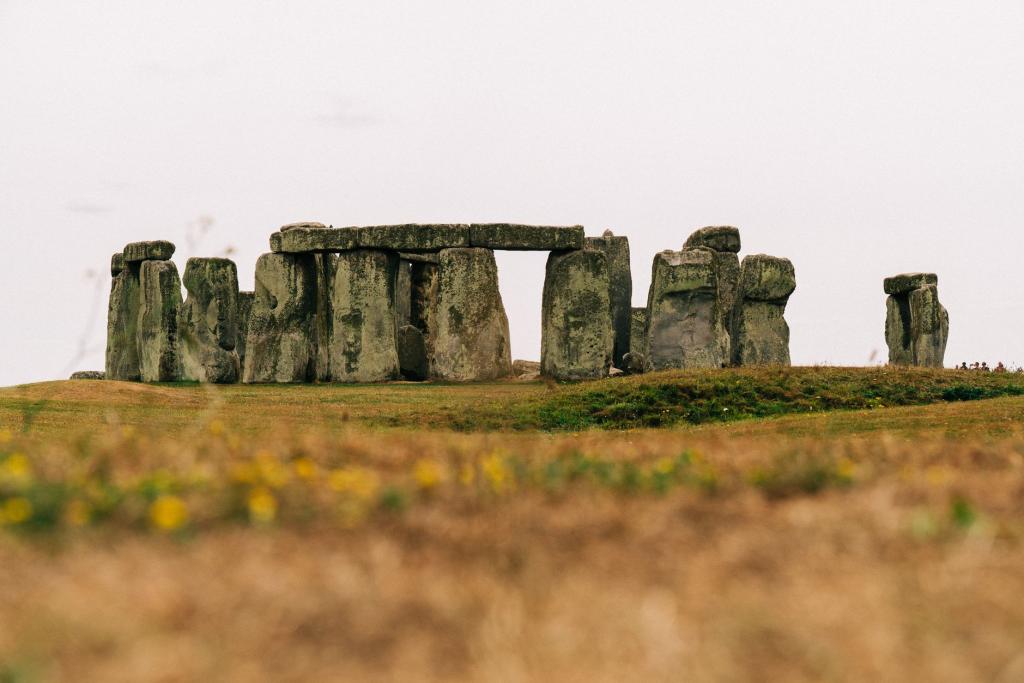
The Tallest Stone Row still standing in Britain has a new origin story, and it is not the one archaeologists expected. For years, researchers assumed the three giant gritstone pillars known as the Devil's Arrows came from the closest plausible quarry near Boroughbridge. According to a study published in the Proceedings of the Royal Society A, they did not. The builders hauled each stone across at least eighteen kilometres of North Yorkshire countryside, deliberately walking past nearer rock to get the material they wanted.
The stones themselves are hard to miss. Three unevenly spaced megaliths run across 174 metres of field on the western outskirts of Boroughbridge, aligned roughly north-northwest to south-southeast, in one of the few lowland stone alignments in Britain. The tallest rises about seven metres, roughly 23 feet, above the surrounding landscape, and each surviving stone weighs around 25 tonnes. Archaeologists believe the Tallest Stone Row was raised in the Late Neolithic or Early Bronze Age, possibly around 2000 BCE, which would make the monument roughly four thousand years old.
How a Roll of Sticky Tape Cracked the Case
The breakthrough came from a technique designed to be as gentle as possible. A team led by researchers at Curtin University in Australia, working with the University of York, pressed adhesive tape onto the surfaces of the stones to collect tiny mineral grains without cutting or drilling into the protected monuments. The team then used detrital zircon and apatite uranium-lead dating on the collected grains and matched the mineral fingerprints to the Millstone Grit of the Pennine Basin, exposed at Brimham Rocks, a National Trust landscape about eighteen kilometres west of the monument. According to Scienmag's report on the findings, the result ruled out the long-favoured nearer candidate, Plumpton Rocks, and also ruled out natural explanations such as glacial movement. The stones were moved by people, on purpose.
The researchers told Phys.org that the analysis definitively matched the Devil's Arrows to the Brimham outcrops and showed that the builders chose their quarry for reasons beyond convenience. Historical accounts suggest the alignment once included a fourth stone, and the team found that a medieval cross in nearby Aldborough, the Battle Cross Monument, carries zircon ages compatible with the Arrows alongside matching dimensions, which supports antiquarian reports that a missing megalith was broken up and reused. Even in stone, the monument's biography keeps growing.
Why Meaning Beat Convenience
The most striking finding is not the distance but the deliberateness. Brimham Rocks is a geomorphologically striking upland landscape of wind-sculpted gritstone, an archaeologically rich area the team describes as carrying cultural weight. Rather than taking the nearest convenient boulders, the builders quarried their material in a far more distant and challenging location. For the Tallest Stone Row, the message is clear: meaning beat convenience. The paper argues that megalithic stone selection was often relational rather than logistical, a pattern the authors say extends what has been seen at Stonehenge, in Orkney and at Irish passage tombs.
That framing changes how the monument reads. Moving 25-tonne blocks across kilometres of rugged terrain with Neolithic technology demanded careful planning, organised labour and engineering skill, and the choice of a distant source suggests the people behind the project valued the place their stone came from as much as the stone itself. The researchers describe the decision as speaking volumes about the values and beliefs of the communities behind one of the most ambitious building projects of Neolithic and Early Bronze Age Britain.
The work is not finished. The team plans to apply the same low-impact tape technique to other standing stones whose origins remain unknown, and targeted excavations are planned at both the monument and its proposed source. For anyone who wants to walk the story, both ends are visitable: Brimham Rocks is a National Trust site famous for its sculpted formations, while the Arrows still stand in their field outside Boroughbridge. More finds from Egypt to the Mediterranean are rewriting ancient timelines this month, as reported in coverage of the world's oldest shipwreck off Turkey and the Dakhla pyramid tomb discovery.
Comments 0
No comments yet. Be the first to share your thoughts!
Leave a comment
Share your thoughts. Your email will not be published.