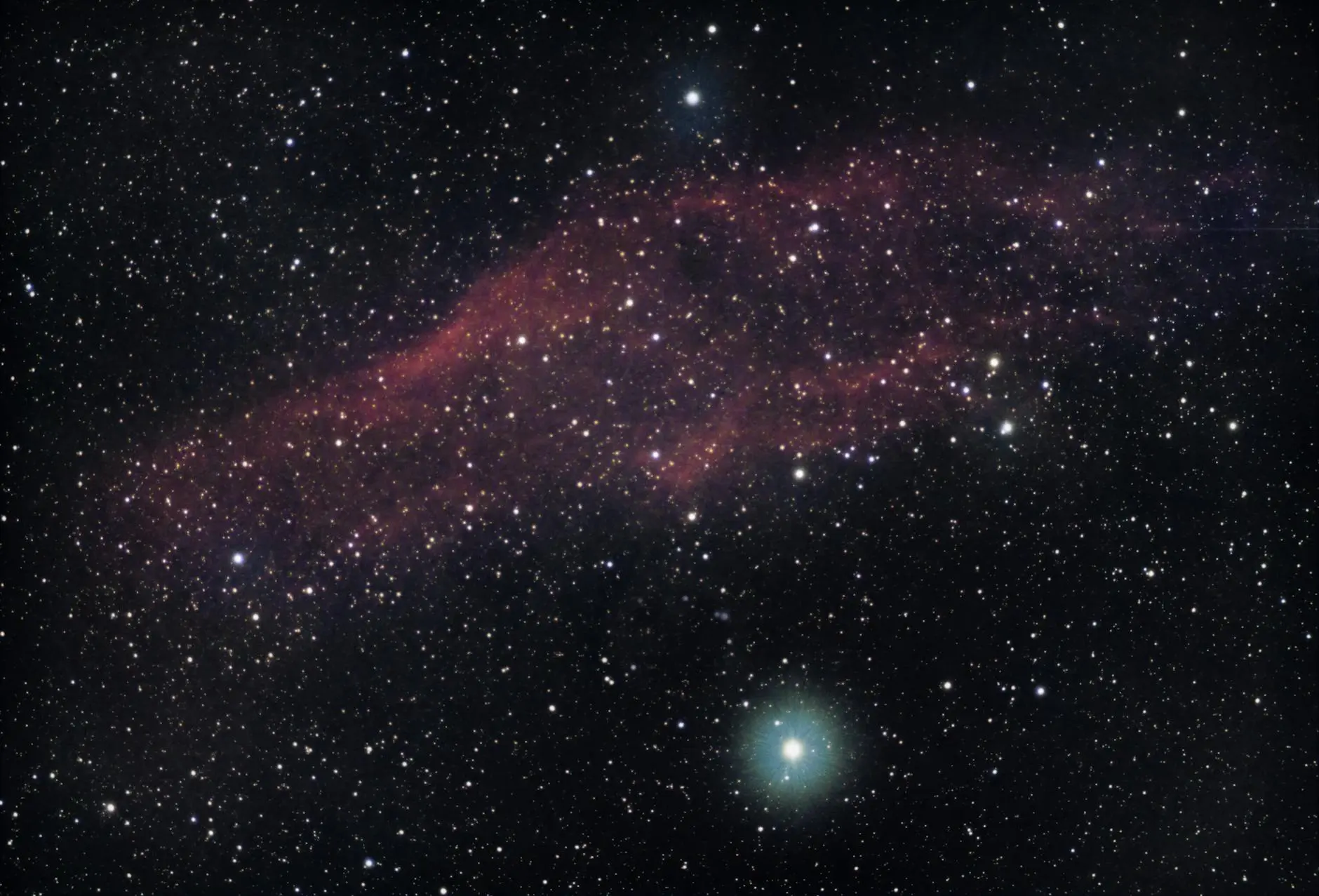
The field of astronomy has been revolutionized by recent **black hole discoveries**, shedding new light on some of the universe's most enigmatic and powerful phenomena. In the past decade alone, scientists have uncovered groundbreaking insights into the nature, formation, and behavior of these cosmic behemoths, thanks to advanced telescopes and innovative observational techniques. From the first-ever image of a black hole's event horizon to the detection of gravitational waves from merging black holes, **black hole discoveries** continue to reshape our understanding of the cosmos. According to researchers at NASA, these findings not only confirm key predictions of Einstein's theory of general relativity but also open new avenues for exploring the fundamental laws of physics.
The Dawn of Black Hole Astronomy
The concept of black holes has captivated scientists and the public alike since their theoretical prediction by Albert Einstein in 1915. However, it wasn't until the 1960s that observational evidence began to emerge, marking the beginning of modern black hole research. The first compelling **black hole discoveries** came from observations of X-ray binaries, such as Cygnus X-1, where a compact object with a mass exceeding 15 times that of the Sun was inferred to be a black hole. This discovery, made in 1971, laid the foundation for decades of subsequent research.
In the 1990s, the Hubble Space Telescope played a pivotal role in identifying supermassive black holes at the centers of galaxies. By studying the motion of stars near galactic nuclei, astronomers confirmed the presence of these massive objects, with some weighing billions of times more than the Sun. A landmark study in 1994 revealed that the galaxy M87 harbors a black hole with a mass of approximately 2.4 billion solar masses, a finding that has since been refined to 6.5 billion solar masses thanks to the Event Horizon Telescope (EHT) collaboration. These early **black hole discoveries** established black holes as fundamental components of cosmic structure.
Gravitational Waves and a New Era of Discovery
The most transformative **black hole discoveries** of the 21st century have come from the field of gravitational wave astronomy. In 2015, the Laser Interferometer Gravitational-Wave Observatory (LIGO) made the first direct detection of gravitational waves, ripples in spacetime caused by the merger of two black holes. This groundbreaking observation, announced in 2016, confirmed a major prediction of Einstein's general relativity and opened an entirely new window onto the universe. The two black holes, each with masses around 30 times that of the Sun, merged to form a single black hole with 49 solar masses, releasing an enormous amount of energy in the form of gravitational waves.
Since then, LIGO and its European counterpart Virgo have detected numerous black hole mergers, providing unprecedented insights into their populations and properties. According to researchers at the Max Planck Institute for Gravitational Physics, these detections have revealed that black holes with masses between 5 and 50 times that of the Sun are more common than previously thought. A particularly notable discovery in 2020 involved the merger of two black holes with masses 66 and 85 times that of the Sun, challenging existing models of black hole formation. Such findings highlight the ongoing evolution of our understanding of these cosmic giants through **black hole discoveries**.
The Event Horizon Telescope: Imaging the Unseeable
In 2019, the Event Horizon Telescope (EHT) collaboration achieved a milestone in **black hole discoveries** by capturing the first-ever image of a black hole's event horizon. The target was the supermassive black hole at the center of the galaxy M87, located 55 million light-years from Earth. The image, a fuzzy ring of light surrounding a dark central region, provided direct visual evidence of the black hole's existence and confirmed predictions about the appearance of its event horizon. This achievement, made possible by combining data from eight radio telescopes across the globe, was hailed as a triumph of international collaboration and technological innovation.
The EHT's success has paved the way for future **black hole discoveries**, as the collaboration continues to refine its techniques and expand its network of telescopes. In 2021, the EHT released new observations of the black hole in M87, revealing more details about its magnetic field and accretion disk. Meanwhile, efforts are underway to image the supermassive black hole at the center of our own galaxy, Sagittarius A*, which has a mass of approximately 4 million solar distances. According to researchers at the Harvard-Smithsonian Center for Astrophysics, these observations will provide critical tests of general relativity in extreme gravitational environments.
Black Holes and Galaxy Evolution
Recent **black hole discoveries** have also deepened the connection between black holes and the evolution of galaxies. Observations from the Hubble Space Telescope and the Chandra X-ray Observatory have revealed that supermassive black holes play a crucial role in regulating star formation in their host galaxies. In 2020, a study published in *Nature* showed that the black hole at the center of the galaxy NGC 6240, which is undergoing a merger, is responsible for suppressing star formation by heating and expelling gas. This finding supports the theory that black holes can act as "cosmic regulators," influencing the growth and structure of galaxies over billions of years.
Another significant discovery came from the observation of a "runaway" black hole in 2023, as reported by NASA. The black hole, estimated to be 3 million times more massive than the Sun, was found to be moving through space at speeds of up to 5 million miles per hour, leaving a trail of newborn stars in its wake. According to researchers, this phenomenon may be the result of a three-body gravitational interaction involving the black hole and two supermassive black holes in a merging galaxy. Such observations highlight the dynamic and often violent role of black holes in shaping the cosmos.
Theoretical Advances and Future Prospects
Theoretical physics has also seen significant progress in recent years, driven by new **black hole discoveries**. In 2021, a team of researchers proposed a new model for intermediate-mass black holes, objects with masses between 100 and 100,000 times that of the Sun. These black holes, which have long been elusive, may form from the collapse of massive stars in dense star clusters or through the mergers of smaller black holes. The discovery of a candidate intermediate-mass black hole in the globular cluster 47 Tucanae in 2022 provides observational support for this theory, bridging the gap between stellar-mass and supermassive black holes.
Looking ahead, future **black hole discoveries** are expected to come from next-generation observatories such as the James Webb Space Telescope (JWST) and the Square Kilometre Array (SKA). The JWST, launched in 2021, is already probing the early universe to search for seeds of supermassive black holes that existed just a few hundred million years after the Big Bang. Meanwhile, the SKA, scheduled to begin operations in the late 2020s, will provide unprecedented sensitivity to radio waves, enabling the detection of faint black hole accretion disks and gravitational wave sources. According to researchers at the European Southern Observatory, these instruments will revolutionize our understanding of black hole formation and evolution.
Black Holes and the Search for New Physics
Black holes also serve as natural laboratories for testing the limits of modern physics. One of the most intriguing **black hole discoveries** in recent years is the observation of "echoes" in the X-ray emissions of black hole binaries, which may hint at quantum effects near the event horizon. In 2023, a study published in *Science* reported on such echoes in the system MAXI J1820+070, suggesting that spacetime at the quantum scale may exhibit properties not predicted by general relativity. If confirmed, these findings could provide evidence for theories beyond Einstein's framework, such as loop quantum gravity or string theory.
Another area of active research is the "black hole information paradox," a longstanding problem in theoretical physics. The paradox arises from the conflict between quantum mechanics and general relativity over whether information that falls into a black hole is lost or preserved. Recent **black hole discoveries**, such as the detection of "quantum hair" in black hole mergers, offer new insights into this problem. According to researchers at the Perimeter Institute for Theoretical Physics, these findings suggest that black holes may retain subtle information about their past, potentially resolving the paradox in favor of information preservation.
Conclusion: The Unending Quest for Knowledge
The past decade has been a golden age for **black hole discoveries**, transforming these once-theoretical objects into well-studied phenomena that continue to challenge and expand our understanding of the universe. From the detection of gravitational waves to the imaging of event horizons, each new finding has brought us closer to unraveling the mysteries of black holes and their role in cosmic evolution. As technology advances and new observatories come online, the pace of discovery is only expected to accelerate, offering even deeper insights into these enigmatic cosmic giants.
According to researchers at NASA, the study of black holes is not just an academic pursuit but a journey to understand the fundamental laws that govern the universe. Whether probing the edges of spacetime or the origins of galaxies, **black hole discoveries** remind us of the boundless curiosity that drives scientific exploration. As we continue to push the boundaries of knowledge, black holes will undoubtedly remain at the forefront of astronomy, inspiring awe and wonder for generations to come.
For more information on recent **black hole discoveries**, readers can explore the following resources:
Comments 0
No comments yet. Be the first to share your thoughts!
Leave a comment
Share your thoughts. Your email will not be published.