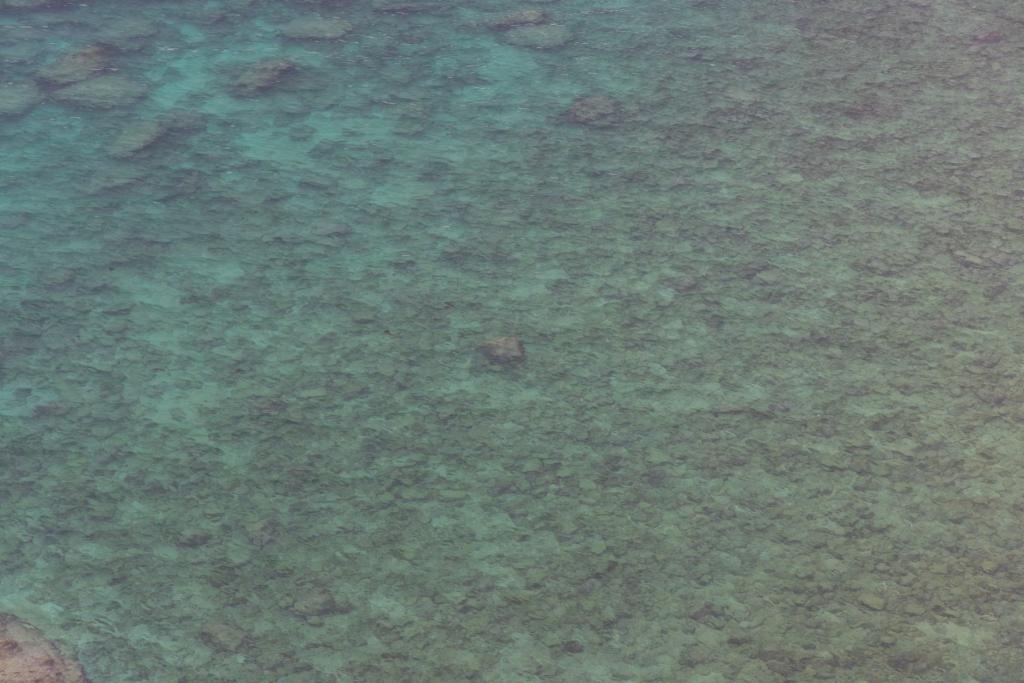
Low-lying tropical atolls could keep pace with rising seas through the end of the century without massive concrete defenses, according to new research published in Science Advances. The formula is a two-part rewilding recipe: eradicate invasive rats so seabirds return, and replace coconut plantations with native vegetation.
The international study, led by marine scientists at Lancaster University, combined ecological datasets from 28 atoll islands across the Seychelles, the Chagos Archipelago, and Tetiaroa in French Polynesia. It is one of the most ambitious tests to date of whether atoll restoration can buy these islands real time against the rising ocean.
The researchers estimated how much energy seabirds carry back from the open ocean to each island and measured how their nutrient-rich droppings ripple through coral reefs, sediment, and soil.
The headline finding: on islands with healthy seabird populations, coral reefs grow far faster and produce far more of the sediment that physically builds islands. For a small island of about 14 hectares, seabird-fertilized reefs generate roughly 170 extra cubic meters of new sediment every year. And native vegetation locks that sediment down with root systems whose fine-root length runs more than four times higher than in degraded areas.
"Replacing old, abandoned coconut palm tree plantations with natural vegetation, and restoring seabird populations by eradicating invasive rats, could be key to the survival of these tiny low-lying islands," said lead author Nick Graham of Lancaster University, as reported by phys.org. The team's modeling, published in the peer-reviewed paper, suggests these combined effects could let atolls grow fast enough to match projected sea-level rise under two degrees of warming.
Seabirds turn reefs into island-building engines
Reef growth matters because a fast-growing reef breaks waves before they can chew away island coastlines. The researchers calculated a reef accretion potential for each island and found that reefs around rat-free, bird-rich islands grew 1.8 times faster on lagoonal reefs and 2.5 times faster on ocean-facing reefs than reefs around rat-infested islands.
Co-author Casey Benkwitt of The Nature Conservancy said those faster rates would be sufficient to closely keep up with predicted sea-level rises through the end of the century under a two-degree warming scenario, while reefs without seabird populations would have only limited ability to do the same. The nutrient-enhanced corals also calcified more quickly, forming more hard reef substrate.
The same nutrient flows supercharge sediment production. Seabird-fertilized reefs supported larger parrotfish populations and other sediment-producing organisms, pushing sediment production rates between 2.3 and 2.8 times higher than around bird-free islands. Co-author Chris Perry of the University of Exeter said the uplift was substantial: for a 14-hectare island, it works out to roughly 6,000 extra cubic feet of new sediment annually, the raw material islands need to maintain or grow.
Roots that hold the whole system together
Vegetation is the second half of the equation. Coconut plantations now dominate an estimated 60 percent of Pacific atoll forests, and their shallow root systems do little to bind soil. Native plants and trees, with long dense roots, lock sediment in place and stop it from washing back out to sea. Other recent work on this beat has shown forests rebuilding from scratch in unexpected places, and the atoll findings fit the same pattern: given half a chance, native vegetation does heavy engineering for free.
The team estimated that fine root length runs 4.6 times higher in areas of dense native vegetation than in areas with little of it, a large increase in soil-binding potential. And when seabirds are present, those root systems get a further boost, because nutrients from droppings feed plant growth. Everything on an atoll, the study suggests, is wired together into one living system.
"These islands provide a model example of how restoration and rewilding can help ecosystems adapt to climate change," said co-author Yadvinder Malhi, director of the Leverhulme Center for Nature Recovery at the University of Oxford, in a statement on the findings.
What this means for island nations
For countries like Seychelles, where many atolls are uninhabited or sparsely populated and costly engineering fixes are impractical, the findings land as something close to a practical playbook for atoll restoration. Co-author Jennifer Appoo of the University of the Seychelles said the results show island restoration can enhance resilience, particularly where expensive engineering solutions are unfeasible or inappropriate.
The damage took centuries to accumulate. Rats arrived as stowaways on ships and decimated seabird colonies, while native forests were cleared for coconut cash crops or development. Undoing that history, through rat eradication and native replanting, is labor-intensive, but it is far cheaper than seawalls and brings biodiversity benefits alongside climate resilience. It is a very different strategy from the hard-engineering instincts that dominate coastal adaptation talk, and it is one island nations can run largely on their own terms.
There are limits. The study models processes, not guarantees: storms, heat waves, and faster-than-expected sea-level rise could still overwhelm recovering islands. And even the most diligent rewilding cannot substitute for cutting the emissions driving the warming. But for the first time, researchers have quantified exactly how much island-building power returns when seabirds and native plants come back, and the numbers are large enough to matter for the people living on the world's lowest land. New research on mangrove forests points the same way: protecting natural systems buys coastlines real, measurable time.
Comments 0
No comments yet. Be the first to share your thoughts!
Leave a comment
Share your thoughts. Your email will not be published.