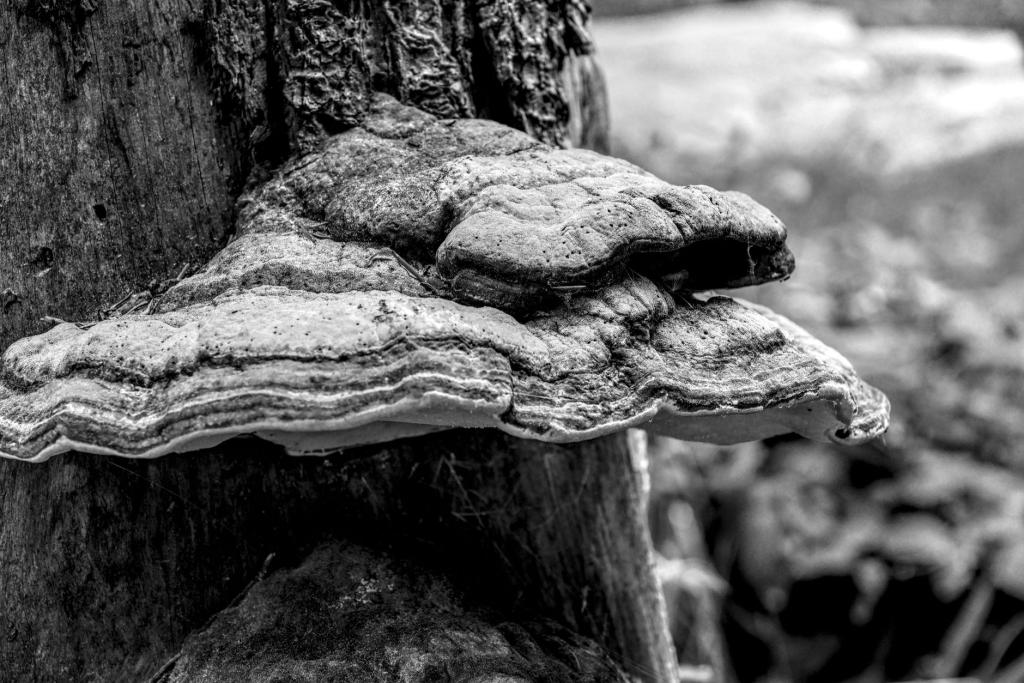
Deep in the forests of Yunnan, in southwestern China, scientists have found a giant fungus so enormous that it redraws the known size limits of its entire phylum. Whitish, vertical fruiting bodies — called stromata — rise about 20 inches above the forest floor and can weigh up to five pounds apiece. The specimens were discovered growing on the woody roots of Chinese cork oak during fieldwork by an international team of researchers from China, Thailand, and Mexico. Detailed study of their structure and DNA revealed something even more startling than their size: the organism represents a brand-new genus and, far more rarely, a whole new family of life called Dianjunaceae within the phylum Ascomycota.
The researchers named the species Dianjunus rex — "D-rex" for short — for Dian, an ancient kingdom in what is now Yunnan, with rex the Latin word for king. The name fits: its stromata are the largest fruiting structures ever documented anywhere in Ascomycota, dwarfing everything previously known in the group. A molecular-clock analysis of its genome, measured against hundreds of fungi with established evolutionary ages, suggests the Dianjunaceae family branched off from its relatives around 65 million years ago — a date carrying an extraordinary coincidence at its heart.
A New Family, Not Just a New Species
New fungal species are described by the thousands every year, so a single new species would barely make news. An entirely new family is an event of a different order, signaling a major branch of life that has been hiding in plain sight. The distinction matters because Ascomycota, the group gaining this family, is the largest phylum of fungi, with more than 64,000 described species. The study confirms the new giant's stromata are the biggest fruiting structures on record in that vast group. The previous record-holders reached only 20 to 30 centimeters, around half its height. The giant fungus grows no true mushrooms; it releases spores from tiny sack-like structures inside or on the surface of the fruiting bodies. The closest known relative is Graphostroma platystoma, a fungus of dead hardwood in the Northern Hemisphere that forms its own family on its own.
Dr. Indunil C. Senanayake, an associate professor at the Germplasm Bank of Wild Species of the Kunming Institute of Botany in China and the corresponding author of the study, said: "This remarkable species represents a new fungal family, Dianjunaceae, and provides a rare window into the evolution of extreme fungal body forms."
Born in the Wake of the Dinosaur Extinction
The genome work produced a second surprise. The molecular clock places the origin of Dianjunaceae at roughly 65 million years ago — about a million years after the Cretaceous-Paleogene mass extinction, the catastrophe famous for wiping out the dinosaurs and an estimated 75 percent of the planet's plant and animal species. Senanayake's team suggests the devastation itself may have opened the door: forests were suddenly strewn with vast quantities of dead plant material, and for wood-decomposing fungi, that disruption may have created entirely new ecological opportunities, according to the study. As for why the giant still grows so large today, the researchers suspect a towering fruiting body catches the wind better and scatters spores farther across dense forest — an advantage worth its heavy energy cost only where the payoff outweighs it.
From Fieldwork to a New Family
The discovery began with surveys across Yunnan's temperate coniferous forests and tropical rainforest, where the team spotted the pale stromata pushing up from oak roots. The scientists collected the fruiting bodies, grew their spores on culture media to study the fungus's growth forms, and sequenced its genome. Combining detailed morphology with multi-gene phylogeny and whole-genome data, they placed Dianjunaceae within the order Xylariales, as a distinct sister branch to the family Graphostromataceae. The findings were published in Frontiers in Fungal Biology, as reported by the Good News Network.
The team expects Yunnan's forests to hold more such surprises. "The discovery illustrates how much fungus biodiversity remains to be discovered in East Asian forests," Senanayake said. The region's varied habitats and stable climate promote fungal diversification, the researchers note, yet that diversity has long been underestimated because fruiting bodies are seasonal, often cryptic, and hard to reach in the field. For readers, the giant is a reminder that the tree of life still holds entire branches nobody knew existed — and some of them tower over the forest floor. It is the latest in a run of plant-world surprises, alongside the giant waterlily spotted in an Instagram selfie and the duckweed that shrank into the world's tiniest flowering plant.
Comments 0
No comments yet. Be the first to share your thoughts!
Leave a comment
Share your thoughts. Your email will not be published.