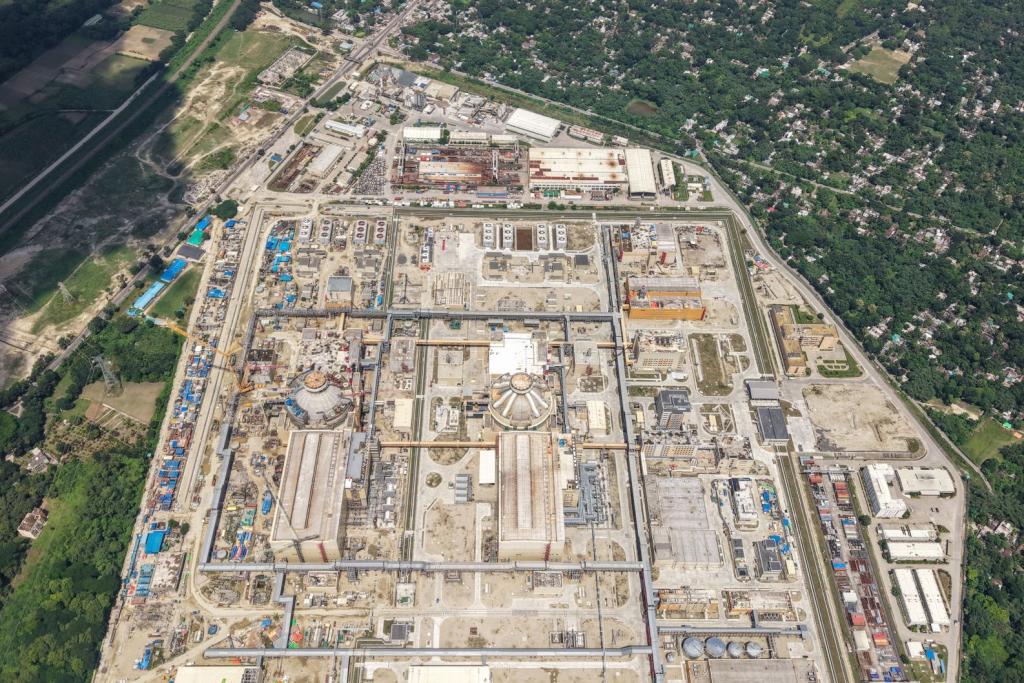
Bangladesh's First Nuclear Reactor has come alive: the country's debut atomic power unit achieved its first sustained chain reaction in early October, a milestone more than six decades in the making and the first of several stages before electricity reaches the national grid.
The first unit of the Rooppur Nuclear Power Plant in the country's Pabna district reached what engineers call first criticality on a Sunday afternoon, officials confirmed to local media. Reaching criticality means the reactor is now running a self-sustaining nuclear fission reaction, with neutron production sufficient to keep splitting uranium atoms and releasing heat.
It does not mean the plant is generating electricity yet. The next steps involve finishing safety and technical tests, gradually raising the reactor's power level, and preparing for trial generation and supply to the national grid, possibly before the year is out.
What reaching first criticality actually means
Inside a nuclear reactor, a controlled chain reaction splits uranium atoms through nuclear fission, releasing energy as heat. That heat turns water into steam, which drives turbines to produce electricity. First criticality is the moment the reaction becomes self-sustaining at a low, carefully watched power level.
During this initial phase, the core runs at a tiny fraction of its full thermal capacity so engineers can verify every instrument and control channel. Power will be raised gradually through a series of regulated stages, each requiring separate regulatory approval, before any electricity flows to homes.
Md Anwar Hossain, secretary of the Ministry of Science and Technology, told The Business Standard that the reaction began smoothly in the afternoon. "By the grace of Allah, the parameters were within the desired ranges, and the reactor was very stable," Hossain said. Russian specialists, Bangladeshi experts and other technical specialists observed the process and assessed the reactor's performance, according to the same report.
Officials say Bangladesh's First Nuclear Reactor will now move through the remaining commissioning stages at low power before any grid connection is attempted.A six-decade road to switch-on
The journey to the country's first nuclear reactor began in 1961, when Bangladesh, then East Pakistan, first explored atomic energy. The foundation stone for the current plant was laid in 2013, main construction started in late 2017, and the operating license for the first unit was issued in the spring, with fuel loading completed in May.
Getting to criticality took longer than planned. The reaction was originally expected in September, but testing revealed a defect in high-pressure safety valves, and regulators held back approval until the valves passed two rounds of testing. The national atomic regulator granted the next-stage license just days before the reactor went critical, a reminder that nuclear schedules move at the speed of safety checks.
The facility is being built with Russian technology supplied by Rosatom, the state-owned atomic energy company, and uses a modern pressurized-water design. The plant will have two generating units, each able to produce about twelve hundred megawatts, for a combined capacity of roughly twenty-four hundred megawatts. Officials hope the first unit can send around three hundred megawatts of trial power to the grid in December, though no firm date has been set.
What it means for Bangladesh's grid
The project is the largest single infrastructure undertaking in the country's history, with a price tag of nearly thirteen billion dollars. Around nine-tenths of the cost is financed through a Russian loan, and currency depreciation has added billions more to the final bill. The project deadline has already been pushed back multiple times.
When Bangladesh's First Nuclear Reactor and its sister unit are both running, nuclear power could cover a meaningful share of a fast-growing economy's electricity needs, easing reliance on imported fuels. It also places Bangladesh among roughly three dozen countries that generate electricity from nuclear fission, a club most of its neighbors in South Asia have already joined.
The timing is notable: while some European countries, including Germany, have shut down their last reactors in recent years, others across Asia and the Middle East are building new ones. Bangladesh is betting that steady, around-the-clock nuclear power is worth the cost and the decades-long commitment, even as debates over waste, safety, and financing continue worldwide.
Related coverage: Doomsday Glacier is melting faster than feared, Phone Batteries Are About to Get a Serious Upgrade.
Comments 0
No comments yet. Be the first to share your thoughts!
Leave a comment
Share your thoughts. Your email will not be published.