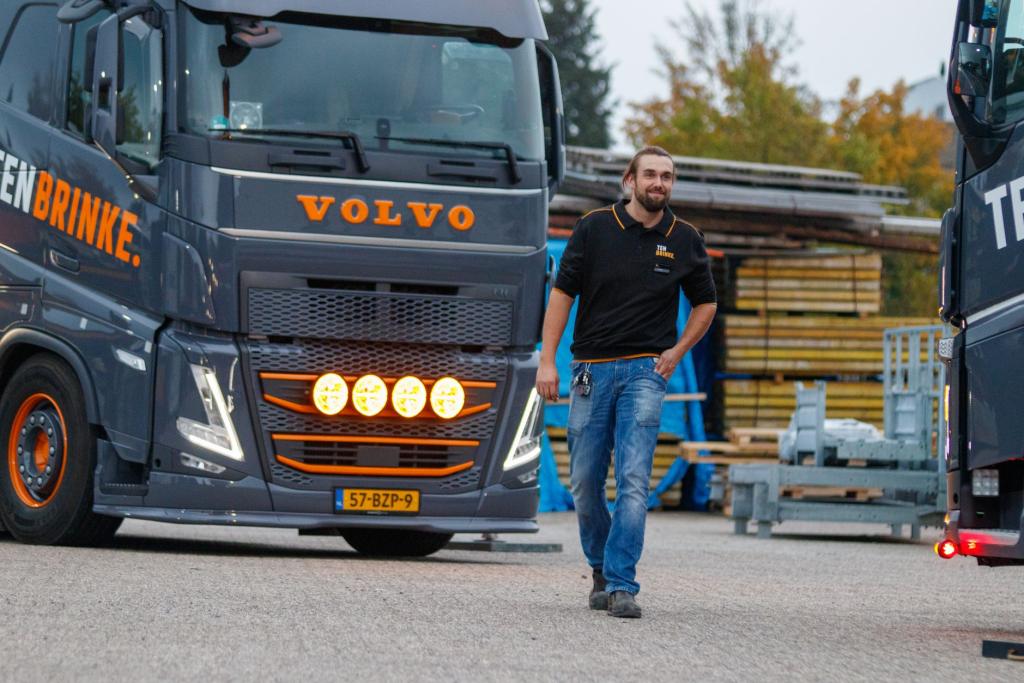
Antimatter has taken its first ride in a truck. In March 2026, researchers at CERN loaded 92 antiprotons into a purpose-built mobile trap, hoisted the trap onto a truck, and drove it 7.5 kilometers around the laboratory campus in about 24 minutes, the first successful antimatter transport on the road. Every one of the antiprotons survived the trip. The team kept the particles confined for more than a month afterward, and the results are now published in the journal Nature, as reported by the BASE collaboration.
The experiment was run by the BASE collaboration, which studies the fundamental symmetry between matter and antimatter at CERN's Antimatter Factory in Geneva. The Antimatter Factory is the only facility in the world that can produce, store, and study low-energy antiprotons. BASE, led by Professor Stefan Ulmer of Heinrich Heine University Düsseldorf together with Christian Smorra, designed its mobile device, BASE-STEP, to carry antimatter beyond the CERN site for the first time.
Antimatter is difficult to handle. An antiproton that touches ordinary matter annihilates in a flash of energy, so the particles must be suspended in an ultra-high vacuum inside a Penning trap, held in place by electric and magnetic fields. Before the road test, the team sealed the 92 antiprotons inside BASE-STEP and completed two laps around the CERN Meyrin campus, reaching a top speed of 40.8 kilometers per hour in ordinary traffic. Detectors monitored the trapped particles minute by minute during the drive.
Why drive antimatter off campus
The reason for the road test is measurement noise. BASE measures properties of protons and antiprotons with high precision: the intrinsic magnetic moment of the proton is known to 0.3 parts per billion, and that of the antiproton to 1.6 parts per billion. So far, comparisons of the two particles have found no difference within the achievable accuracy.
The problem is that the Antimatter Factory itself limits further progress. The facility's operation creates magnetic-field fluctuations that disturb the measuring equipment. A quieter location outside CERN could improve precision by a factor of at least a hundred, which would make the experiment sensitive to differences no instrument has ever detected. Any difference in mass or magnetic moment between protons and antiprotons could point toward an explanation for the matter-antimatter asymmetry of the universe, the puzzle of why the Big Bang left the cosmos made almost entirely of matter.
That is what makes antimatter transport worth attempting. If antiprotons can survive a truck ride across campus, they can in principle be delivered to laboratories far away, opening up precision measurements that cannot be done at CERN.
A month in a vacuum better than deep space
The road test itself took roughly half an hour door to door, including loading and unloading. Once the trap was back on the BASE-STEP beamline and reconnected to power and cooling, the experiment had run autonomously for 2.72 hours. The team then kept the antiprotons stored and manipulated them in a controlled manner for more than a month, the longest anyone has ever stored antimatter in a mobile vessel.
The hardest part was the vacuum. Any collision with a stray gas molecule can destroy an antiproton, so long-term storage demands a vacuum better than the one the team designed for. According to the team, BASE-STEP achieved a vacuum better than 2.2 × 10⁻¹⁸ millibar throughout the storage period, far beyond its design target of 1 × 10-16 millibar. That set a world record for an open trap system into which antiprotons can be injected and later extracted. Team members described it as the best vacuum on Earth, better than the pressure in interstellar space.
The experiment followed a rehearsal with ordinary protons in October 2024, which showed the trap could survive the journey. Lead author Marcel Leonhardt, a doctoral researcher at HHU, wrote in the Nature paper that the team was able to store and manipulate the antimatter in a controlled manner for more than a month in total.
Next stop: a lab in Germany
The team already has its next destination picked out: a high-precision laboratory being built by Ulmer's group at Heinrich Heine University Düsseldorf. The drive from Geneva would take around ten hours, a far more demanding journey than the campus loop. The researchers say their next goal is to make the trap autonomous enough to run that long without external support. Science X's report on the experiment describes the March drive as a dress rehearsal for the longer journey.
Christian Smorra, the study's corresponding author, told Science X that the group had completed a successful dress rehearsal with the March transport and demonstrated that the concept works. The long-term aim is to compare protons and antiprotons in the quiet German laboratory at a precision that could finally reveal whether the two particles differ at all.
Other recent science stories on GenZ NewZ include NASA's Roman telescope gaining 12 extra years of observations, the first new wildcat species described in a century, and a 600-year-old sealed tomb excavated at Chan Chan.
If antimatter can one day be shipped the way laboratories now order equipment and samples, fundamental physics experiments would no longer be tied to a single facility. The truck ride at CERN was short, but it was the first step toward making antimatter a deliverable material for science, as reported in Nature.
Comments 0
No comments yet. Be the first to share your thoughts!
Leave a comment
Share your thoughts. Your email will not be published.