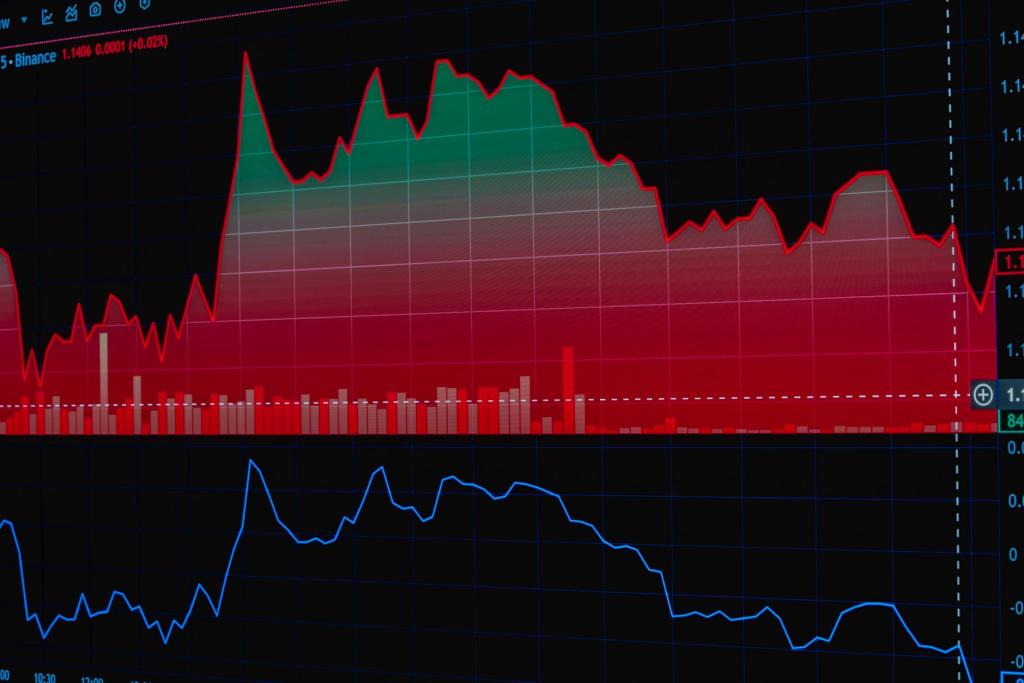
On 15 October 2026, Wall Street abruptly stopped treating the artificial intelligence boom as an equity story and started pricing it as a credit story. The cost of insuring CoreWeave's debt against default through a five-year credit default swap spiked above 1,140 basis points in intraday trading, the highest level ever recorded for the AI cloud company, according to ABC Money. At that level, traders were effectively betting on roughly a 60 percent chance of a CoreWeave Default within five years, nearly double the roughly 30 percent implied chance priced a year earlier, while technology stocks shed about a trillion dollars of value in a single session.
A credit default swap is simply insurance on a borrower's debt. If you own a bond and worry the company might not pay you back, you buy a swap from someone willing to cover the loss, and you pay them an annual premium measured in basis points. Think of it the way renters think about rental insurance: the riskier the neighborhood feels, the higher the premium. When the premium for a company crosses the 1,000-basis-point line, credit professionals call the situation distressed, which means the market has started to treat default as a plausible outcome rather than a remote one. Swaps span single-name corporate debt on a vast scale, so when the price moves this far this fast, debt managers everywhere pay attention.
The repricing was not confined to one balance sheet. Oracle's five-year default insurance hit a record 288 basis points that same day, and SoftBank's reached 424 basis points, The Inference reported, drawing on S&P Global Market Intelligence and LSEG data. CoreWeave's protection settled near 1,038 basis points after the intraday peak, running about four times Oracle's record reading. The move was not a rates story either: the ten-year US Treasury yield barely moved across the session, which tells you the widening was about company and sector credit, not a broad shift in government borrowing costs.
How the debt piled up this fast
The anxiety has a long runway. Companies have borrowed roughly 625 billion dollars for data centers and AI over two years, much of it through leveraged structures built by fast-growing "neo-cloud" firms that rent out GPU computing power. CoreWeave's own filings explain why traders flinched: capital spending has exceeded revenue in every quarter since early 2024, and in the second quarter of 2026 the company reported about two and a half billion dollars of revenue against nearly six and a half billion in capital spending, with free cash flow working out to roughly minus five point seven billion dollars. The company's 2031 bonds now yield above fifteen percent, the kind of coupon lenders demand when they see a real chance of not getting repaid.
The freshest print came from a smaller name that paid the market's new price in public. AI cloud startup Volta sold a five-billion-dollar leveraged loan on 15 October 2026 at ninety-five cents on the dollar with a yield above eleven percent, reported by The Inference, well below the terms JPMorgan and Goldman Sachs had pitched a week earlier. Buyers also extracted a penalty if the loan is repaid early and a rate that steps up if Volta is ever rated. Volta's equity cushion was three hundred million dollars against five billion of debt, and even with a signed six-year compute agreement from AI lab Anthropic at a Norwegian site, the discount was severe. Every neo-cloud that borrows next will likely be priced off that sale. Gartner projects that more than eighty percent of neo-cloud companies may not remain independent by the end of the decade, citing cost pressure and thin differentiation.
The counterpoint: Nvidia and CoreWeave say the panic is wrong
Nvidia chief executive Jensen Huang pushed back hard on the selloff. Speaking at an event in Stockholm on 15 October 2026, Huang told reporters that "CoreWeave's strength is improving every day" and added "I'm optimistic. Their cost of capital is actually decreasing," according to Reuters reporting, and he said he saw no need for Nvidia to provide a financial backstop. That matters because Nvidia holds roughly a tenth of CoreWeave's equity, making it the cloud company's second-largest shareholder. CoreWeave chief executive Mike Intrator told staff the selloff was "irrational," pointing to a contract backlog topping a hundred billion dollars, about two-thirds of it with investment-grade customers including Microsoft and Meta. Deutsche Bank reiterated a buy rating on the stock, arguing the gap between what bond traders and equity analysts believe will eventually close in CoreWeave's favor.
The demand side of the story is genuinely strong. Anthropic's revenue reached nearly seventeen billion dollars in the quarter ahead of its public listing, a sign that customers are still paying real money for AI computing. Cathie Wood's ARK Invest even bought shares during the drop. And the underlying infrastructure buildout continues: venture funding keeps flowing into the supply chain, from Salience Labs raising money to wire AI data centers with light to Japan funding two GlobalFoundries chip fabs in New York. Axel Rudolph, chief technical analyst at IG Group, captured the market's actual question in one line: "The market is waking up to the fact that AI demand and a profitable business model are two very different things."
Why this matters if you are Gen Z
You do not need to own a bond to feel a credit repricing. If you have a 401k or any index fund, CoreWeave's slide and the broader tech selloff are already inside your portfolio, because AI names make up an outsized share of the major indexes. Higher borrowing costs for data centers also flow through to the prices you pay: cloud computing underpins streaming, gaming, and the AI features baked into your phone, and lenders charging double-digit yields do not absorb that cost quietly. Jobs are the third channel. When credit tightens for the startups building this infrastructure, hiring freezes follow, and entry-level tech and operations roles are usually the first to go.
There is a wider consumer angle too. Credit markets repricing risk in October 2026 landed alongside holiday spending forecasts showing Gen Z and millennials carrying half the load this year, which means households are already stretched just as corporate borrowing gets pricier. The next earnings season will show whether CoreWeave's backlog converts into the cash flow its debt stack requires, and whether the next GPU-backed loan prices at a tighter discount than Volta's sale did. The first genuine test of whether a CoreWeave Default could ripple into the broader market will be whether its 2031 bonds stabilize or keep sliding. Watch the swaps: they moved first this time, and they rarely move last.
Comments 0
No comments yet. Be the first to share your thoughts!
Leave a comment
Share your thoughts. Your email will not be published.