HiTHIUM has crossed a new Battery Storage Shipment Milestone: cumulative battery deliveries have passed 200GWh, according to a company release issued October 16, 2026. The announcement followed a milestone ceremony at the firm's Chongqing manufacturing base the day before, and it means the Chinese energy storage maker says it has roughly doubled its lifetime shipments in about a year — the release puts the 100GWh mark at August 2025.
Gigawatt-hours measure stored energy, and a figure on this scale implies enough battery capacity to supply a large grid many hours of backup power or to smooth out big swings in wind and solar output. HiTHIUM builds batteries and integrated systems for utilities and grid-scale projects, and it says it has shipped to customers worldwide since deliveries began at the end of 2021. The pace is the headline as much as the total: the release frames the climb from last August's figure to the new cumulative total as proof of accelerating large-scale manufacturing and delivery capability.
At the ceremony, co-founder and chief executive Jason Wang called the achievement a new starting point for the company's global development. He said the energy storage industry is no longer defined by competition between individual products, but by integrated capabilities across the entire value chain. He added that the milestone was not about growth alone but about scaling end-to-end capabilities. Looking ahead, the company says it will keep advancing its long-duration energy storage technology, upgrade its smart-manufacturing systems, and push toward the next block of a hundred gigawatt-hours in support of the green energy transition.
From fifth place to the top tier in three years
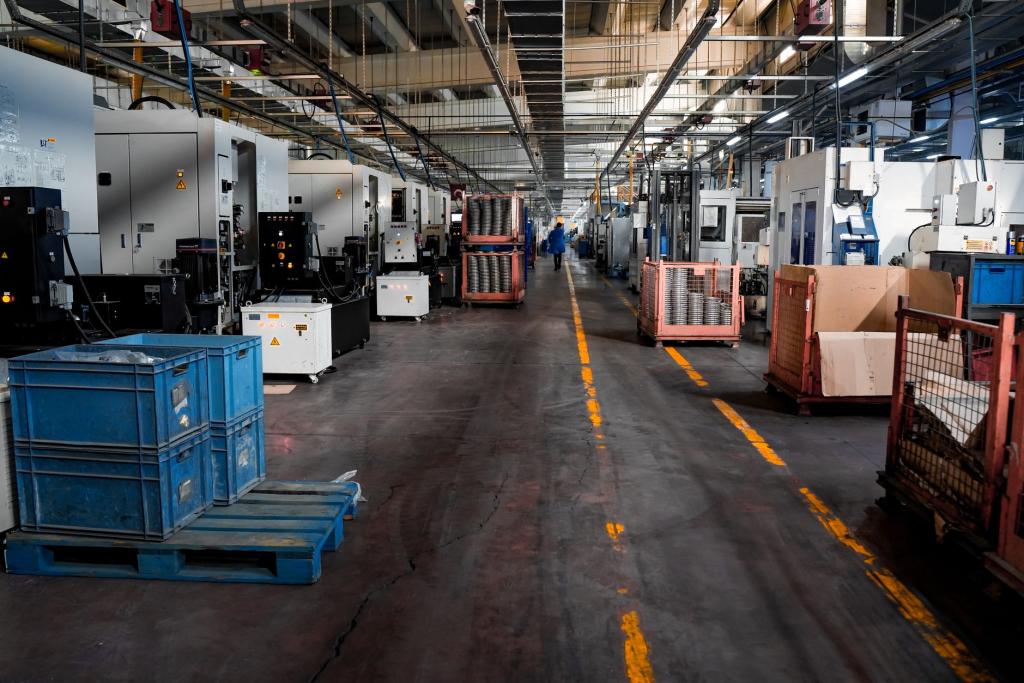
HiTHIUM was a newcomer when shipments started in late 2021, in a field dominated by established giants. Since then its global ranking has climbed from fifth in 2023 to third in 2024 and into the global top two in 2025 and the first half of 2026, according to the company's own tally. That rise rests on what the firm describes as three core strengths — cost leadership, service quality, and safety and reliability — and on the Chongqing hub, which the company calls the world's first energy storage battery lighthouse factory, a center for deep supply-chain collaboration that makes large-scale quality delivery possible.
The company's longer-term bet is on long-duration energy storage: systems built to discharge over many hours, from individual cells all the way up to grid-connected projects. Its leadership frames that combination of new energy and extended-duration storage as a reliable anchor for the power system of the future, and says a globalization strategy led from its Xiamen headquarters with local operations abroad will carry it there. Investment on this kind of manufacturing scale echoes what is happening in other strategic industries, from chip fabs backed by Japanese funding in New York to battery plants across Asia and Europe.
Why it matters for the power system you rely on
This Battery Storage Shipment Milestone is more than a company trophy; it is a signal about where battery costs and availability are heading. Power systems built on wind and solar need somewhere to bank energy when it is abundant and get it back when it is not, and grid-scale battery projects are doing much of that work today. When a major supplier roughly doubles its lifetime output within a year, the practical effect is more storage reaching the grid faster — and more competition among suppliers, which historically pushes prices down. You will feel that less as a headline and more as steadier local grids, more solar-plus-storage projects breaking ground, and energy storage showing up in more job listings.
The demand side is not standing still, either. AI computing is pushing electricity demand higher, and one recent funding round for optical switches built for AI data centers shows how fast the industry is hunting for efficiency on the other side of the meter. More batteries and smarter loads are two halves of the same answer.
A caveat is worth keeping in mind. All of these figures come from the company's own release and have not been independently audited, and industry coverage — including a report from market-intelligence firm IndexBox — has relayed them from that source rather than verifying them. Shipments are also not the same as deployed capacity: batteries can sit in warehouses or project pipelines before they ever touch a grid. Rivals publish their own milestones, so the real test is how many of these units end up installed and running reliably over decades.
Comments 0
No comments yet. Be the first to share your thoughts!
Leave a comment
Share your thoughts. Your email will not be published.