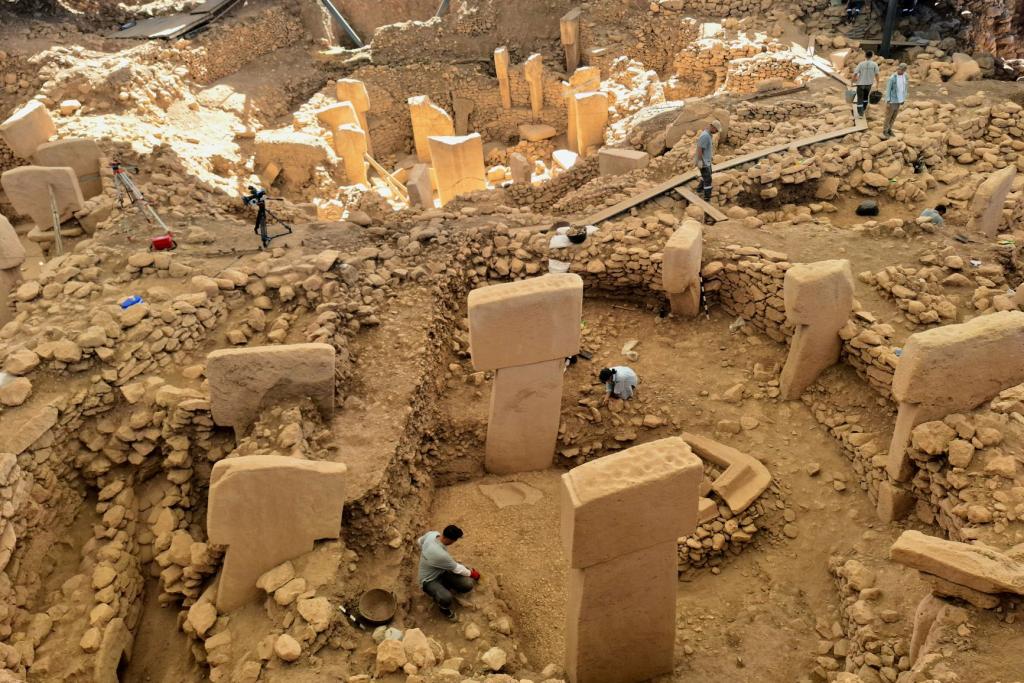
In the south of Uzbekistan, in a stretch of land that has been quiet for centuries, archaeologists are digging into the remains of a city that once stood at the edge of Sogdiana, the ancient Persian-speaking world of Central Asia. This season they hit something that matters: the Zoroastrian fire altar Uzbekistan archaeologists uncovered at Odirmon, and beside it, a decorated bone box carved with images of a deer and a juniper tree. The finds could reach back to the earliest days of Zoroastrianism, the fire-worshipping religion that ruled Persia long before Islam arrived.
The site is called Odirmon, in the Kamashi district of Uzbekistan's Kashkadarya province. Archaeologists have known about its defensive walls, roads, and rectangular citadel for years, but this is the first year the structures have been systematically excavated, in a project led by Sanjar Abdurakhimov of the Samarkand Archaeological Institute and Uzbekistan's Cultural Heritage Agency, according to reporting from La Brújula Verde. The fire altar the team uncovered sits in the north-eastern section of the site, roughly 70 centimeters high and 90 centimeters wide, with a floor paved in fired tile-like bricks.
The structure bears clear traces of fire, and the clay plaster on its walls was renewed over and over across the years. People do not replaster a fire altar for generations unless the fire inside it matters to them. The evidence of burning around the Zoroastrian fire altar may link it to the practice of Zoroastrianism, according to Archaeology Magazine, though the team has not precisely dated the structure yet.
The second find is an ossuary, a container for human bones, whose outer surface is decorated with motifs resembling a deer and a juniper tree. Conservators are still cleaning it, and more images are expected to emerge as the restoration continues. Heritage Daily, which covered the excavation, notes that the repeated layers of plaster on the Zoroastrian fire altar show it stayed in use for a long time and was repaired regularly by the settlement's inhabitants. Preliminary dating places Odirmon somewhere between the third century B.C. and the third century A.D., a six-hundred-year stretch in which the region passed from Greco-Bactrian to Kushan control.
Odirmon sits in what was once the eastern territory of Sogdiana, a civilization of merchants and oasis cities along the Silk Road. Its people lived between empires, and their rituals mixed Persian, Greek, and steppe traditions, which is what makes a discovery like this so interesting. The altar and the ossuary look like the material trace of a living religious tradition in one of the most culturally mixed regions of the ancient world, a place where belief had to make sense to people who traded with everyone.
A death ritual older than the Towers of Silence
Zoroastrianism is famous for how it treated the dead. Followers held the earth sacred, so burial would pollute it, and held fire sacred, so cremation was out of the question. Their solution was the dakhma, known in English as the Tower of Silence, where bodies were exposed to scavenger birds and the cleaned bones were gathered afterward into ossuaries. It is one of the most distinctive funeral customs ever devised, and the Odirmon finds suggest that the underlying logic, neither burial nor cremation, was already taking shape centuries before the towers existed.
The Smithsonian's research on Sogdian ossuaries explains the belief behind them: in accordance with Mazdean belief, Sogdians exposed their dead to carrion-eating birds and then collected the bones into ossuaries, often decorated with elaborate scenes. The Odirmon bone box, carved with deer and juniper imagery and found in a settlement whose altar room burned with ritual fire for generations, fits that lineage. Ancient burial customs keep turning up surprises, like the 4,000-year-old mystery of Britain's Devil's Arrows, which was only solved this month after researchers traced the stones 11 miles to their quarry.
What the team still cannot say
For all the excitement, the excavators are being careful. Neither the altar nor the ossuary has been precisely dated, and it is not yet clear how the two finds relate to each other or whether they were even in use at the same time. The full meaning of the deer and juniper images will only be worked out once the restoration is complete, and archaeology is usually a slow business: the headline arrives long before the certainty does. More from the Old World will follow as the dig continues.
Still, Odirmon is worth watching. Ancient religion is usually reconstructed from texts written by the powerful, while here the evidence is different: layers of replastered clay, tiles blackened by fire, a bone box carved with animals and trees. It is the material record of ordinary devotion, maintained by people whose names are lost. If the Zoroastrian fire altar Uzbekistan archaeologists are studying proves to be what they suspect, Odirmon could become one of the best windows archaeologists have into how the ancestors of the Zoroastrians actually buried their dead.
Comments 0
No comments yet. Be the first to share your thoughts!
Leave a comment
Share your thoughts. Your email will not be published.