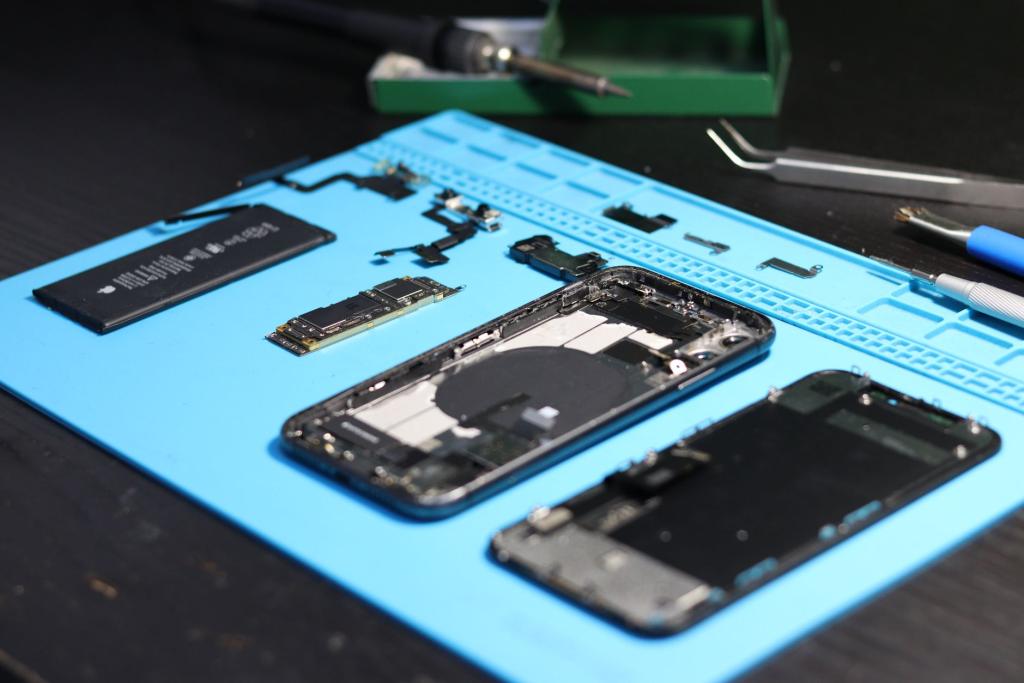
Your Next Phone Ships With a Repair Grade Most Brands Flunk — that is the verdict one year into the European Union's experiment of stamping every new smartphone and tablet with an A-to-E repairability score. Since June 2025, devices sold across the bloc have carried the grade on an energy-style label, giving shoppers a quick read on how fixable their next phone really is. But according to a new review by the campaign group Right to Repair Europe, the system is being undermined from the inside: more than four in five devices still fail to provide the repair information the law requires, while some of the worst offenders award themselves the top grade anyway.
The label is part of the EU's Ecodesign for Sustainable Products Regulation, the same rulebook that standardized phone chargers on USB-C. It rates devices on six measures — how deep the disassembly goes, the fasteners used, the tools required, spare-part availability, the length of operating-system updates, and the quality of repair information — and condenses them into a single letter, as detailed in GSMArena's glossary of the label. The regulation also requires at least five years of software updates after a model stops selling and seven years of spare-part availability, a baseline that consumer advocates argue is still too short.
The numbers behind the failing grade are stark. Of 2,334 smartphone records reviewed in the European Product Registry for Energy Labelling, only about eighteen percent actually listed a website where spare-part prices or repair instructions could be found. Roughly half of the entries left that field blank entirely, and about nineteen percent linked to a generic product or support page with no relevant repair content at all.
Makers grade their own homework
The uncomfortable twist is that the scores are self-declared. Manufacturers assess their own devices, and according to reporting by The Register, some blatantly non-compliant brands still hand themselves a class A for repairability. As The Register put it, the "vast majority of new devices on market still don't give repair information to owners, but give themselves top marks for repairability." In the strangest cases, registry entries directed shoppers to marketplaces like Temu or AliExpress for spare parts and repair instructions — the digital equivalent of being told to fix it yourself with parts from a stranger.
Even where manufacturers did list spare parts, the campaigners found the details unhelpful: one entry quoted a battery replacement anywhere between 14 and 128 euros, a price range so wide it tells a buyer almost nothing. And while big brands technically complied, the report notes that finding their parts pages can take several clicks through support mazes — compliance on paper, friction in practice.
What to do with the label on your next phone
So how should you actually read the grade? The label also carries battery endurance, drop reliability, and dust-and-water resistance ratings, which makes it a genuine comparison tool — if you trust the letter. Check the accompanying product information sheet, which manufacturers must publish, and look for a real repair-manual link rather than a generic support page. Devices at the top of the scale tend to use standard screws, replaceable batteries, and published teardown guides; the bottom is dominated by glued-shut designs with proprietary fasteners.
The contrast with the rest of the world is sharp. The United States has no equivalent mandatory repairability label, and several states are still fighting over right-to-repair bills for electronics. The European Commission estimates the smartphone and tablet rules alone will save consumers around 20 billion euros by 2030 — a figure that explains why repair advocates elsewhere are watching Brussels closely. The labeling rules also sit alongside a separate EU right-to-repair directive that took effect last summer, which requires manufacturers to offer repairs at reasonable prices even after warranties expire, as summarized in a recent explainer of the EU's labeling system.
Not everyone calls the scheme a failure. Some industry voices argue that even a self-reported grade gives shoppers more signal than they had before, when repairability was invisible at the point of sale. Consumer advocates counter that a score nobody verifies is a label, not a guarantee — and they are pushing for the next step: independent testing of the grades, plus the longer support windows that repair experts say devices really need.
For young shoppers, who keep phones longer than previous generations and buy refurbished at record rates, the grade matters more than it looks. A phone rated at the top of the scale is cheaper to keep alive, easier to resell, and less likely to become e-waste after a cracked screen. The label, flawed as the rollout has been, is the first time that information has been standardized at the point of sale — which is why Your Next Phone Ships With a Repair Grade Most Brands Flunk remains the fairest summary of year one: the label exists, the grades are public, and the industry is largely ignoring them.
The labeling push lands during a busy stretch for consumer tech. AI tools that let you try on clothes with just a selfie show how fast the software side is moving, while a growing wave of privately distributed apps that skip the Play Store is rewriting how software reaches your handset. Hardware, it turns out, is finally getting its own report card too.
Comments 0
No comments yet. Be the first to share your thoughts!
Leave a comment
Share your thoughts. Your email will not be published.