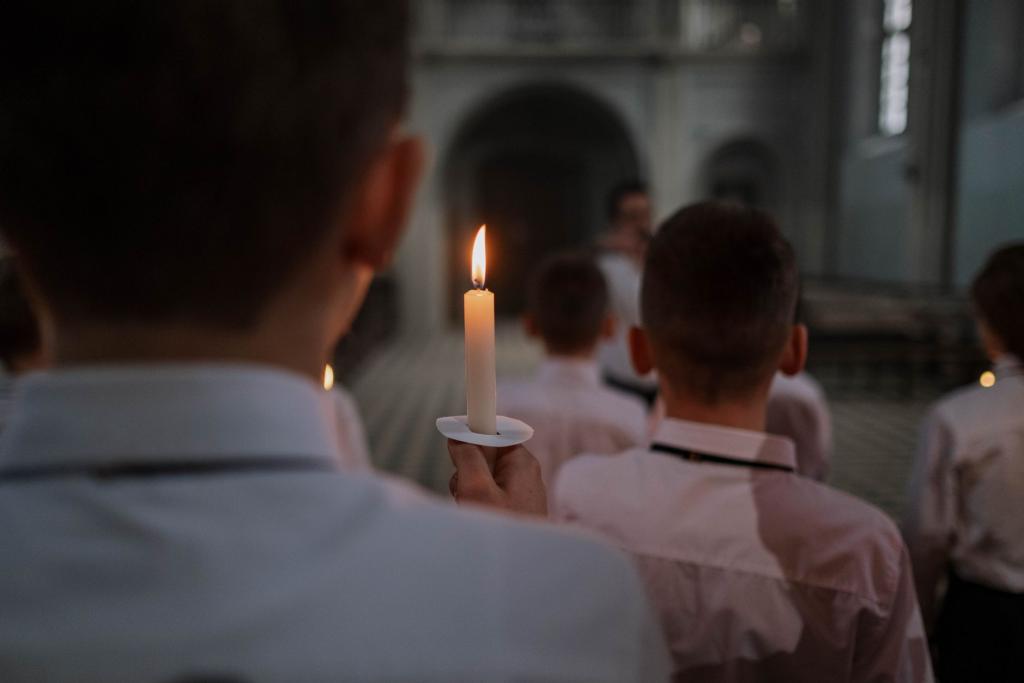
A quiet Return to Church is underway among young Americans, and it is young men leading the way. New polling and packed pews in New York City point to a measurable revival of faith among Gen Z — a generation long written off as the least religious in modern American life.
The numbers come from Gallup, which reported in April that forty-two percent of American men ages eighteen to twenty-nine now call religion "very important" in their lives, up from twenty-eight percent in 2022 and 2023. That fourteen-point climb in roughly two years is one of the sharpest moves the pollster has recorded. It also marks the first time in a quarter century that young men have outpaced young women on the measure: among women the same age, fewer than three in ten now call religion very important — their lowest reading on record, according to a write-up of the poll by SRN News.
Attendance is moving in the same direction. In Gallup's 2026 tracking, two in five young men attend religious services weekly or monthly — the highest level in more than a decade, and up from about a third just two years ago. Independent research from the Barna Group lands in the same place: commitment to faith among Gen Z men jumped fifteen percentage points between 2019 and 2025, while Gen Z churchgoers now show up nearly two weekends a month, the highest rate the research group has tracked.
In New York, the trend has a street address. The Wall Street Journal's reporting from St. Joseph's Church in Greenwich Village described a Sunday evening Mass packed mostly with worshippers in their twenties. Latecomers squeezed into folding chairs, stood shoulder to shoulder in the foyer, or sat on the balcony steps through the ninety-minute service, according to the newspaper's account. The congregation has grown to roughly four times its usual size.
Before the service comes the social engine. A pre-Mass pizza meetup called "Pizza to Pews," organized by two young Catholics at a nearby restaurant, grew from about one hundred attendees in its first weeks to more than two hundred by its third — with some participants traveling from Long Island and even Boston, the Journal reported. For some, church has become part of a weekend routine and a place to meet people. Several attendees told reporters they would rather meet a future partner in a pew than in a bar.
Why now: the search for something sturdier
The Rev. Boniface Endorf, the parish's longtime pastor, offered an explanation that has nothing to do with marketing. "People are looking for more than career and consumption," he said, in remarks reported by Fox News. "What does it mean to grow up? They're looking for guidance." The hunger for offline community runs through the whole story. Isabella Orlando, a twenty-three-year-old nutrition consultant, started a "Holy Girl Walk" in Central Park — a faith-inflected spin on the viral fitness trend — that grew from fifty women to more than one hundred fifty after a video of the group praying together spread online, according to the network's reporting.
Parishes are adapting to meet the moment. At an October retreat of New York pastors, the Rev. Jonah Teller of the Greenwich Village parish credited daily confession and a Eucharistic adoration chapel opened in 2023 for drawing young adults in, according to an account of the gathering by The Good Newsroom. "This is a God thing," he said. "This is not something that we and the Archdiocese of New York came up with."
For the pastors riding the wave, the Return to Church is less a marketing win than a pastoral one: the same generation rethinking careers — more than half of Gen Z workers plan a job move before year's end — is now rethinking where it belongs on a Sunday night.
Not everyone is convinced it will last
Sociologist Ryan Burge is not buying the revival narrative. In an August analysis for the National Catholic Reporter, Burge argued that American Christianity is still losing ground overall, with aging congregations closer to dying than to growing — and that viral anecdotes about young urban professionals can mask a broader decline. A few packed Manhattan services, his caution runs, do not equal a national turnaround.
The gender split may be the story's sharpest edge. Young men — the same demographic behind 2026's viral protein-bowl food craze — have flipped a pattern that held for decades: faith, long assumed to be women's territory, now polls stronger with men under thirty. Whether the Return to Church becomes a lasting realignment or a passing moment, the data captures a generation renegotiating what a good life looks like — and finding, in surprising numbers, that the answer might be in a pew.
Comments 0
No comments yet. Be the first to share your thoughts!
Leave a comment
Share your thoughts. Your email will not be published.