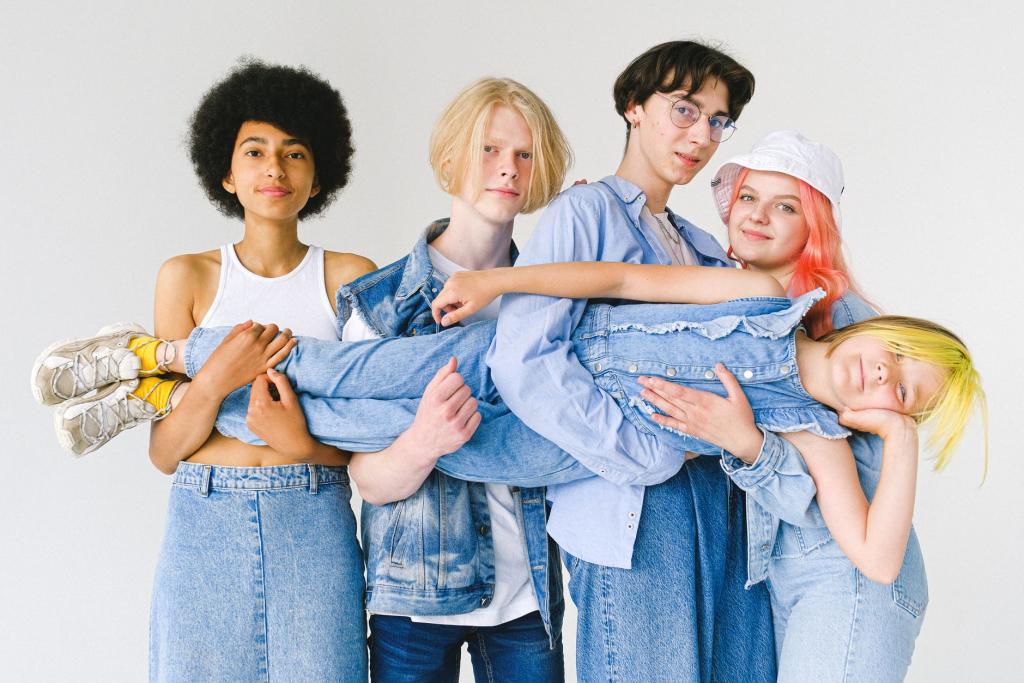
Imperfect DIY Style has a new headquarters in Seoul. KiiiKiii, the five-member K-pop girl group that Starship Entertainment bills as its "Gen Z-core" act, has turned clashing pastels, handmade crafts, and deliberately rough edges into a visual identity fans now call "KiiiKiii core" — and the numbers suggest the mess is the message. The group's styling topic on the Chinese platform Xiaohongshu has passed 365 million views, while the wider electronic Y3K style conversation it feeds into is approaching 884 million, according to trend analysts.
The music earned the spotlight first. KiiiKiii debuted in March 2025 with its first EP, and the pre-release track "I Do Me" topped YouTube's trending charts before the group won its first music-show trophy days later. Rookie honors at two major 2025 award shows followed, and the "I Do Me" video was named Music Video of the Year at that year's Melon Music Awards. A six-track second EP arrived in January 2026 with a lead single about a new era and one song produced by Epik High's Tablo, and Korean music press has since named the group to its list of 2026's must-watch artists, as reported by DIPE. An August single then leaned hard into 2010s nostalgia, complete with perler-bead pixel art and shutter shades, as covered by The Kraze.
Why imperfection works
The aesthetic is a deliberate inversion of the industry's polished playbook. Where the dominant luxury mood whispers restraint, KiiiKiii core shouts in clashing early-internet pastels, DIY craft projects, and Y2K references pushed toward a futuristic Y3K sheen, layered with humor and self-aware internet culture. The looseness of the code is the point: when an aesthetic does not demand flawless replication, far more people can make their own version of it. That participatory quality is why the style spreads, and it is why fans describe the group's look as an invitation rather than a uniform. On Xiaohongshu and TikTok, fans post thrifted recreations of the group's outfits, proving the aesthetic travels through closets rather than shopping carts.
The group's own words back up the reading. Starship introduced the act with the mantra "Don't lose your cheerfulness, even in an imperfect reality," and the members have stayed on message. "We prepared this EP as if we were making a wish," member Sui said of the January record during a Seoul press showcase, according to the Korea JoongAng Daily. Fellow member Kya framed the throughline as self-belief: "believing in ourselves and continuing to move forward with confidence." The Imperfect DIY Style is not a styling accident attached to the music; it is the message, repeated in interviews, videos, and stage outfits alike.
The business of looking unfinished
There is a commercial logic hiding inside the mess. Analysts note that brands can respond to the look without licensing the group's members, because the aesthetic is a set of codes — clashing color, visible craft, retro tech — rather than a face. Products that leave room for personalization, from customizable accessories to craft-ready basics, fit naturally into a trend built around fans modifying what they buy. That is a sharp contrast with the traditional idol economy, which monetizes exact replication: the dance cover, the identical outfit, the limited-edition photocard. KiiiKiii sells variation, rawness, and personal interpretation instead, and Imperfect DIY Style travels further precisely because nobody has to get it exactly right.
The honest counterpoint is that the imperfection is professionally designed. Stylists, art directors, and music-video shoots on Sicilian cliffs all sit behind the handmade look, so the "DIY" label describes a designed code rather than an actual accident. Critics could fairly call it manufactured authenticity — a rebellion with a production budget. But the response from fans suggests the distinction barely matters. The group's handmade-first image lands in a fall where fashion keeps rewarding the personal, from pop stars rewriting their own eras to costume data showing what people actually wear and retailers betting on rotation over ownership. For a generation fluent in spotting the seams, a trend that admits the seams are showing feels like the honest one. That low barrier to entry is exactly why the style outpaces polished concepts in fan-made content.
Comments 0
No comments yet. Be the first to share your thoughts!
Leave a comment
Share your thoughts. Your email will not be published.