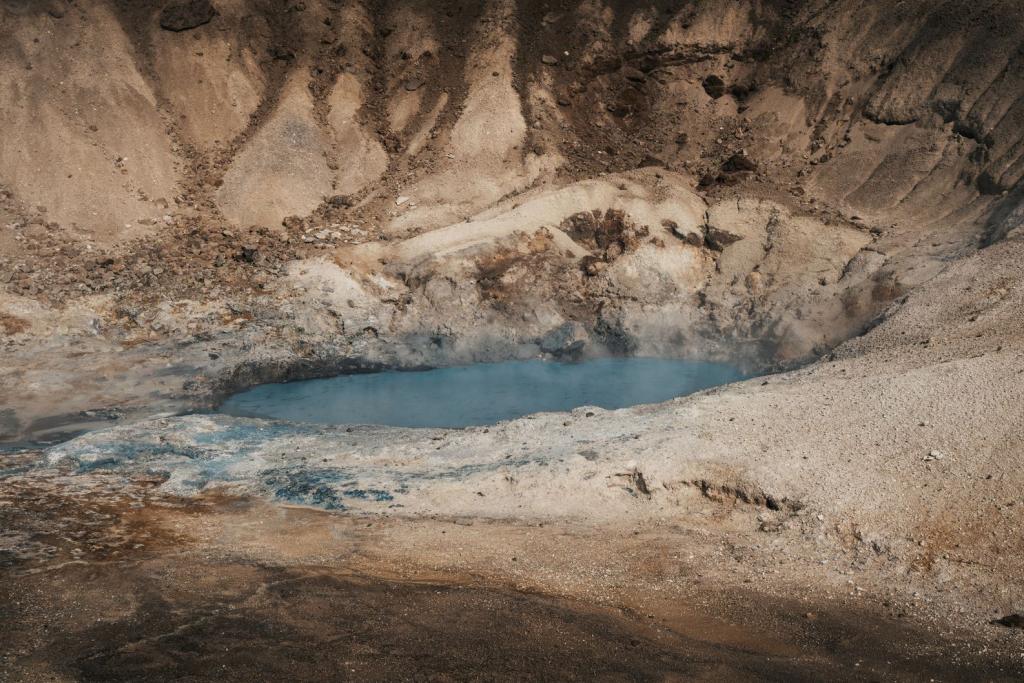
Scientists found a living thing that reproduces in water nearly hot enough to brew tea. Yellowstone rangers pulled more than 280 lost hats out of geyser basins this summer. And archaeologists in Paris uncovered scorch marks that may match an account written by Julius Caesar 2,000 years ago.
Every question in this weird news quiz September 2026 comes from a real story published this month. Each has three possible answers. Pick one, then read on for the full story behind it. Keep a tally of your score. At the end you will see where you land.
The quiz: six questions
Question 1. Scientists discovered a new amoeba species in California's Lassen Volcanic National Park that set a heat record for complex life. What is the hottest temperature at which it was seen reproducing?
A) 120 degrees Fahrenheit
B) 145.4 degrees Fahrenheit
C) 200 degrees Fahrenheit
Answer: B. The species, named Incendiamoeba cascadensis, performed cell division at up to 145.4 degrees Fahrenheit (63 degrees Celsius) and stayed active up to 147.2 degrees, according to Reuters. Exposed to 158 degrees, it could still recover once returned to cooler water. The heat tolerance sets a record for any eukaryote, the branch of life that includes everything from fungi to people, since membrane-bound cells were long thought unable to function above about 140 degrees. Biologist Beryl Rappaport of Syracuse University, the lead author, told Reuters the findings reopen questions about the limits of complex life. The research was published in the journal Cell on September 22.
Question 2. Yellowstone's geology team removed a record amount of trash from the park's hot springs and geyser basins this year. What was the single most common item they fished out?
A) Sunglasses
B) Hotel key cards
C) Hats
Answer: C. Staff pulled more than 20,100 pieces of trash from hydrothermal areas in 2026, and hats topped the list at over 280, People reported. The haul included a FIFA 2026 Men's World Cup hat, a Roblox bucket hat from St. Kitts and Nevis, and a baseball cap reading "COWBOY HAT." Crews also collected 54 camera lens caps, 47 hair ties, 42 pencils, 36 pairs of sunglasses, 20 hotel key cards, 17 baby pacifiers, six Invisalign retainers, and more than $18 in coins in currencies from pesos to yen. Margery Price, a physical science technician with the Yellowstone Geology Program, wrote in a U.S. Geological Survey blog post that foreign material can damage or permanently alter a hot spring, whether by clogging its water supply or polluting it with chemicals. Morning Glory Pool famously changed color last century from all the trash visitors left in it.
Question 3. Archaeologists found a roughly 65-foot stone-and-wood wall beneath a Paris hospital this summer. What do French officials believe it might be?
A) A World War II bunker
B) A fragment of the ramparts of Lutetia, the settlement that became Paris
C) A medieval mill foundation
Answer: B. France's culture ministry called the find a "major breakthrough," according to Reuters. The wall, discovered beneath the Hôtel-Dieu hospital on the Île de la Cité near Notre Dame, is thought to be part of the ramparts of Lutetia, built by the Gallic Parisii tribe. The structure bears traces of fire, which may match Julius Caesar's account that the Gauls burned their own town before the Battle of Lutetia against the Romans in 52 B.C. Carbon dating put the wall between 200 B.C. and 10 B.C., a range that includes 52 B.C. If confirmed, it would be the first substantial trace of a pre-Roman settlement on the island, settling a long debate against a rival theory that places the original Lutetia in the suburb of Nanterre.
Question 4. Calls to U.S. poison centers about the herbal extract kratom have surged in the last decade. How big was the jump between 2015 and 2025?
A) From 258 calls to a record 3,434
B) From about 500 calls to about 900
C) They fell by 40 percent
Answer: A. Poison center calls about kratom rose more than 1,200 percent, from 258 in 2015 to a record 3,434 in 2025, according to research from UVA Health reported by CNN. During that period, 233 deaths were linked to kratom, though 184 involved other substances as well. Kratom comes from the leaves of a Southeast Asian tree and is sold in gas stations and vape shops, but the FDA says it is not lawfully marketed in the U.S. as a drug, dietary supplement, or food additive. The surge is in the spotlight after police found kratom at the scenes where two University of Mississippi students died and urged the public to avoid the extract, CNN reported.
Question 5. Climate scientists warn that this year's "super" El Niño could drive extreme heat deaths. How many excess deaths do researchers project through February 2027?
A) About 45,000
B) As many as 451,000
C) More than 4.5 million
Answer: B. The University of Chicago's Climate Impact Lab projected up to 451,000 excess deaths between June 2026 and February 2027, Reuters reported. Nigeria faces the worst toll at an estimated 31,400 deaths, followed by Indonesia at 19,300 and Sudan at 17,600. The Sahel region could see 66,800 additional deaths, and Southeast Asia another 19,400. The estimate, which uses peer-reviewed methods but is not itself peer-reviewed, combines seasonal forecasts with mortality data across more than 24,000 regions. Researcher Emily Grover-Kopec told New Scientist the heat will hit the southern hemisphere first, then move north, and the numbers will likely grow. The United States is projected to see about 3,500 additional heat deaths.
Question 6. A baby was born this month on North Ronaldsay, a remote Scottish island in Orkney. What makes the birth historic?
A) It was the first baby born on the island in 34 years
B) It was the island's first birth ever
C) It was the 50th birth on the island this year
Answer: A. Duncan Wilder Thorstein Traill Suarez Ford was born on September 15, the first birth on North Ronaldsay since August 1992, according to CNN. His mother, Alice Traill Ford, told CNN the family splits its time between Costa Rica and the island and originally planned a Costa Rican birth, but changed course after arriving on Orkney. Duncan was born at Holland House, built by his mother's ancestors, and the couple raised a flag in the traditional manner to announce him, later handing each islander a small bottle of whisky decorated with four-leaf clovers and lucky groatie buckie shells. About 51 people live on the island, which has no doctor or hospital, only a resident nurse, though NHS midwives helped with the birth.
How you did
Six out of six on this weird news quiz September 2026: you clearly followed this week's strangest headlines closely. If you enjoy this format, try our September science quiz. Four or five: strong, and you probably recognized the stories that led the news cycle. Two or three: respectable, and you now know that a burned wall may mark where Paris began and that Yellowstone collects hundreds of lost hats. Zero or one: you took your best guess, which is a perfectly fine way to play.
Where to read more
Every question comes from a story reported this week. For the fire amoeba, see the Reuters report and Gizmodo's write-up. People has the full rundown of the odd things tourists left behind at Yellowstone, with UPI on the record haul. The Paris wall was covered by CBS News and People. On kratom, read CNN's investigation and the UVA Health analysis via Medical Xpress. The El Niño projections were reported by Reuters and New Scientist, and the Scottish island baby by CNN and The Times. Also on GenZ NewZ: how lead ink could help unlock the burned Herculaneum scrolls, another story of ancient writing meeting modern X-rays.
Comments 0
No comments yet. Be the first to share your thoughts!
Leave a comment
Share your thoughts. Your email will not be published.