September was a strange month for science, in the best way. Astronomers picked up radio static from a planet orbiting another star. NASA's moon orbiter found a crater bigger than the Roman Colosseum that nobody noticed forming. And researchers set their own scrolls on fire, just to figure out how to read ancient ones. This September science quiz 2026 gathers the month's biggest research breakthroughs, including a DNA discovery era of precise cell biology and new fossils reshaping the past, so even seasoned news readers may learn something new.
This quiz has six questions, all drawn from real studies published this month. Each question has three possible answers. Pick one, then scroll to the answer for the full story. Keep track of how many you get right. At the end you'll find out what your score says about you, which is nothing at all, except that science moves fast.
The quiz: six questions
Question 1. This month, astronomers announced the first direct detection of radio signals coming from a planet outside our solar system. Which planet is it?
A) Proxima Centauri b
B) Beta Pictoris b
C) TRAPPIST-1e
Answer: B. Using South Africa's MeerKAT radio telescope array, a team led by Kevin Ortiz Ceballos of the Center for Astrophysics, Harvard and Smithsonian, detected faint repeating radio bursts coming from Beta Pictoris b, a gas giant about 63 light-years away. The researchers traced the signal to the planet itself rather than its parent star. According to Science News, the bursts look like the signature of auroras, the same kind of light show behind Earth's northern lights, and they reveal a magnetic field thousands of times the strength of Earth's. The team posted its paper to the arXiv preprint server on September 15.
Question 2. NASA's Chandra X-ray Observatory found a brand-new class of cosmic objects this month. How many of these "hypersoft X-ray sources" did scientists identify across six galaxies?
A) 14
B) 84
C) 300
Answer: B. A team led by Mustafa Muhibullah of the University of Alabama found 84 hypersoft X-ray sources in six galaxies, including the Andromeda and Pinwheel galaxies, using data from Chandra's public archive. The objects give off unusually low-energy X-rays but intense ultraviolet radiation, a combination astronomers had never seen. "We've never encountered a group of objects that act like this," Muhibullah said in NASA's announcement. The team thinks each one is probably a compact object, a black hole, neutron star, or white dwarf, pulling material off a companion star. The finding was published in Nature Astronomy on September 9 and could help solve two long-standing puzzles: what triggers Type Ia supernovae, and why gas between stars in some galaxies is more ionized than it should be.
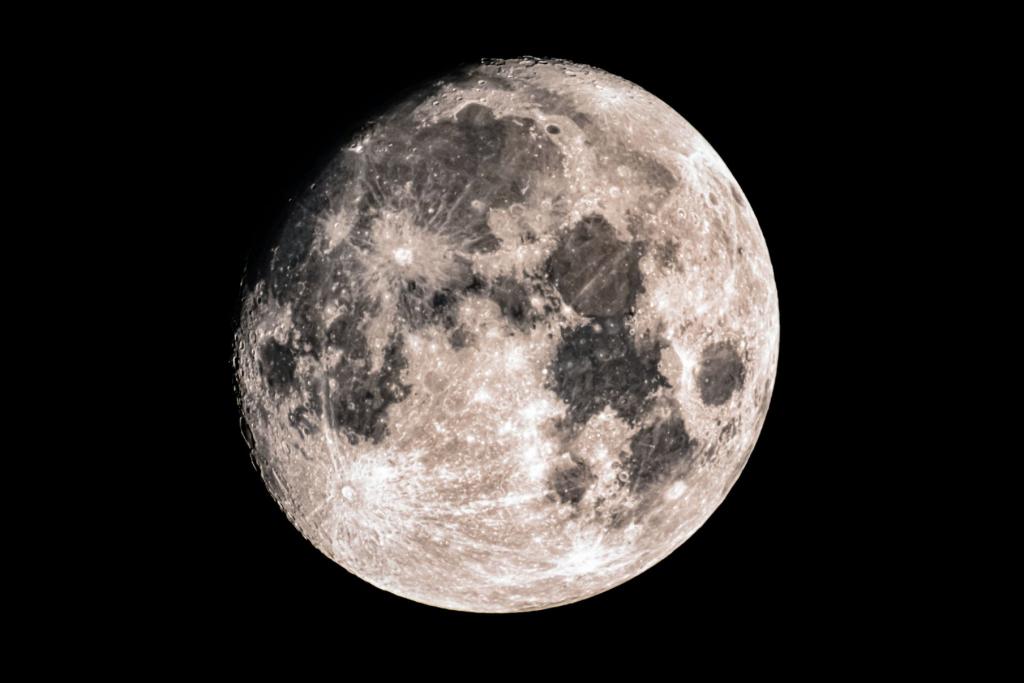
Question 3. A huge new crater was discovered on the Moon this month, created by an impact two years ago that nobody saw happen. How often does an impact of this size occur on the Moon?
A) Roughly once a decade
B) Roughly once every 132 years
C) Roughly once a century, so we're due
Answer: B. NASA's Lunar Reconnaissance Orbiter, which has circled the Moon for more than 17 years, spotted a crater 728 feet across and 141 feet deep that formed between April 11 and May 22, 2024, when a rock three to six stories tall slammed into the Moon's eastern edge. Nobody noticed at the time. It is the largest newly formed crater ever found in the solar system since scientists started monitoring such impacts, and researchers calculate that an event this big happens only about once every 132 years. The crater was named McGetchin crater for the late Apollo-era lunar scientist Thomas McGetchin. The findings appeared in two studies in the journal Science Advances.
Question 4. To help read the burned Herculaneum scrolls, scientists made their own scrolls and set them on fire. What did they discover about ink containing lead?
A) It dissolves completely, which is why the scrolls are blank
B) It absorbs up to 25 times as many X-rays as charred papyrus, making letters readable in scans
C) It makes the papyrus too fragile to ever unroll
Answer: B. Douglas Seiler, a research volunteer affiliated with Berkeley SETI, sourced papyrus and reed pens from Egypt and lampblack ink from Japan, paid high school students to write out lines from Star Wars, the Bible, and the 1960s TV show The Outer Limits, then rolled up the scrolls and burned them in a high-temperature furnace. The replica experiment, published September 16 in the journal PLOS One, showed that even tiny amounts of lead in the ink absorb up to 25 times as many X-rays as the surrounding charred papyrus, so the letters light up in X-ray tomography. A cheap handheld X-ray fluorescence scanner could even tell which of the real Herculaneum scrolls contain lead, which would tell researchers which ones are the best candidates for virtual unrolling.
Question 5. A new study traced the growth of the bird-like dinosaur Troodon formosus from embryo to adult. What did the fossils show?
A) The dinosaur kept growing its whole life and never stopped
B) Its bone shape stayed broadly consistent through growth, but the femur became relatively longer than the tibia in adults
C) Juveniles and adults had completely different body shapes, like caterpillars and butterflies
Answer: B. David Varricchio of Montana State University and Heath Caldwell of North Carolina State University studied pelvic and hindlimb fossils from the Two Medicine Formation in western Montana, rocks laid down about 75 to 78 million years ago, when the area was a coastal plain. The specimens span the whole growth series, from embryos to full adults, a near-complete record that is rare for dinosaurs. Most major skeletal features were present even in young animals, though bone strength, surface texture, and fusion changed at set stages. The femur grew relatively longer compared with the tibia in adults, and the pattern was steady enough to suggest that environment had little influence on growth. The study appeared in PLOS One on September 9.
Question 6. Saturn's north pole is famous for its hexagon storm. What did the Hubble Space Telescope find at the south pole this month?
A) A giant, evolving 10-sided atmospheric wave
B) Nothing unusual, the pole is calm
C) A second, smaller hexagon
Answer: A. Recent Hubble observations revealed a 10-sided wave, a decagon, encircling Saturn's south pole. It is the first large regular-sided jet pattern ever seen in the planet's southern hemisphere. By piecing together images from Hubble's Outer Planet Atmospheres Legacy program, which has photographed the outer planets every year for more than a decade, researchers traced hints of the structure back to 2023. Unlike the northern hexagon, which has sat there unchanged for more than 40 years, this feature appears to be strengthening, giving astronomers a rare chance to watch a giant atmospheric pattern develop. "We've never seen anything quite like this in Saturn's southern hemisphere," said Amy Simon, a co-author and OPAL principal investigator at NASA's Goddard Space Flight Center. The results were published in the journal Science Advances.
How you did
Six out of six on this September science quiz 2026: you read more science news than most people. Check our Emmys quiz next if trivia is your thing. Four or five: solid. You clearly pay attention to the headlines, and you probably have opinions about peer review. Two or three: respectable, and you just learned five facts you didn't have this morning, which is the whole point of this exercise. Zero or one: you guessed honestly, and now you know that the Moon got a new crater this year and nobody even saw it happen. That's a good conversation opener.
Where to read more
Every question in this quiz comes from a study or announcement published this month. The exoplanet radio detection was reported by phys.org. NASA announced the hypersoft X-ray sources at science.nasa.gov, and the lunar crater was covered by CNN. The scroll experiment was reported by Berkeley News, and the Saturn decagon by the European Space Agency. For more September research, see the European ash pangenome breakthrough.
Comments 0
No comments yet. Be the first to share your thoughts!
Leave a comment
Share your thoughts. Your email will not be published.