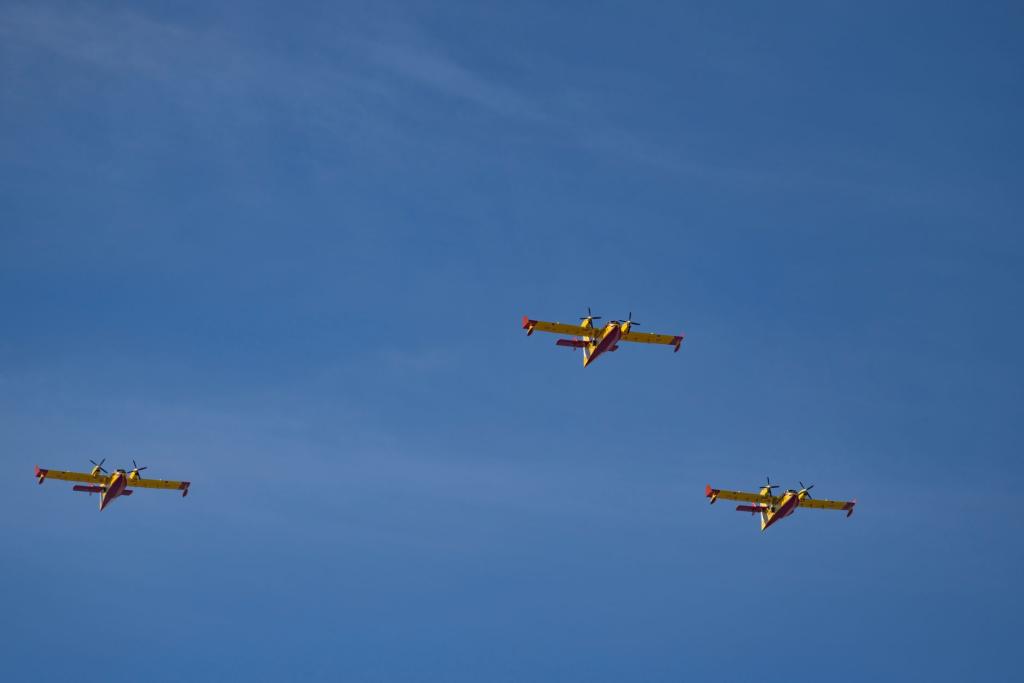
Three US Air Force B-52 Stratofortress bombers flew in international airspace off the Venezuelan coast on Thursday, tracing slow orbits for roughly two hours in full view of public flight trackers. The aircraft flew under the call signs BUNNY01, BUNNY02 and BUNNY03 with their transponders switched on, according to Air Data News, which meant anyone with a tracking website could watch the mission unfold in real time. It was the second American bomber flight near Venezuela in a week, days after the US pulled bombers out of RAF Fairford over an alleged Iranian drone plot, and the Venezuela pressure campaign keeps adding layers: the air display arrived alongside the region's biggest naval deployment in decades.
The flight is the latest visible piece of a US military buildup in the Caribbean that officials describe as counter-narcotics work. The Times reported that the USS Gerald R. Ford, the largest aircraft carrier in the world, arrived in the region along with warships and attack planes, while the US war secretary, Pete Hegseth, put the force at around 15,000 troops under the name Operation Southern Spear, the military arm of the Venezuela pressure campaign. Air Data News put the troop figure lower, at about 10,000, and reported that F-35 jets and MQ-9 Reaper drones are operating out of Puerto Rico, with recent imagery showing the drones armed with Hellfire missiles. The same reporting noted the retirement of Admiral Alvin Holsey, the chief of US Southern Command, which adds a leadership transition on top of the buildup.
A show of force the whole world can track
Below the bombers, the Venezuela pressure campaign has a quieter track record: a strike campaign that has been running since early September. US officials acknowledge six airstrikes against vessels they describe as suspected drug traffickers, with at least 27 people killed, according to Air Data News. The Times reports a higher tally: at least 21 strikes over the past two months across the Caribbean and the Pacific, killing 83 people. Legal experts and some US lawmakers have questioned whether the strikes comply with international law, given that they target civilian boats on suspicion alone. The boat strikes are the deadliest part of the Venezuela pressure campaign so far.
President Donald Trump has confirmed that CIA operations are underway in Venezuela and said further action inside Venezuelan territory is under consideration. The US government has offered a $50 million reward for information leading to the capture of President Nicolas Maduro, who faces American accusations of drug and arms trafficking conspiracies. At the same time, Trump has reopened the door to talks, telling reporters that discussions with Maduro may happen and declining to rule out American boots on the ground. Secretary of State Marco Rubio plans to designate a Venezuelan drug cartel, which he alleges Maduro leads, as a foreign terrorist organization, effective November 24, a delay The Times notes may be designed to leave room for negotiations, keeping the Venezuela pressure campaign's diplomatic off-ramp open.
Why the bombers matter more than the boats
A boat destroyed at night appears in a press release the next day. Three heavy bombers flying with their transponders on cannot be hidden, and the flight trackers that followed them made the route public within hours. That visibility is what separates this mission from the quieter strikes that came before it in the Venezuela pressure campaign: Washington demonstrated that it can put heavy firepower over Venezuelan airspace on short notice. Aerospace coverage of the flight described it as a demonstration of long-range strike capability aimed squarely at the Maduro government, which has ruled out nothing in its own response.
Maduro has answered the Venezuela pressure campaign with an offer to talk rather than a threat to fight, telling reporters that anyone who wants to speak with Venezuela will be met face to face. The pattern is familiar: a US-backed Ukraine energy ceasefire crumbled under the same mix of strikes and sudden diplomacy this week. The tone is a sharp shift from last month, when Washington was said to have suspended diplomatic outreach after Trump told his special envoy, Richard Grenell, to stop all contact, according to The Times. The Miami Herald reported that senior Venezuelan officials privately floated opening the country's natural resources to US companies as part of a transition in which Maduro would eventually step down, a report the regime angrily denied.
Meanwhile, limited cooperation continues: deportation flights from the United States still arrive regularly at Caracas airport, and the oil giant Chevron keeps operating in Venezuela under a Treasury rule that bars payments to the Venezuelan state, settling debts in oil instead. Whether the Venezuela pressure campaign ends at a negotiating table or moves further depends on conversations the White House has not yet confirmed. Either way, the Venezuela pressure campaign is now impossible to miss, whether you follow it on the news or on a flight-tracking app.
Comments 0
No comments yet. Be the first to share your thoughts!
Leave a comment
Share your thoughts. Your email will not be published.