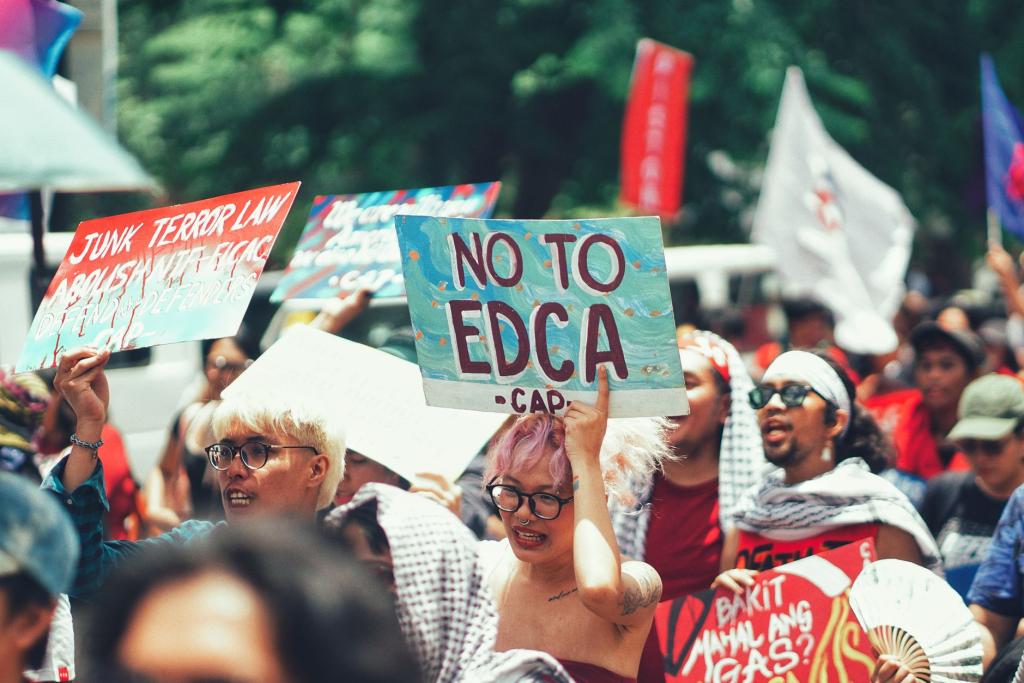
On Friday, Sept. 18, UST student activists marched along España Boulevard in Manila, calling on the University of Santo Tomas to take a stand in an ongoing dispute between its students and the Philippine Air Force. The march came after the PAF filed an administrative case against four student activists over a rally they held against a military exhibit on campus in April.
The complaints name Sean Capalar, the Central Student Council's public relations officer, along with Dex Frogoso, Ralph Manuel and Raven Racelis, according to The Varsitarian. The four students released separate statements on Facebook on Sept. 17, the day before the rally, addressing the reported complaints.
The dispute began on April 21, when the PAF staged an exhibit at the Buenaventura Garcia Paredes, O.P. Building to mark the university's 415th anniversary and the air force's 79th. In a campus memo dated April 20, UST's secretary-general said the exhibit would run from 9 a.m. to 5 p.m. and was meant to give Thomasians a look at the PAF's capabilities and modernization programs. The memo described the showcase as a chance to build appreciation for national service and defense.
The April confrontation
The UST student activists protested the exhibit on the day it opened. The display included a flight simulator, miniature aircraft, gun models and audiovisual presentations on the PAF's modernization programs. Led by philosophy freshman Raven Racelis, the protesters argued that the military gear on show was the same kind used in aerial bombings that harmed civilians in rural areas.
In a Facebook video posted the same day, Racelis was heard telling PAF personnel that the air force's institutions were "not welcome in academic spaces," calling the force "the number one human rights violator." She told officials the equipment on display was "the same equipment used in [an] aerial bombing in Mindoro," as reported by The Flame.
During the exchange, Racelis held up newspapers reporting on an Armed Forces of the Philippines aerial bombing in Abra de Ilog, Occidental Mindoro on Jan. 1 this year, which she said killed civilians, including at least three indigenous youth. The air force disputed her account. PAF spokesperson Col. Maria Christina Basco said in a DZMM Teleradyo interview that officers had engaged the students properly and talked to them calmly, and that she did not understand why the activists had grown agitated during an event meant to bring the air force closer to the public.
The Sept. 18 rally
Five months later, the incident returned to the streets outside campus. The protesters carried tarpaulins reading: "UST, take a stand. Cut all ties with fascist state forces… prioritize students' rights and welfare." The Varsitarian reported that the marchers called for "accountability" and the "protection" of students' right to protest and organize.
Student activist Kerby Calizar told The Flame the anger over the case filed against the four was justified, arguing that the complaint showed state and university machinery being used to suppress the critical voices of the youth. He urged universities across the country to stand firm in safeguarding students' democratic rights and academic freedom.
The four students pushed back in their own words. Capalar said seeking and speaking the truth was "never a disciplinary offense," and called the administrative complaint part of a pattern of charges filed against students for exercising freedom of expression. Frogoso, a freshman from the Faculty of Pharmacy, said the complaints had taken on a "political characteristic," and that the respondents felt "insulted" that their knowledge of national issues had been dismissed as "brainwashed." Manuel said concerns raised against an institution of authority "do not, by themselves, establish misconduct," adding that disciplinary liability should rest on conduct and evidence rather than political beliefs. Racelis said the respondents "should not be punished for expressing dissent" or treated as "enemies" for standing up for communities affected by injustice.
A fight over campus space
The clash points to a wider argument about who belongs on a university campus. The students say military exhibits have no place in academic spaces while the armed forces face accusations of abuse; the air force says it was invited, showed up professionally and engaged the protesters with respect. What happens next now sits with UST, which the protesters want to choose a side: defend its students' right to protest, or leave them facing the disciplinary process.
The episode arrives in a busy stretch for youth activism this month. Six anti-oil activists in Uganda were freed on bail after weeks in detention, and PeaceJam marked its 30th anniversary in Denver with young activists at the center of the celebration.
Comments 0
No comments yet. Be the first to share your thoughts!
Leave a comment
Share your thoughts. Your email will not be published.