Thousands of Australian students walked out of classrooms on Thursday in a second nationwide walkout, as students protest Hanson and One Nation for the second time in two months, taking their anger over immigration and student visa policy to the streets of every major city in the country.
The coordinated walkouts on September 17 followed a similar student strike in August. According to reporting from the Australian Associated Press, thousands of high school and university students joined rallies in every major city and several regional centres, while Green Left put the number of rally locations at 18 cities and towns across the country.
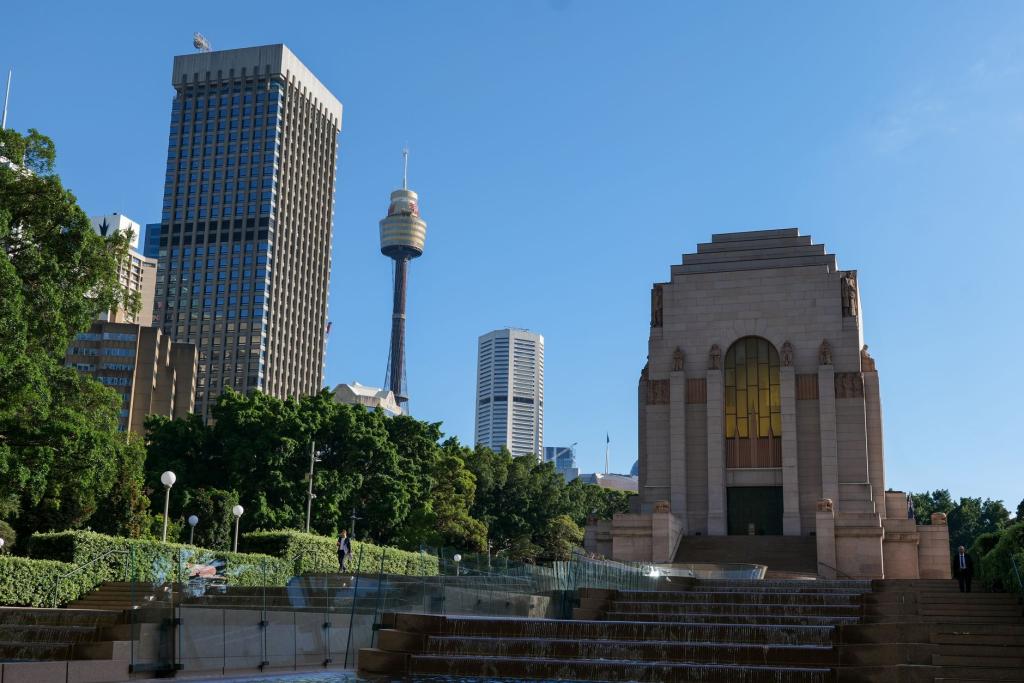
In Sydney, well over a thousand students marched from Hyde Park to Sydney Town Hall behind a Students Say No To Hanson banner, some of them carrying a large paper mache head depicting the One Nation leader's likeness. Chants of "Pauline Hanson go to hell, take your racists there as well" rang out through the city streets. High school students, some still in school uniform, held placards reading "One Nation? I don't like it" and "Highschoolers against Hanson".
Melbourne drew hundreds of students outside the State Library of Victoria, where they gathered with anti-One Nation signs before marching through the city streets. In Brisbane, one protester carried a sign reading "Hanson is a primitive species", an apparent response to Hanson's qualified apology for past comments in which she described Indigenous Australians as "the most primitive race on Earth". Similar messages were carried by protesters outside Parliament House in Adelaide and Hobart.
Why students protest Hanson
The central grievance, organisers said, was One Nation's migration policy, which promises to cut immigrant numbers by hundreds of thousands over the coming years. The party's plans would reduce temporary visa holders and overstayers by more than three quarters of a million over three years. International student visas would take the biggest hit, with grants cut to less than half their current annual level and secondary visas for family members eliminated entirely. The debate echoes visa fights elsewhere, including the United States' tightening of H-1B rules this month.
Protest organiser Yasmine Johnson, a 26-year-old University of Technology Sydney student, told AAP that Hanson's policy interventions against immigrants and international student visa holders had left many in the student community afraid for their future. She said international students were among the first groups One Nation intended to target, and that for university students the policy would mean "the total destruction of life as we know it at university".
Johnson pointed to the makeup of modern Australia as the reason the campaign had spread so quickly. AAP reported her saying that a huge section of the community were migrants or international students, and that students could see around them a society full of migrants that they wanted to defend.
A movement gaining momentum
The September walkouts were noticeably larger than the first round of protests. Turnout grew across the board, with bigger crowds in Sydney, Melbourne, Adelaide and Perth, and more walkouts reported in regional areas than during the August day of action, according to Australian press coverage of the events.
The response from Hanson and her supporters has been hostile. The One Nation leader has accused the striking students of hating the country, while right-wing media questioned whether the teenagers were thinking for themselves. Student organisers brushed those attacks aside. The tone on the ground was defiant: students said they had watched Hanson's rhetoric target their friends and classmates, and were not prepared to stay in class while it happened.
For many of the protesters, the stakes were personal rather than abstract. The students who spoke to reporters at the rallies described friends and schoolmates targeted by racism and anti-immigrant politics. They framed the walkout as a defence of the people around them as much as a rejection of a politician.
The campaign also sits inside a larger pattern of youth-led political action, with mass protests in the Philippines making headlines the same week. In Australia, students have repeatedly walked out of school over climate change, refugee policy and the war in Gaza. Organisers of the anti-Hanson strikes say they intend to keep escalating as long as One Nation's polling strength keeps its immigration agenda in the national debate.
Whether the walkouts shift any votes is an open question. What is not in doubt is that a generation of Australian teenagers is getting its political education on the street, and that Hanson, for now, has become its defining adversary.
Comments 0
No comments yet. Be the first to share your thoughts!
Leave a comment
Share your thoughts. Your email will not be published.