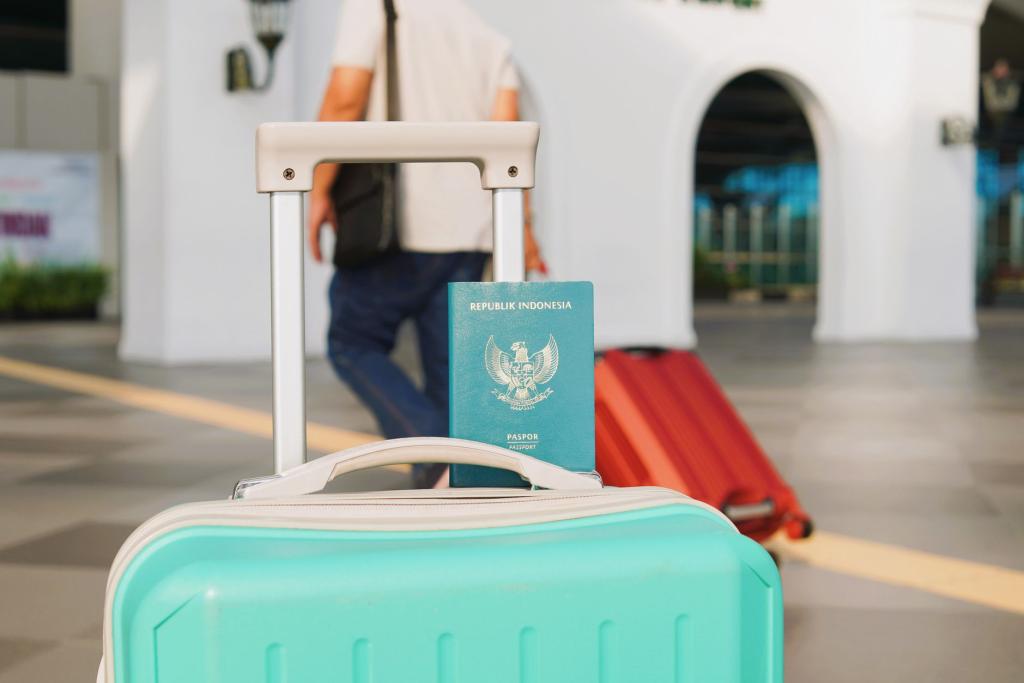
Starting October 2026, the United States will extend Visa Social Media Screening to three more nonimmigrant visa categories, pulling foreign journalists, Canadian and Mexican professionals, and their families into a digital vetting system that has been quietly expanding for more than a year. The State Department announced the change in a September 2026 update, first reported by The American Diary 24, adding I visas for foreign media representatives, TN visas for qualifying professionals under the United States-Mexico-Canada Agreement, and TD visas for their spouses and minor children.
Under the expanded Visa Social Media Screening process, applicants in the three categories are instructed to set their social media profiles to "public" or "open" so consular officers can review posts, photos, comments and affiliations across platforms including Facebook, Instagram, X, YouTube, TikTok and LinkedIn, reported by Travel + Leisure Asia. The department says it uses available information during visa screening to determine whether applicants qualify for the requested visa and whether grounds of inadmissibility apply, describing the online review as one element of its broader security and eligibility process, according to Berry Appleman & Leiden's immigration news coverage.
What Visa Social Media Screening checks on your profiles
The review is not a vibe check. Consular officers look at whether applicants qualify for the visa category they applied for, whether planned activities match that category, and whether any national security or public safety concerns arise, reported by Immigration Law Daily. Applicants must disclose the platforms and usernames they have used over the past five years, and anything that conflicts with the education, employment or travel history on the application gets flagged.
Flags carry real consequences. Applicants can face extra interview questions, administrative processing referrals, or rescheduled appointments, and delays can stretch for weeks or even months, with no standard timeline from consulate to consulate. Even a spotless application can slow down, because the higher review workload touches everyone, not just flagged cases. People with cases still pending when the rule takes effect should expect the expanded review to reach them too, even if they applied or booked interviews before the announcement, according to NPZ Law Group.
How Visa Social Media Screening grew from students to workers
The October expansion is the newest step in a steady rollout, not a one-off. A timeline of the program traces it to F, M and J student and exchange visas in June 2025, with H-1B and H-4 workers added that December, and a wider net cast in March 2026 covering diplomatic and official categories alongside fiance, cultural exchange, religious worker and other classifications, according to the outlet's reporting.
What it means for Gen Z travelers, journalists and creators
For young travelers, the impact is concrete. Canadian and Mexican professionals in their twenties and thirties — engineers, designers, analysts and other qualifying occupations — use the TN route for US jobs under the regional trade pact, while journalism students, freelance reporters and video creators travel on I visas for assignments. Their spouses and children travel on TD status. For all of them, the instinct to lock profiles down before a visa interview now runs the wrong way: the guidance asks for profiles to be open, not hidden.
The practical move is consistency. Officers compare what they find online against the application, so a profile that contradicts stated employment, education or travel history is the real risk — not the mere fact of having an account. Travelers who keep public creative portfolios or professional pages may already be most of the way there; the shift is for those whose online presence lives behind private settings.
The privacy pushback
Privacy advocates say the trade-off is steep. Saira Hussain, a senior attorney at the Electronic Frontier Foundation, warned that the broader collection of immigrants' social media data is "an even greater threat to the First Amendment," according to Bloomberg Law's reporting. The digital rights group argues that handles open a window onto political views, religious practices and personal associations — intimate material reviewed by officers with broad discretion, which raises the risk of bias in individual decisions.
The department's position is that vetting is a security function: it relies on all available sources of information to identify applicants who may be inadmissible, including people who may pose a threat to national security or public safety, and it treats visa adjudications as national security decisions rather than entitlements, according to Envoy Global's summary of the government's position.
What happens next
Applicants in the affected categories should follow guidance from US embassies and consulates rather than assuming the requirement applies identically across visa types, and anyone with a pending case should expect the expanded review to reach them. The department has widened Visa Social Media Screening category by category, and immigration lawyers expect the net to keep growing — so for globally mobile young workers and creators, an audit-ready public profile is becoming part of the travel paperwork. Follow the travel desk for updates, and for a wider look at how visa rules shape where young workers roam, see GenZ NewZ's reporting on digital nomad visas now available in dozens of countries.
Comments 0
No comments yet. Be the first to share your thoughts!
Leave a comment
Share your thoughts. Your email will not be published.