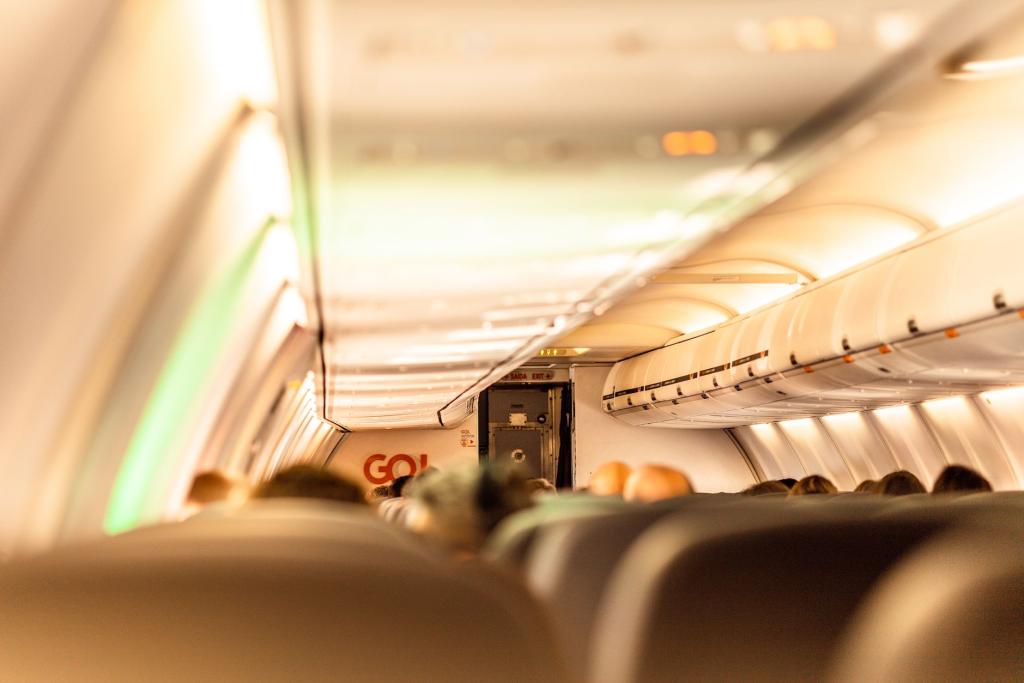
The era of the budget red-eye is over, at least for a growing share of travelers. Global searches for premium class flights nearly doubled in the first half of 2026, according to booking data released by Trip.com Group on September 3, 2026, as travelers trade bargain hunting for comfort, privacy, and trips they can talk about for years.
The numbers are striking. Searches for premium cabins jumped 99 percent year over year, while searches for five-star hotels climbed by more than half, per the company's data. Custom tours, where travelers chat with an expert and get an itinerary built around their requests, saw bookings surge more than 600 percent globally. The biggest appetite is coming from Mainland China, Hong Kong, and Singapore, which the report identifies as some of the fastest-growing markets for affluent travelers.
American Express Travel's 2026 Global Travel Trends Report paints the same picture from the demand side. Three in four millennials and Gen Zers surveyed call travel a "non-negotiable" budget item, and 40 percent of respondents worldwide plan to spend more on travel in 2026 than they did the year before. Even work is on the table: 64 percent of young respondents said they would take a job with fewer benefits if it meant more flexibility to travel. "said Audrey Hendley, President of American Express Travel, adding that travellers are being "particularly intentional about how they spend their holiday time this year." Young travelers are also planning around milestones, hands-on activities, and local cuisine, according to American Express Travel's 2026 Global Travel Trends Report.
The premium playbook: personal, private, and longer
This is not the old luxury of monogrammed luggage tags. The defining feature of the 2026 premium traveler is customization. Trip.com says its top loyalty tiers are the proof: Black Diamond members make almost twenty times as many bookings as the average member, and bespoke itineraries rank among their fastest-growing purchases. The platform has responded with 24/7 concierge teams for those members and AI itinerary tools that tailor recommendations by age, travel group, and comfort level.
Premium travelers are also going further and staying longer. More than four in ten premium class flights booked globally for the second half of the year are long-haul, and premium travelers spend at least 14 days overseas per trip, roughly 40 percent more than the average traveler, stretching to 20 days for European premium travelers. Japan is emerging as the standout destination: four of the world's ten most-booked five-star hotels sit there, and the Tokyo to Sapporo route is the top-selling first-class flight globally. The pattern fits a broader 2026 shift in how travelers spend, with experience-first itineraries replacing the old hunt for the cheapest fare.
Live entertainment has become one of the biggest reasons people upgrade. Nearly two-thirds of Asia Pacific travelers have already crossed a border for a concert, and 66 percent say they would travel abroad for one, the data shows. The booking platform now bundles concert tickets, hotels, transport, and local attractions into single packages, a line of business that produced triple-digit growth in 2025. From front-row seats at a sold-out K-pop show to a spot in the Formula 1 paddock, events are fast becoming the trigger that makes travelers book and spend more.
Airlines are racing to cash in
Carriers have read the signal. Qantas has set a mid-2028 target for non-stop flights between Sydney and New York under its Project Sunrise plan, which would turn the world's longest commercial routes into a premium-heavy showcase. Turkish Airlines agreed in late September to buy 100 Boeing 737-8 aircraft with options for 50 more, one of the industry's biggest fleet commitments of the year. And the luxury refresh keeps coming: Etihad introduced a new first- and business-class product, American Airlines unveiled its Flagship Suite on the Boeing 777-300ER, and Avianca rolled out a redesigned business cabin, all chasing demand for premium class flights.
The wellness side of premium travel is booming alongside the seats. Worldwide searches for "luxury" and "best spas" rose 170 percent, and the company says bookings for its highest-tier "Platinum Luxury Hotels" climbed in the first half of the year, concentrated in Mainland China and Southeast Asia. Retreats built around calm and privacy, like Aman Tokyo with its panoramic views and zen design, top the platform's data-backed luxury rankings. Demand for senior travel is rising too: bookings for Old Friends Club, a product line for travelers aged 50 and above, grew more than 100 percent year over year in the first quarter of 2026.
The other side: a five-times bigger footprint
There is a catch that the industry rarely advertises. Premium cabins take up far more floor space per passenger, which means their emissions per traveler are dramatically higher. Research published in Communications Earth & Environment, covered by Phys.org in February 2026, found that business- and first-class seats can be up to five times more carbon-intensive per passenger than economy seating, based on an analysis of more than 27 million flights. The researchers calculated that configuring every aircraft with all-economy cabins would cut global aviation emissions by between 26 and 57 percent.
That tension is the story of 2026 travel in miniature. Younger travelers say experiences matter more than things, with 76 percent of all-age travelers in the American Express survey saying skills learned on vacation are more valuable than a material souvenir. They are spending deliberately, often on milestone trips around birthdays and anniversaries, which 79 percent of young travelers say feel more rewarding than typical vacations. But the upgrades that make those trips memorable are the same upgrades that multiply their climate cost.
What does this mean for readers who will never book a lie-flat seat? Two things. First, premium demand is making high-end experiences cheaper to access in some markets: a top-rated five-star hotel in Shanghai, the Novotel Shanghai Clover, goes for about 126 dollars a night, drawing travelers from Singapore, South Korea, and Hong Kong, even as platform shake-ups push hotel prices down elsewhere. Second, the money is flowing toward routes and products built for long-haul comfort, so expect denser 2027 summer schedules and more non-stop ultra-long routes. For more on where travel is heading, browse the Travel topic page. The splurge era is not a bubble the industry is waiting out. It is building the fleet around it.
Comments 0
No comments yet. Be the first to share your thoughts!
Leave a comment
Share your thoughts. Your email will not be published.