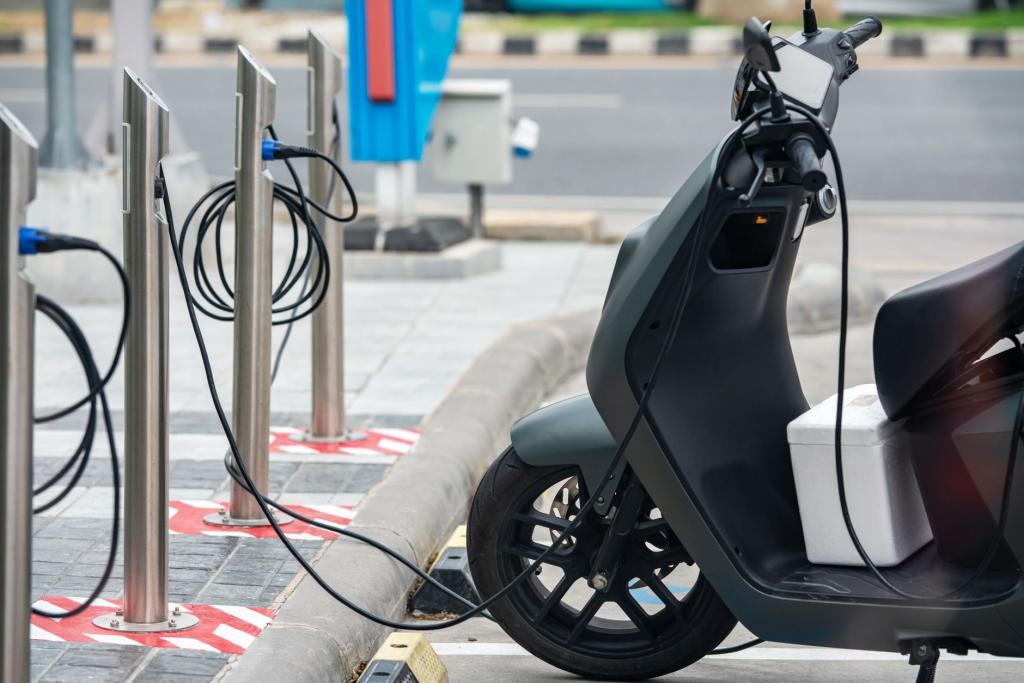
EV Sales Are Growing Again, and the comeback is happening in the least expected place: after purchase tax credits were canceled last year and sales cratered, the United States electric car market has now grown for three straight quarters. Electric vehicles captured their best share of the American market in a year, and Europe just posted record EV sales of its own. The obituary for the electric car, it turns out, was written too soon.
The US numbers come from a new report by automotive research firm Cox Automotive, as reported by TechCrunch this week. EVs took just over six percent of the American market, their strongest showing in about a year. That matters because the market was supposed to be in freefall. When the tax credits disappeared, buyers vanished, and for a while it looked like America's electric transition had stalled for good.
What changed is refreshingly simple: price and fuel. EV prices have become more competitive, and high gasoline prices have pushed cost-conscious buyers back toward plugs, according to Stephanie Valdez Streaty, the firm's director of industry insights. In her analysis of the report, she described the market as "finding its footing again." Toyota, Rivian, and Subaru led the pack, and refreshed Toyota and Lexus electric models nearly doubled their sales after arriving at dealerships late last year with bigger batteries, stronger motors, faster charging, and Tesla-style charging ports.
Tesla Fell While the Market Rose
Here is the twist in the data: the company that started the EV era is not the one driving the rebound. Tesla's sales dropped by roughly a fifth compared with the same quarter last year, even as the overall market grew. Tesla still sells more than half of all electric cars in the country, so its first-mover advantage is intact. But the growth now comes from rivals, which is exactly what a maturing market looks like. EV Sales Are Growing Again not because one company carried the quarter, but because the field got wider.
The pattern is not even unique to America. Germany went through the same cycle three years ago. Berlin canceled EV purchase incentives in November of twenty twenty-three, a year earlier than planned, and sales plunged the following month to a fraction of their previous level. From that low, the market rebuilt itself steadily. By August of this year, German EV sales had reached their second-highest monthly level on record. The lesson: subsidies can pull demand forward, but they are not the only thing holding the market up. Once prices and fuel costs make the math work, buyers return on their own.
Europe Just Had Its Biggest EV Year
Across the Atlantic, the numbers are even louder. A new study by the Brussels-based advocacy group Transport & Environment found that electric car sales across the European Union hit record volumes this year, with more than one and a half million battery-only cars sold from January through August, up forty-five percent from a year earlier. Battery electrics took about twenty-two percent of the market, six points higher than the same stretch last year. In the second quarter, battery-powered cars outsold gasoline cars for the first time over a full quarter.
The group called this year a turning point for affordability. Carmakers expanded their lineups by half in a single year to meet emissions targets, with about sixty new models expected by the end of the year. Several new entries arrived priced below twenty-eight thousand dollars, and European brands supplied nearly sixty percent of the available models. Record fuel prices did the rest: with diesel costs surging since the Middle East conflict began, Reuters reported that home-charged electric cars now cost about half as much to run as gasoline or diesel cars. "Petrol and diesel drivers pay the price of Europe's oil dependency, electric drivers do not," the study's authors wrote.
What It Means for First-Time Buyers
For young buyers shopping for a first or second car, the timing is unusually good. A wave of affordable models means the sticker shock that defined early EVs is fading, and the used market is filling up with three-year-old electrics coming off leases at prices a twenty-something salary can reach. High gas prices hurt at the pump but sharpen the running-cost argument: if you can charge at home or at work, the monthly math increasingly favors a plug.
The counterpoint is that none of this is guaranteed. The American rebound leans on high fuel prices and refreshed model lineups, both of which can shift. Tesla's slump shows that brand loyalty in EVs is no longer automatic, and charging access is still uneven outside cities and suburbs. Europe's surge, meanwhile, is tangled up with fuel prices driven by conflict, which could swing the other way. EV Sales Are Growing Again, but the growth rests on economics, not inevitability.
Still, the direction is clear, and it is broader than any single launch. The same week the sales data landed, Tesla's Roadster reveal grabbed the spectacle lane, its driverless cabs scaled up in Austin, and Volvo bet big on next-generation driving tech. The industry's attention has moved past the question of whether EVs survive to the question of which ones win. For buyers, that competition is the whole point: more models, keener prices, and a market that no longer needs a tax credit to keep moving.
Comments 0
No comments yet. Be the first to share your thoughts!
Leave a comment
Share your thoughts. Your email will not be published.