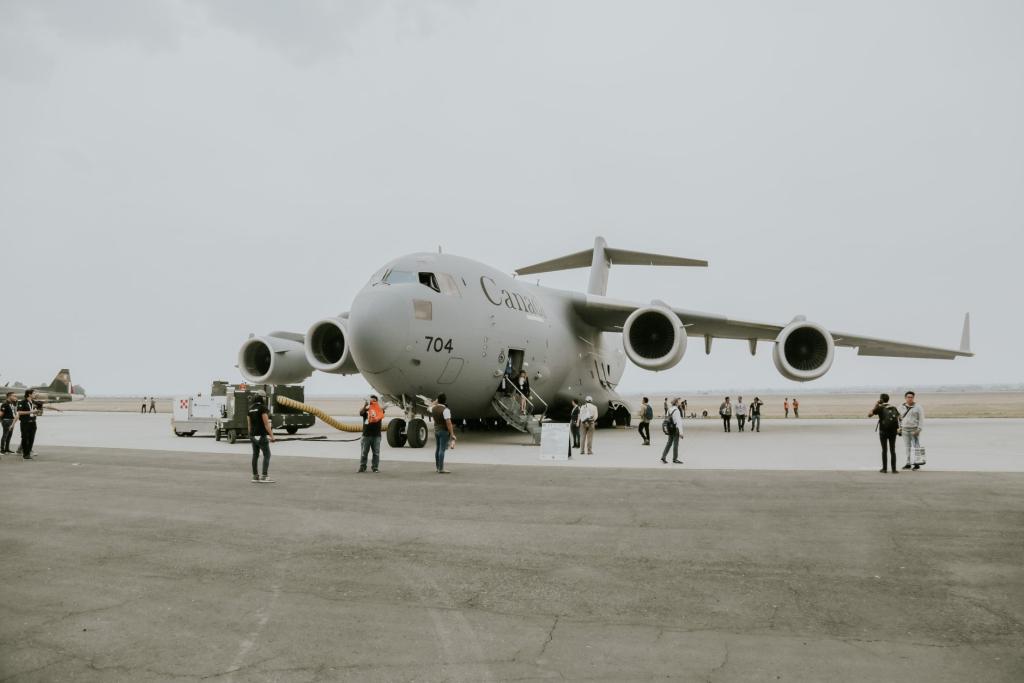
The U.S. military announced on September 30 that it had completed the Iraq withdrawal, pulling the last American troops out of the country and ending the campaign against the Islamic State group, according to the Associated Press. The final troops left an air base in northern Iraq under an agreement between Baghdad and Washington.
President Donald Trump hailed the withdrawal in a social media post, calling the mission "a very expensive excursion into Hell" and describing the departure by the deadline as "orderly." At a White House event soon after, he spoke at length about the war: "It's been a long time with very bad decision making that got us involved in this quagmire in the first place. It was a quagmire. For many, many years it lasted. But soon that part of history will be over."
Pentagon spokesperson Sean Parnell said in a statement, as reported by TNND, that coalition troops and equipment had completed an "orderly departure" from Erbil Air Base in the semi-autonomous Kurdish region. "This milestone reflects the success of a 12-year campaign that defeated ISIS as an organized military threat in Iraq and across the region," he said. "It also marks a transition from a wartime coalition mission to an Iraqi-led security effort supported by a more normal bilateral security relationship." The U.S. military will continue targeted training and intelligence support for Iraqi partners, the Pentagon added.
Iraqi Prime Minister Ali al-Zaidi presided over the handover ceremony and described the withdrawal as the beginning of "a new phase, one defined by Iraq's sovereignty, the strength of its institutions, the readiness of its forces, the unity of its decision-making, and balanced partnerships with its friends." He said Iraqi forces will continue the fight against IS and that the government will ensure non-state groups no longer hold weapons. Trump, in his White House remarks, praised al-Zaidi as "outstanding" and said he hoped the prime minister would handle the transition well, the AP reported.
From invasion to the final flight out
U.S. troops invaded Iraq in 2003 to topple Saddam Hussein and departed in 2011. Three years later, Iraqi authorities invited a smaller U.S.-led mission back after the Islamic State group seized large areas of territory across the country. With the extremist group reduced to scattered sleeper cells, Washington and Baghdad agreed in 2024 to wind the mission down. Troops pulled out of bases across most of Iraq last year, while hundreds remained in the semi-autonomous northern Kurdish region until the final departure announced Wednesday.
The exit comes while the United States and Israel are at war with Iran, a conflict that began on Feb. 28 and has repeatedly spilled over into Iraq. Iran-backed militias have fired on U.S. troops there, and the U.S. has struck the groups' strongholds in response. Bases in the Kurdish region have come under regular attack during the fighting, and Iran-backed Iraqi militias have also coordinated with Yemen's Houthi rebels to strike Saudi Arabia, according to the AP. For more on this week's security crises across the region, read the Flydubai cockpit attack passengers had to stop and Iran's student protests over hijab, tuition and defiance.
Celebration in Baghdad, anxiety in Erbil
Baghdad touted the end of the mission as a sign of the country's growing strength and sovereignty. Iraqi security officers celebrated in convoys through the capital, flashing victory signs from vehicles draped in national flags, according to the AP. The government declared October 1 a national Day of Sovereignty, as reported by Particle News. Iran-backed groups also celebrated the departure. Abu Mujahid al-Assaf, a security official with the powerful Kataib Hezbollah militia, said in a statement: "The expulsion of the occupation forces, defeated, from the land of Iraq is the beginning of full sovereignty." He warned that any government that "does not work for the benefit of the people" would be "overthrown by all means."
In the Kurdish region, the mood is different. Many there fear the departure could embolden Iran-linked groups and give ISIS remnants room to regroup. The Kurdish regional government's Peshmerga Ministry said the region had faced more than 1,000 drone and ballistic-missile attacks during the U.S.-Iran conflict, and that "the departure of the United States from the Kurdistan Region under these complex regional circumstances, without the provision of a defense system, is a matter of concern." The anxiety centers on the removal of U.S. air defense systems from Erbil, which regional officials say Iraqi forces cannot replace.
Questions also loom over the powerful militias that the Baghdad government wants disarmed. A handful of smaller groups agreed to hand over their weapons, but stronger groups close to Iran rejected the plan or set conditions the government is unlikely to meet. Al-Zaidi told The New York Times that the disarmament deadline had been moved to June 2027. The Islamic Resistance in Iraq, an umbrella group of Iran-backed militias, said in a statement that weapons negotiations with the government had not produced an agreement and that it was "not bound by any timeline or agreement," while remaining open to dialogue that guarantees Iraq's sovereignty and dignity.
The Iraq withdrawal closes a long and uneven effort by Washington to pivot its military focus toward Asia. What remains is the relationship the Pentagon described: an Iraqi-led security effort backed by American training and intelligence. Whether Iraqi institutions can hold the line against armed militias and ISIS sleeper cells is the question Baghdad must now answer without U.S. troops on the ground.
Comments 0
No comments yet. Be the first to share your thoughts!
Leave a comment
Share your thoughts. Your email will not be published.