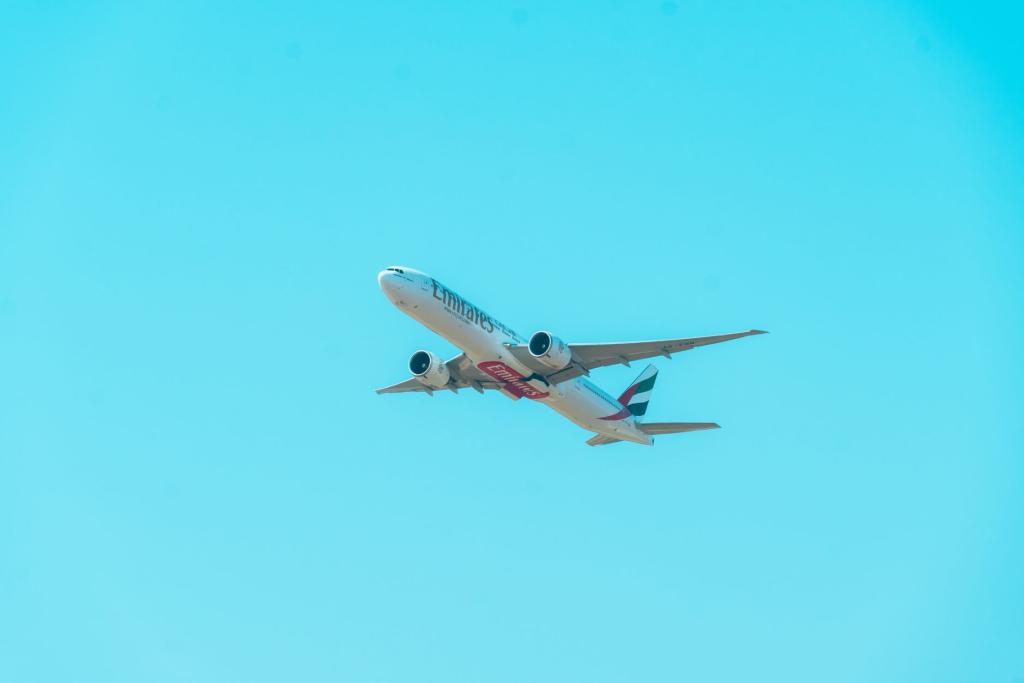
On Wednesday, September 30, a routine Flydubai flight from Dubai to Tel Aviv became a fight for the cockpit. The co-pilot allegedly stabbed the captain mid-flight, throwing the Boeing 737 MAX 8 into a terrifying dive before passengers and off-duty crew members forced their way into the flight deck and took the plane back. The Flydubai cockpit attack ended with an emergency landing in Saudi Arabia and every passenger walking off the plane alive, but it has exposed a blind spot in aviation security that experts have warned about for years.
What happened on the flight
Flight FZ1073 had been airborne for roughly two and a half hours when flight-tracking data registered the first sign of the Flydubai cockpit attack, according to detailed reporting by Tech Times. At half past one in the morning Eastern time, the jet's transponder switched to squawk 7700, the international code for a general emergency. Seven minutes later the code changed to 7500, the signal reserved for unlawful interference with an aircraft, and Flightradar24 data showed the plane dropping more than fourteen thousand feet in under thirty seconds before partially recovering.
Israeli officials say the co-pilot attacked Captain Smit Machchhar in the cockpit and tried to bring the aircraft down. Prime Minister Benjamin Netanyahu named the wounded captain, describing him as an Indian national, according to Indian Republic's account of his remarks. Despite severe stab wounds, the captain fought back and managed to unlock the cockpit door, which let passengers and cabin crew rush in and overpower the attacker. Passengers later described screaming, blood near the flight deck, and a plunge so violent that one traveler told Israel's Channel 12 he feared he was living through another September 11. All one hundred seventy-four people aboard survived the Flydubai cockpit attack, and no passengers were injured.
Once the Flydubai cockpit attack was over, the airline confirmed that crew members traveling on the flight had secured the aircraft and diverted it to Tabuk in northwestern Saudi Arabia, where it landed safely, according to the Law Street Journal. Both pilots were taken to hospital. The captain underwent surgery and is now in stable condition, with the Indian Embassy in Saudi Arabia confirming he is receiving proper medical care. A dentist traveling as a passenger, Shota Musev, helped treat the captain's wounds mid-flight before the jet touched down, the Law Street Journal reported. A replacement aircraft carried the passengers onward to Tel Aviv later that evening.
The security system that could not see this coming
The Flydubai cockpit attack broke the single assumption behind every post-September 11 cockpit defense. The reinforced flight deck door, the keypad overrides, and the transition protocols were all engineered to keep an attacker outside the cockpit. None of them offers any protection when one of the two authorized people inside turns on the other. Aviation analysts quickly drew the parallel with the Germanwings disaster of 2015, when a co-pilot locked himself alone in the cockpit and flew an Airbus into the French Alps, killing all one hundred fifty people aboard. That crash produced a short-lived two-person rule at many airlines, but the requirement was relaxed within a couple of years, leaving a patchwork with no binding global standard.
What saved this flight was not a system at all. Off-duty Flydubai pilots happened to be traveling as passengers, and they were the ones who entered the cockpit and brought the jet under control. Had they been on any other flight that night, there would have been nobody aboard qualified to fly the plane once both certificated pilots were hurt. Netanyahu called the Flydubai cockpit attack a most serious security incident and praised the passengers who physically subdued the attacker as heroes, telling CNN the captain had prevented a catastrophe on the scale of the September 11 attacks, according to Indian Republic.
What investigators do next
The Flydubai cockpit attack is now under formal investigation. Saudi authorities arrested the co-pilot after the landing in Tabuk and are interrogating him, and the inquiry is expected to draw in aviation and security officials from Saudi Arabia, the United Arab Emirates, and Israel. The motive remains under investigation, and early official accounts of the attacker's background have conflicted with one another, so few details have been confirmed. Israeli Transport Minister Miri Regev called for suspending Flydubai's flights to Israel and asked regulators to examine whether the airline breached its bilateral aviation agreement, according to Tech Times. Israel also said it would tighten security screening for pilots flying into the country.
The incident lands in a region already on edge. American troops completed their withdrawal from Iraq this same week, and diplomatic efforts around Ukraine peace talks have kept aviation security in the headlines. Flydubai has described the event publicly only as an altercation in the flight deck. The airline dispatched replacement aircraft to Tabuk and said its other scheduled operations were unaffected.
The Flydubai cockpit attack is the case the industry's cockpit defenses were never built to handle. The reinforced door did its job exactly as built. The problem was that nobody built a defense for the moment the threat was already sitting in the co-pilot's seat, holding a knife, with the door locked behind him.
Comments 0
No comments yet. Be the first to share your thoughts!
Leave a comment
Share your thoughts. Your email will not be published.