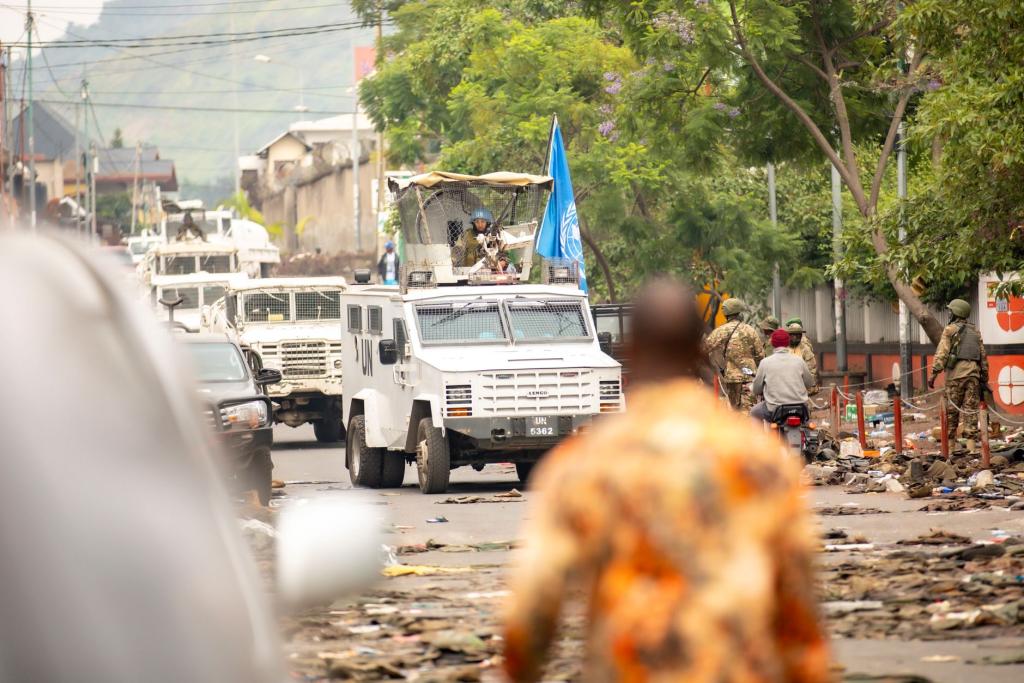
The head of the United Nations peacekeeping force in Lebanon said on Saturday that a smooth handoff of its duties is critical ahead of the UNIFIL Lebanon withdrawal at the end of this year, according to Reuters.
Major General Diodato Abagnara of Italy, who commands the force known as UNIFIL, spoke to Reuters at a peacekeeping position in southern Lebanon. UNIFIL has monitored hostilities along the border for nearly 50 years.
Since a new war broke out between Israel and Hezbollah, the Iran-backed Lebanese armed group, in March, the force has also escorted humanitarian aid convoys into a small cluster of mostly Christian towns in the south that are now encircled by Israeli troops, Reuters reported. Residents across much of the rest of southern Lebanon have been forced out by Israeli strikes and evacuation orders.
The UN Security Council has ordered UNIFIL to start withdrawing at the end of 2026. That decision has raised concerns about whether aid deliveries can continue and how the force can transfer its positions to Lebanese troops.
Escorting aid convoys is not the work UNIFIL was built for. For decades its job was watching the border area and reporting what it saw. The war that erupted in March turned it into an escort service for towns cut off by the fighting, and diplomats fear that role will vanish along with the patrols when the force leaves.
A difficult handover
Abagnara told Reuters that UNIFIL is already working with the UN's country team to keep humanitarian assistance flowing in Israeli-occupied areas and to share information with the Lebanese army about sensitive areas and how to manage them.
He acknowledged that handing over some posts will be very difficult, because more than half of UNIFIL's positions now sit inside areas controlled by Israeli troops. Diplomats worry that the departure will remove the UN's ability to see and verify what happens on the ground in southern Lebanon, Reuters reported.
According to Abagnara, the goal is a smooth transition to other UN agencies or to a new mission. Without that kind of arrangement, the UNIFIL Lebanon withdrawal risks leaving gaps in both aid delivery and the monitoring the force has done for decades. With months remaining before the deadline, Lebanese troops would need to take over posts in areas they do not currently control, while aid groups work out how to keep convoys moving to towns that depend on them.
Demolitions at Mansouri
Abagnara spoke to Reuters at a position overlooking Mansouri, a town where Israeli forces have been demolishing buildings since ordering residents to leave in June, despite a ceasefire. Reuters reporters at the scene could see excavators knocking down trees and multi-storey homes.
He described the demolitions as another violation of UN Security Council resolutions on Lebanon, according to Reuters. Israel's military has said it is destroying Hezbollah infrastructure across southern Lebanon.
The demolitions show the conditions UNIFIL faces as the withdrawal date approaches. A ceasefire is formally in place, yet towns in the south continue to be cleared while peacekeepers look on from nearby positions.
A diplomatic scramble
A US-backed plan for Lebanon's army to disarm Hezbollah and take control of southern Lebanon has stalled, Reuters reported, and diplomats are now scrambling to address the vacuum UNIFIL's withdrawal will leave.
Lebanon wants the mission extended. Other countries have discussed a new multinational mission, though it remains unclear what kind of mandate such a force would have, according to Reuters. UN agencies are under strain on several fronts at once, including the record global hunger the World Food Programme is confronting under its newly appointed leader.
Abagnara said an extension would be a great honor, but that without a new Security Council decision his force would have to stop operating at the end of the year. He said time is short and that the UN presence in the south is essential, more now than ever.
As it stands, the force is preparing to leave on schedule while hoping the Security Council acts. Until then, UNIFIL continues its patrols and convoy escorts along a border that has been its beat for almost 50 years.
Comments 0
No comments yet. Be the first to share your thoughts!
Leave a comment
Share your thoughts. Your email will not be published.