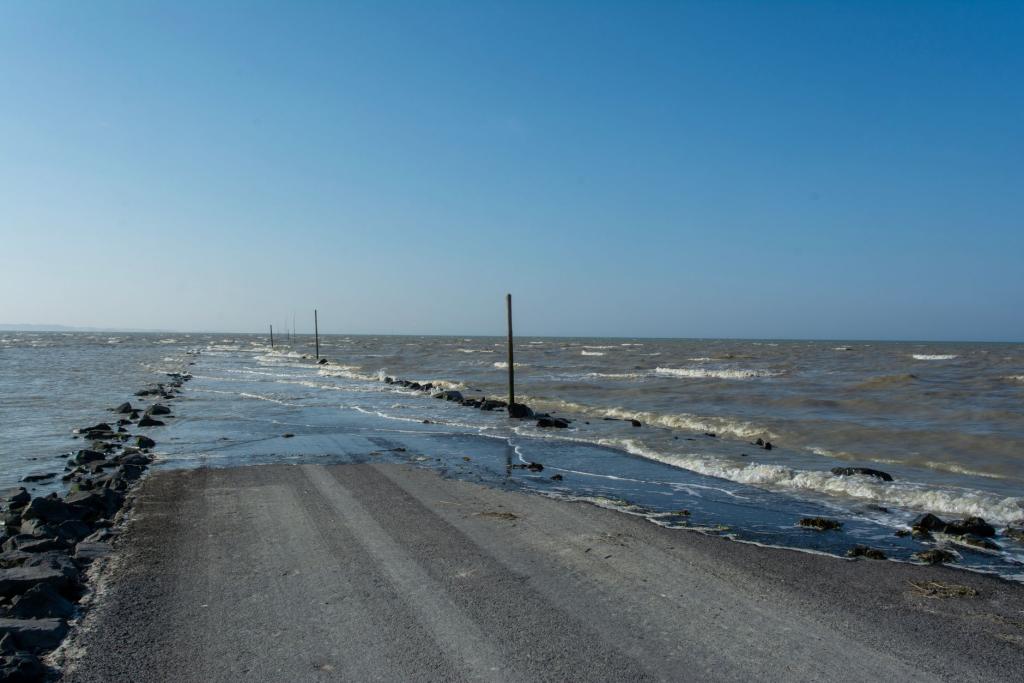
World leaders at the UN General Assembly are expected to adopt the UN Declaration on Sea Level Rise on Thursday, the first international declaration devoted to the rising oceans threatening to erase low-lying nations from the map. The one-day high-level plenary meeting, held during the Assembly's eighty-first session, caps a two-year push by Pacific island states to force the issue onto the global agenda.
Sea level rise is among the most visible consequences of global warming, but for some countries it is an imminent existential threat. Around 770 million people live in coastal areas affected by rising seas, according to UN News, and the global mean sea level is rising and accelerating, the UN's climate science panel says. Just a half-metre rise by the end of the century could force between 150 million and 300 million people from their homes.
The legal question no one wanted to ask
The declaration's most unusual section answers a question lawyers once treated as hypothetical: if a nation's territory is submerged, do its exclusive economic zone and its UN seat survive? The draft affirms the presumption in favour of continued statehood, stating that the disappearance of one element of a state would not necessarily end its statehood, and calls for international support so states facing land changes can maintain institutional functions. It also stresses stability of maritime zones: once established under the UN Convention on the Law of the Sea, states can keep their maritime zones even as coastlines change.
For Tuvalu and Kiribati, that paragraph is existential. Home to around half of Tuvalu's twelve thousand people, Fogafale Island is already vulnerable to flooding, shoreline erosion and rising seas along the southern lagoon coast. Some small island states are planning for the possibility of being swallowed by the sea, with Tuvalu moving to become the world's first "digital nation," preserving its government, culture and records online. The nations that contributed least to the warming are facing its worst consequences.
What the declaration actually does
The four-page declaration expresses deep concern about sea level rise and emphasizes the need to implement international law and strengthen action to protect the shared environment. It lays out four pillars of action aimed at building resilience, adapting coastal communities and coordinating international support. The IISD's SDG Knowledge Hub reported that member states finalized negotiations last month, and the draft passed a silence procedure on August 20, clearing the way for adoption by consensus on Thursday.
The Assembly first took up the issue at a high-level meeting on September 25, 2024, then decided to hold a follow-up during its eighty-first session. Australia's permanent representative James Martin Larsen and Cabo Verde's permanent representative Tania Serafim Yvonne Romualdo co-facilitated the negotiations that produced the text.
Why island nations pushed for it
The diplomatic engine behind the declaration is the Rising Nations Initiative, launched in 2022 by Pacific and Caribbean island states. Saint Kitts and Nevis, together with Palau, Tuvalu and the Maldives, co-convened the initiative, which has now established the Rising Nations Institute. On September 21, leaders gathered at the Harvard Club of New York for a gala dinner celebrating the declaration's adoption, hosted during the General Assembly's high-level week, according to Saint Kitts and Nevis.
At the negotiating table, Pacific island leaders described saltwater intrusion into taro plots and cemeteries washing into the surf. Caribbean ministers cited hurricane reconstruction debts that leave no fiscal room for seawalls. African coastal states said mangrove restoration is cheaper than concrete but that they need satellite monitoring they cannot afford alone. Wealthier delegations accepted references to "enhanced support" without quantifying dollars, leaving the fight over replenishing the Green Climate Fund to budget seasons in Washington, Brussels and Beijing.
The United States and the European Union aligned on open-data pledges for tide gauges and ice-sheet modeling, while stressing that adaptation grants must include anti-corruption safeguards. China's representative emphasized South-South cooperation and technology transfer without accepting new binding finance targets. Details of the day's debate are in coverage of the adoption. For readers following our climate emergency coverage, the pattern is familiar: broad agreement on the crisis, hard bargaining on who pays.
The meeting sits beside a crowded General Assembly agenda, with wars in Iran, Ukraine, Gaza and Sudan alongside AI safety debates. UN Environment Programme schedules show back-to-back sea-level panels through the afternoon, a signal the secretariat wants momentum before the next round of climate talks. The declaration's value, negotiators said, is coordination: a shared checklist ministers can cite when bidding for World Bank projects or arguing that migration funding should cover planned relocation, not just emergency shelters.
Whether the declaration changes anything on the ground will depend on what follows. The text sets expectations, not obligations, and the money question remains open. But for the island states that spent two years pushing the process, Thursday marks a shift: sea level rise is now formally on the international agenda as a question of statehood and survival. More of the week's developments are tracked in our ongoing climate emergency coverage.
Comments 0
No comments yet. Be the first to share your thoughts!
Leave a comment
Share your thoughts. Your email will not be published.