Governor Gavin Newsom proclaimed a statewide emergency on September 21 to get California ready for what could become the strongest El Niño storm season on record. According to a statement from his office, the emergency order lets state agencies skip the usual red tape, pre-position flood-fighting gear, and start coordinating with local and tribal governments before winter storms arrive.
The declaration is a preemptive move. Federal forecasters at the National Oceanic and Atmospheric Administration say the developing El Niño has a greater than 90 percent chance of being very strong this fall and winter, with a 75 percent chance it reaches historic strength. The governor's office says the event is already breaking records and forecasters expect it to keep intensifying.
What the emergency order does
The proclamation puts the Governor's Office of Emergency Services in charge of statewide preparedness and suspends competitive-bidding rules so agencies can lock in emergency contracts quickly. The Department of Water Resources is tasked with staging flood-fighting supplies, including sandbags and pumps, and its dam safety division is reaching out to dam owners about inspections and operational readiness, according to the text of the proclamation.
Caltrans will single out the highways, bridges, and drainage systems most exposed to storm damage and stage traffic-control, road-closure, and snow-removal equipment along those routes. The California National Guard is being prepared to back up flood response, search-and-rescue, engineering, and logistics missions. The order also pushes state environmental and natural resources agencies to fast-track permits for local flood, landslide, and debris-flow work, and calls for expanded multilingual emergency communications so more residents get alerts in the language they speak.
In a statement, Newsom said the action is about "giving communities the support they need" and "giving first responders the tools to do their jobs," so families can have "the confidence that their state is ready." The statement says early preparation is meant to make sure every Californian can be "safe in their home" and "protected when severe weather comes."
Why this El Niño has forecasters worried
El Niño is a natural climate pattern driven by warmer-than-average ocean temperatures in the tropical eastern Pacific. That warming flips the usual setup, weakens trade winds, and reroutes storm tracks around the world. For California, a strong El Niño typically means wetter and more volatile winters. Climate change, the governor's office notes, can supercharge the pattern: a study published in the journal Science last month found El Niño events are now more than 36 percent stronger than before the industrial era, with that trend accelerating over the last 40 years as the planet warms.
The Pacific is running unusually hot. NOAA's Climate Prediction Center reported in its September 10 diagnostic discussion that sea-surface temperature anomalies reached +1.8°C in the central Pacific's main El Niño monitoring zone, with readings of +2.5°C in Niño-3 and +3.4°C in Niño-1+2, according to reporting by The Watchers. Warm water that far out of bounds loads the atmosphere with extra energy and shifts the jet stream south, steering storms toward the West Coast.
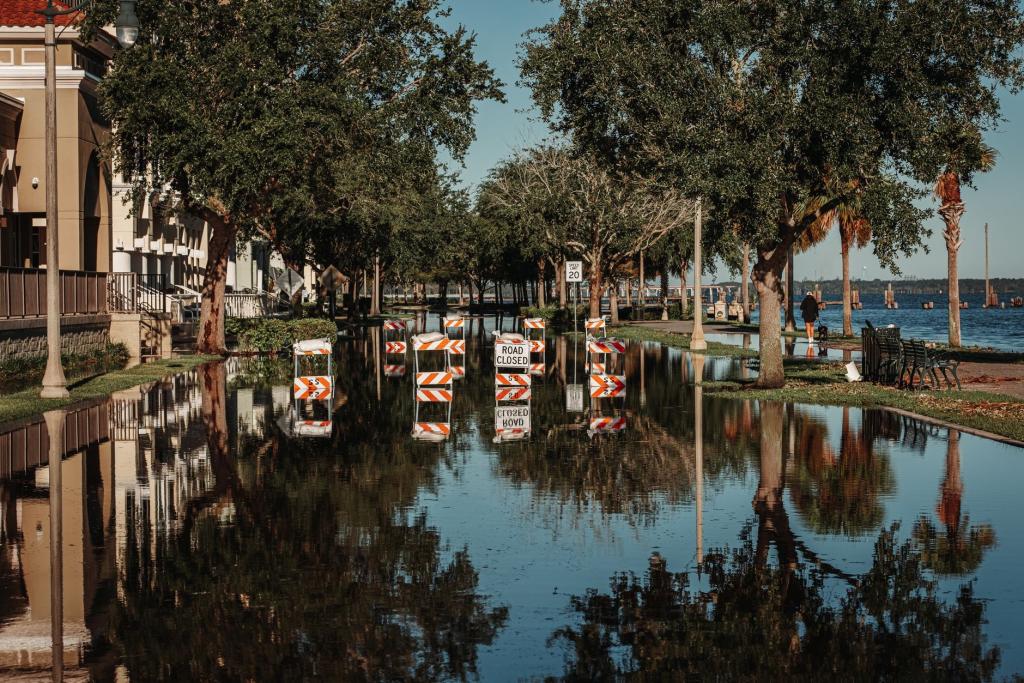
California is already seeing early effects. The governor's office says the state has experienced coastal flooding attributed to the developing El Niño, as slow-moving "Kelvin waves" raise sea levels and offshore hurricanes fed by the warm water send powerful surf battering the coast. Looking ahead, officials warn of repeated rounds of heavy rain, strong winds, mountain snow, flooding, landslides, debris flows, large waves, and coastal flooding, especially when storms hit during very high tides.
State emergency officials say they are not waiting for the worst to show up. Cal OES Director Caroline Thomas Jacobs said advance planning is meant to give communities and first responders the personnel, equipment, and support they need before "this season's storms" arrive. Natural Resources Secretary Wade Crowfoot said California is "already taking steps" to protect communities from what could be a historic event, and that the order is "cutting red tape" so flood-protection work gets done before "the worst storms arrive."
How Californians are being told to prepare
Alongside the El Niño order, Newsom signed separate emergency proclamations to support recovery from earlier severe weather that hit Glenn, Humboldt, Kern, Mendocino, and Santa Barbara counties, plus a major sewage spill in Lake County. He also terminated 34 open states of emergency from 2023 and 2024 that officials say are no longer needed for response and recovery.
For residents, the governor's office is pushing a simple checklist: know your flood risk, clear drains and gutters, sign up for local emergency alerts, and have an evacuation plan with emergency supplies, including provisions for pets. Officials say to pay close attention to forecasts because conditions can shift fast during major storms, and to follow instructions from local emergency officials.
One warning in particular is aimed at drivers: never drive through floodwater. Water on flooded roads can run deeper and faster than it looks, and the roadbed underneath may be damaged or washed out, so the official advice is to turn around and find another route.
Comments 0
No comments yet. Be the first to share your thoughts!
Leave a comment
Share your thoughts. Your email will not be published.