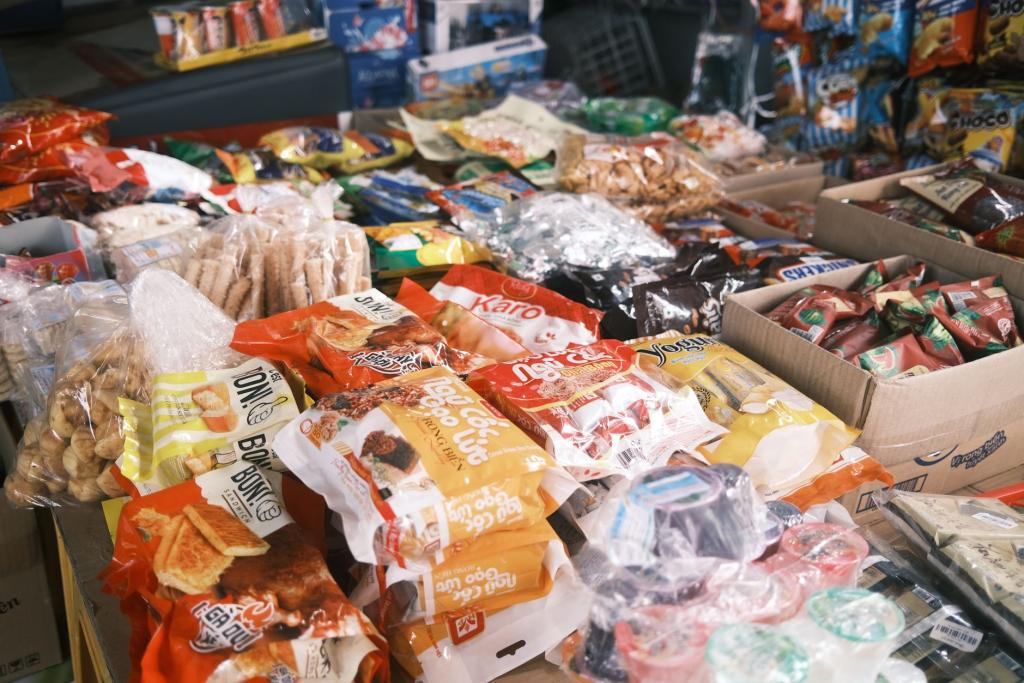
California just decided your grocery labels need a new seal — and your drive-through menu is getting a warning icon. On September 28, 2026, Governor Gavin Newsom signed a ten-bill health package that creates the country’s first government-backed “non-ultraprocessed” food certification and forces big chain restaurants to flag drinks loaded with a full day’s worth of added sugar. It is the latest front in the national fight over ultra-processed food.
The centerpiece for anyone who eats is Assembly Bill 2244, which sets up a voluntary “Non-Ultraprocessed Certified” seal modeled on the USDA Organic label. The California Department of Public Health will oversee accredited third-party certifiers — accreditation must be complete by June 2029 — and products that earn the seal will need recertification every three years, with penalties for misuse, according to the governor’s office announcement covered by Food Business News.
What the non-ultraprocessed seal actually means
Ultra-processed foods — the soft drinks, packaged snacks, and ready meals built from industrial formulations — now dominate the average grocery cart, and California is betting shoppers want an official way to spot what is not one of them. The seal is voluntary, so no company is forced to apply, but big grocery stores with more than ten million dollars in annual sales that carry at least twenty-five certified product types will have to display them prominently, through signage or dedicated placement.
The bill passed the Legislature unanimously and builds on a 2025 law that made California the first state to define ultra-processed food and start phasing it out of school meals. The framing from the bill’s author is deliberately kitchen-table: Assemblymember Jesse Gabriel said parents should not “need a Ph.D. in chemistry” to understand what they are feeding their kids, per Newsroom America’s September 28 report.
Sugar-cube icons are coming to your menu
The second headline measure targets the drink in your hand. A companion law requires chain restaurants with at least twenty locations to mark any beverage containing a full day’s recommended added sugar — or more — with a sugar-cube icon inside a black triangle. The icon goes directly on drive-through menu boards and on other menus in print or on screen, starting in January 2029. Like the grocery seal, the menu law bets that unavoidable information changes behavior — the core theory behind the whole ultra-processed food labeling push.
The law’s author, state Senator Akilah Weber Pierson, framed it as information rather than prohibition: the point is that Californians “should not have to guess” how much added sugar is in the beverages they order, and the measure is “about transparency,” her office said in its release. A related provision requires chains to offer at least one children’s meal meeting nutrition standards — capped at 550 calories with at least two specified food-group servings — and to train employees on the rules by July 2027.
Why this matters if you are under 25
For a generation raised amid the ultra-processed food boom, the stakes are concrete: Gen Z eats at chains and drinks sweetened beverages at rates the industry notices, which means the sugar-cube icon will land exactly where young people order. The new seal, meanwhile, will reshape grocery aisles over time — it is modeled on the organic label many shoppers under 30 grew up navigating, so the learning curve is short.
One more piece of the package hits teens directly: the state banned the sale of over-the-counter weight-loss and muscle-building supplements to minors. The governor’s office noted that nearly one in ten adolescents has used such products and that users face dramatically higher odds of an eating-disorder diagnosis within three years. The package also restricts single-use vapes and vape advertising.
The skeptics have a point, too
Not everyone is cheering. Restaurant owner and Huntington Beach councilman Andrew Gruel argues the rules add compliance costs without improving diets, quipping that “you cannot eat a warning label, and you cannot sauté a certification seal.” His broader complaint: voluntary certification tends to favor big manufacturers with compliance departments, while smaller producers get priced out of the seal.
There is also the honest question of whether labels change behavior. Warning icons and seals inform choices; they do not make the healthier option cheaper or closer. And none of this takes effect overnight — the timeline runs from employee training in 2027 to menu icons and certifier accreditation in 2029. At the federal level, there is still no official ultra-processed food definition, though federal health agencies have submitted a proposed one for final review, according to the trade-press coverage.
Still, California has a habit of exporting its rules. Seat-belt-style, the state’s food policies often become the template other states — and eventually national brands — adopt. Whether the ultra-processed food seal becomes as familiar as the organic frog or just another logo on the shelf will depend on what happens between now and 2029. For more on how eating out keeps changing, see why dinner out now means two stops, not one and the Cooking desk.
Comments 0
No comments yet. Be the first to share your thoughts!
Leave a comment
Share your thoughts. Your email will not be published.