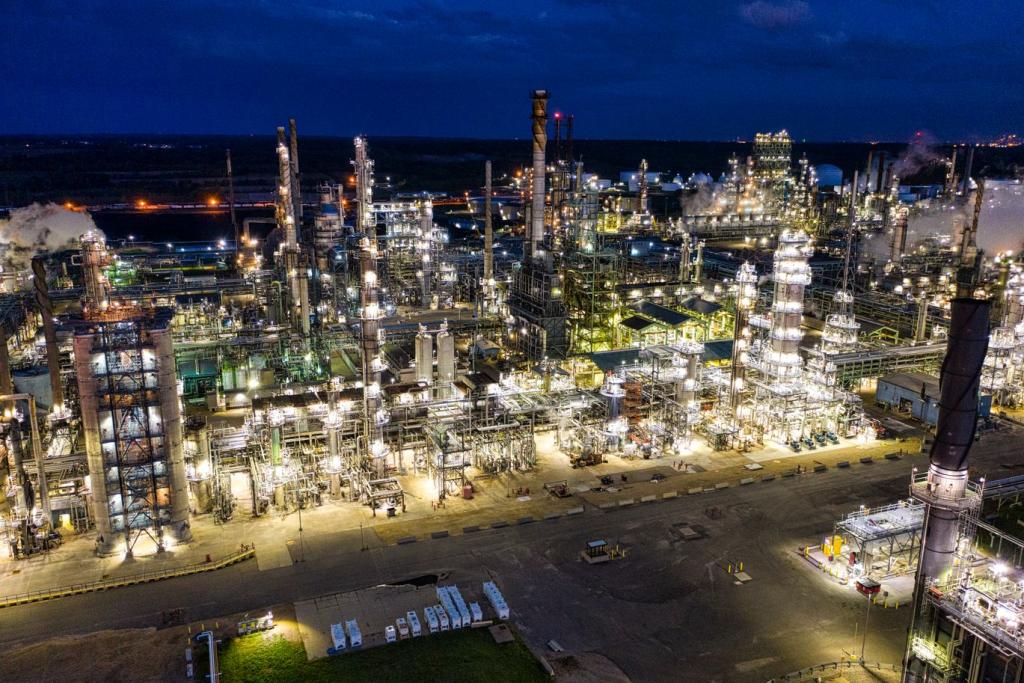
The Ryazan refinery caught fire during an attack Russia’s Defence Ministry placed between 04:00 and 07:00 local time on Thursday, Oct. 15. A senior Ukrainian official separately confirmed to the Associated Press that Ukraine hit the facility. Ryazan regional governor Pavel Malkov reported the fire and said preliminary information showed no casualties; Russia’s account of the weapons intercepted and the damage remains a claim by a party to the war.
What is confirmed
Malkov wrote on his public channel that the region had faced a mass drone attack “this night and morning,” that a fire broke out at an oil refinery, and that a warehouse and vehicles at another Ryazan enterprise were damaged. He said emergency crews were working at the sites and that officials were assessing material losses. His preliminary casualty update was that there were no injured people. The governor’s account is available in his public post and was reported by Interfax.
Russia’s Defence Ministry said the attempted attack occurred from 04:00 to 07:00 on Oct. 15, local time, and claimed that its air-defence units and other forces intercepted and destroyed 69 fixed-wing drones and four long-range Flamingo cruise missiles. It attributed the refinery fire to falling drone debris. Anadolu Agency’s Russian-language report of the ministry’s statement gives the time window and figures; those interception totals and the missile claim remain Russian military claims, not an independent count. Malkov also reported the fire, and the Associated Press reported the same damage account.
The Ukrainian side’s confirmation came from a senior official who spoke anonymously to the AP because the person was not authorized to comment publicly. The official confirmed that Ukraine had hit the refinery but did not provide a weapon count or describe the damage. The AP, carried by The Times-Standard, reported the fire at the facility about 300 kilometres southeast of Moscow. The reports consulted here do not establish whether the refinery stopped operating or lost production capacity.
Reuters described the site as a Rosneft refinery that supplies Moscow and accounts for nearly 5% of Russia’s refining throughput. That figure describes the facility’s reported share of national capacity, not the amount affected by Thursday’s fire. No verified estimate of damage to refinery units or output was reported in the accounts reviewed for this article.
What the parties said
Malkov’s public statement described an attack on the region, a refinery fire and damage at a second enterprise. The Russian Defence Ministry gave a more specific account: it said Ukraine launched the drones and four Flamingo missiles, and that falling debris started the fire. The ministry did not publish an independently verifiable count of what reached the refinery. Its statement is the account of a belligerent, not neutral confirmation.
A senior Ukrainian official confirmed the strike to AP, while President Volodymyr Zelenskyy gave the broader policy position in an interview with the Financial Times published Thursday. “The block [on attacking refineries] is out. We’re done,” he said, as quoted in Reuters’ report. That public statement concerned Ukraine’s refinery campaign; it was not a detailed account of the Ryazan operation.
Kremlin spokesman Dmitry Peskov said Thursday that Ukraine had never stopped its refinery strikes, according to AP. The two governments therefore presented different descriptions of the energy pause: Kyiv said it had observed a short halt before resuming attacks, while Moscow said it had not seen Ukraine comply. The specific Russian interception figures remain unverified by independent reporting.
How the coverage splits
The AP report carried by The Times-Standard opens with “Ukraine attacked a Russian oil refinery,” then says Kyiv was abandoning a brief truce it said Moscow had not heeded. The story labels the sides “Ukraine” and “Russia” or “Moscow,” foregrounds the ceasefire dispute and strained U.S.-Ukraine ties, and includes an anonymous Ukrainian official’s confirmation. The Times-Standard headline also puts Zelenskyy’s sense of betrayal by Trump above the refinery damage. AP reports the governor’s fire account and Peskov’s position, but omits the Defence Ministry’s 69-drone and four-missile tally and an independent refinery casualty count.
Reuters’ report headlines “Ukraine resumes strikes” alongside Zelenskiy’s “we’re done” remark. Reuters uses “Kyiv” for Ukraine and “Moscow” or “Russia” for the opposing side. It foregrounds Kyiv’s resumption after the U.S. ceasefire announcement, the Russian diesel deal and the refinery’s reported role in supplying Moscow. It reports Malkov’s fire statement and Putin’s earlier dismissal of refinery damage as “nothing particularly significant,” but not AP’s anonymous Ukrainian confirmation or the Russian Ministry’s interception totals. Reuters is not a party to the war.
Al Jazeera headlines its report “Russia says Ukraine resumes attacks” and quotes Moscow’s Defence Ministry calling it a “large-scale attack on an oil refinery,” with falling drone debris blamed for the fire. Al Jazeera uses “Kyiv” for Ukraine and “Moscow” for Russia; it foregrounds the ceasefire announcement and the Russian official account, while omitting AP’s anonymous Ukrainian confirmation and the Ministry’s interception totals. Al Jazeera is not a belligerent. The Russian Defence Ministry is a party source, so its figures and attribution are not independent verification.
The record so far
For the Ryazan refinery, the confirmed public record for Oct. 15 is narrow: the regional governor reported a refinery fire and damage at another enterprise; the Russian Defence Ministry supplied its account of the attack and claimed interceptions; and an anonymous senior Ukrainian official confirmed to AP that Ukraine hit the site. Malkov’s preliminary statement said no one was injured. No independent source in the reports reviewed confirmed the ministry’s interception totals, the extent of refinery damage or any production interruption.
The desk previously covered a separate Ukrainian strike claim involving an Omsk refinery and an earlier Russian attack that damaged power plants in Kyiv. Those reports concern different facilities and dates. For Ryazan, the essential distinction is between the fire reported at the site and the competing accounts of how the attack unfolded, which remain attributed to the officials and outlets that made them.
Comments 0
No comments yet. Be the first to share your thoughts!
Leave a comment
Share your thoughts. Your email will not be published.