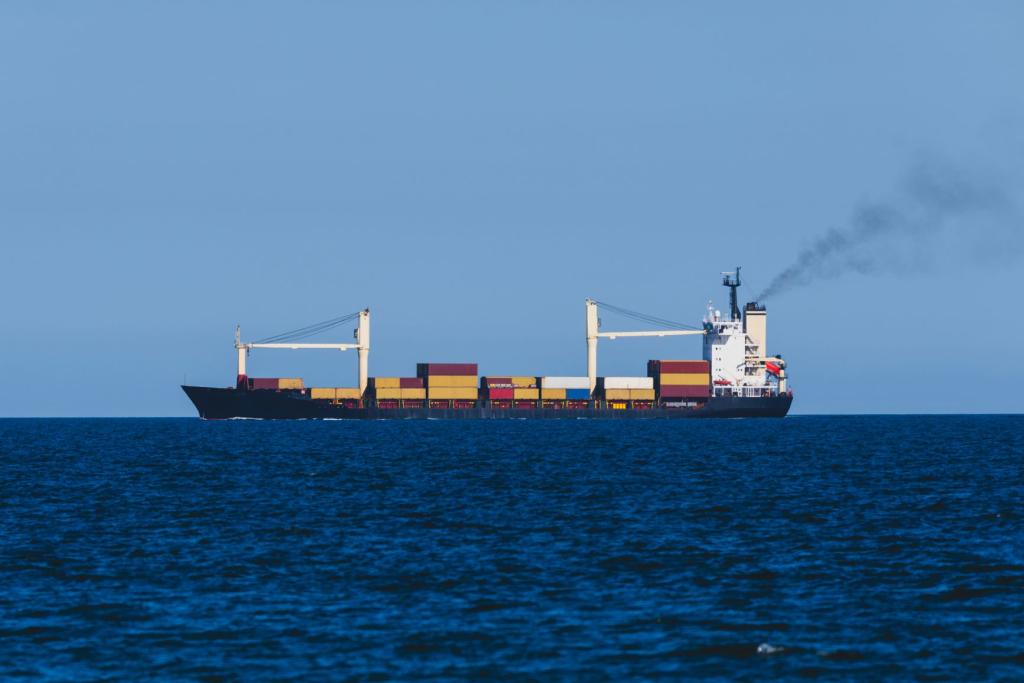
The GFS Pride sinking is the clearest sign yet that the war around the Strait of Hormuz has moved from threats to real damage on the water. The Singapore-registered container ship caught fire and went down this week after being hit while passing through the narrow channel that carries a huge share of the world's oil and cargo. All twenty-one crew members got off safely, but the story of what actually hit the ship is already splitting into two versions.
What happened to the GFS Pride
According to the Maritime and Port Authority of Singapore, the GFS Pride was struck by an unidentified projectile on Tuesday while transiting the strait. The vessel caught fire, took on water and later sank. The authority said every crew member was evacuated and nobody was injured, which is the one piece of genuinely good news in this story.
A sister ship, the GFS Giselle, was hit on Wednesday and suffered hull damage. It managed to reach a safe anchorage under its own power, and its twenty-two crew members are also fine. Singapore's maritime authority called the attacks "unprovoked, unjustifiable and a breach of international law," a pretty blunt statement from a country that usually keeps its shipping diplomacy calm.
The GFS Pride is a small container vessel, with a capacity of roughly twenty-eight hundred standard boxes, according to Reuters. Footage verified by CNN shows thick black smoke pouring off the hull, and later satellite images show cargo scattered across the water along with a small oil slick.
Iran blames a sea explosive, monitors say projectile
Iran's Revolutionary Guard navy gave a very different account. It said a "violating" container ship, carrying more than twenty-five hundred containers, tried to use an "unauthorized and high-risk" route and hit a sea explosive, which triggered an explosion and a fire. The Guard also warned local boats and fishermen to stay away from the floating containers.
Outside experts are not buying it. CNN reported that specialists doubt that account and think a drone attack is more likely, while the British military's maritime monitoring body, known as UKMTO, described both ships as hit by unidentified projectiles. A Greek maritime security firm also said there was no conclusive evidence of a mine.
The Associated Press noted that it was the first time during this war that Iran had publicly said a ship sank after striking a sea explosive. That detail matters because that claim lets Tehran frame the loss as the ship's own fault for taking an "unauthorized" route, rather than as an attack on civilian shipping.
Why shipping is so jumpy right now
This was not a one-off. The Washington Post reported that three other vessels were hit on Tuesday as well, and Reuters said a dry bulk carrier called the Cape Dao also sank near the strait weeks after being struck by a projectile. Reuters described the surge as the sharpest rise in attacks on shipping since the US-Israel war with Iran began in late February.
The rhetoric is climbing too. CNBC reported that Revolutionary Guard chief Ali Ozmaei said, "If the Americans think the Strait of Hormuz is open, let them come closer. We are impatient to sink American warships." US Central Command pushed back, insisting that American forces and regional partners "clearly control the Strait of Hormuz."
Another Iranian official warned that vessels would be "safe nowhere, even outside the Strait of Hormuz," according to The National. If that threat is real, it widens the danger zone far beyond one chokepoint and puts insurers, crews and shipping companies on high alert.
What it means for everyday prices
A container ship sinking thousands of kilometres away can seem distant, but the numbers say otherwise. CNBC reported that Brent crude climbed to about one hundred six dollars a barrel, with the Houthi attacks on Saudi oil sites adding more pressure. That helped push United States consumer prices up three point seven percent from a year earlier in September, hotter than economists expected.
Gasoline in the United States is averaging about four dollars and thirty-three cents a gallon, compared with around three dollars and eight cents a year ago, according to AAA figures cited by CNBC. Stocks slid on the inflation news, and Asian markets tumbled on Thursday. Higher fuel costs ripple into delivery fees, airfares and the price of basically everything that gets shipped.
Finance chiefs are already feeling it. G20 finance ministers and central bank governors meet in Bangkok on Thursday, and the economic fallout from the Iran war is expected to dominate the agenda, according to Al Jazeera. Crude has stayed above one hundred dollars for much of the past eight months, which strains government budgets and household budgets alike.
What to watch next
The key question is attribution. If investigators confirm a missile or drone strike, Iran's explanation collapses, and pressure grows on Washington and its partners to escort commercial ships. If a sea explosive really did the damage, shipping lines will have to treat the strait's lanes as a hazard zone, which could slow traffic and send freight rates higher.
Either way, the GFS Pride sinking has changed the mood. Shipping insurers, oil traders and ordinary drivers are all watching the same narrow strip of water, and a single misstep could escalate things fast. For more on the wider conflict, see the war coverage on GenZ NewZ, which tracks developments as they land.
Comments 0
No comments yet. Be the first to share your thoughts!
Leave a comment
Share your thoughts. Your email will not be published.