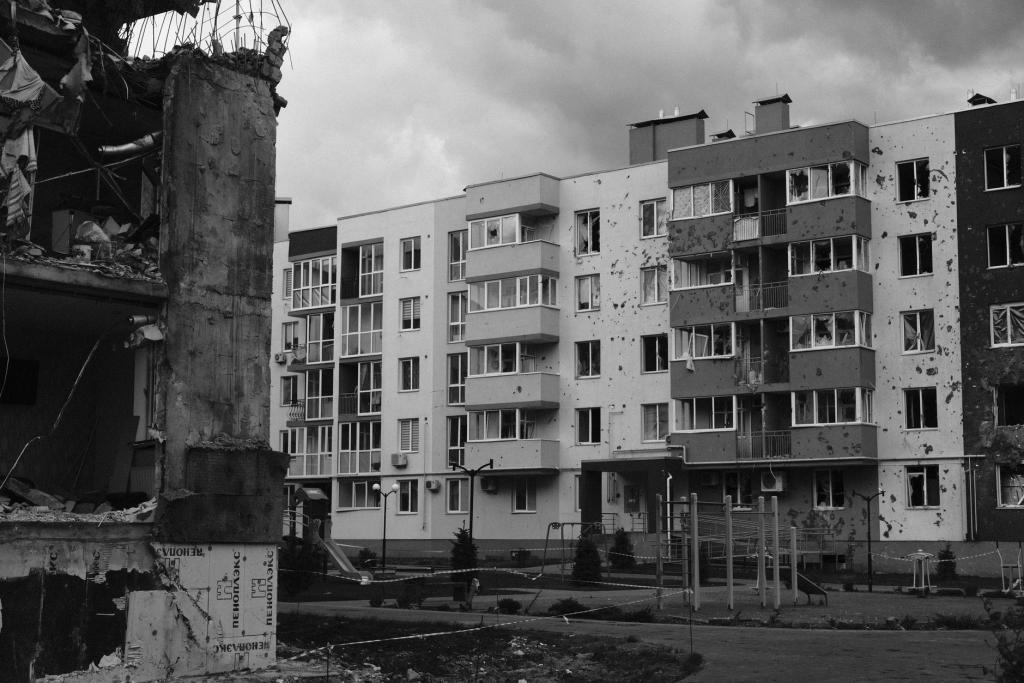
All three Kyiv power plants were damaged overnight into Wednesday, Oct. 14, and more than 600,000 people lost electricity, Ukrainian officials said. Russia’s Defence Ministry also said it hit communications and energy infrastructure in Kyiv, Kyiv Oblast and Kharkiv Oblast, but described those sites as serving military purposes.
What is confirmed
The Ukrainian Air Force said the assault began at 6 p.m. on Tuesday, Oct. 13, and continued overnight. Its morning report recorded 39 missiles and 128 attack drones. Ukraine’s air defences said they shot down or suppressed 115 drones and four ballistic missiles by 9 a.m. local time on Wednesday. These are figures from a Ukrainian military account, published by Ukrainian National News; they have not been independently verified.
The Ukrainian Air Force named Kyiv, the surrounding region and Kharkiv as the main direction of the attack. It said the missiles came from several directions and that strikes or falling debris were recorded at 22 locations, while debris from intercepted weapons fell at eight more. The report did not establish which weapon hit each site. In a separate account of the same night, the Russian Defence Ministry confirmed a large strike on communications and energy infrastructure in those regions, without providing a comparable missile-and-drone total.
Prime Minister Serhii Koretskyi said all three of Kyiv’s municipal combined heat-and-power plants were damaged, as were energy facilities in the surrounding region. He said rescuers and energy workers were at the sites. Kyiv’s largest private energy provider, DTEK, reported emergency power cuts in several districts. President Volodymyr Zelenskyy put the number of people without electricity above 600,000 and said 26 power-system facilities and four oil-and-gas sites were damaged. Those figures are his account, not an independent damage survey.
Kyiv police reported five people killed and 25 injured in the capital, according to a Wednesday morning update carried by Ukrainian National News. The same report said most casualties were at an apartment building in Desnianskyi district, where three women died; police also reported two deaths in Holosiivskyi district. Earlier casualty updates gave a lower Kyiv count, so this figure should be read as the later police tally, not a final nationwide total. Ukrainian reports also described damage to homes and railway infrastructure in other regions.
What the parties said
Zelenskyy wrote on his official X account after the Kyiv strike: “The main target was energy infrastructure, specifically CHPP-4. Unfortunately, it was hit.” He also said a residential building was damaged and that Ukraine received no early warning from its partners. His statement describes Kyiv’s account of the target and warning; it does not independently establish Russia’s intent or the full damage at the plant.
The Russian Defence Ministry, in a statement carried by Ukrainian National News, said the strike hit communications and energy facilities “used in the interests of the military-industrial complex and the Armed Forces of Ukraine.” That is Moscow’s explanation of the targets. The ministry did not publish a casualty assessment in the statement, and the sources reviewed do not independently substantiate its description of the facilities’ military use.
Zelenskyy called CHP-4 an energy facility; the Russian ministry said the facilities it struck served Ukraine’s military. The ministry did not provide evidence for that description, and the reports read here do not independently establish the use of each plant.
How the coverage splits
Al Jazeera used “massive Russian attack” in its headline and led with deaths and power cuts. Its updated report foregrounded civilian casualties across several regions and included Russia’s claim that it struck communications and energy facilities; it did not lead with the Ukrainian Air Force’s 39-missile and 128-drone count. Its report listed nine deaths overall and three in Kyiv, while a later Kyiv police update carried by UNN put the capital’s toll at five. Al Jazeera is not a party to the war.
CNN headlined its story around Ukraine’s claim that Starlink restrictions disrupted military operations, placing the energy strike in a wider account of intelligence-sharing and communications. Its energy section reported Zelenskyy’s 600,000-person outage figure and his claim that Russia fired 39 ballistic missiles and more than 120 drones. The headline gives less space to civilian casualties, and CNN’s report did not include Russia’s military-use rationale for the power sites. CNN is not a combatant.
Ukrainska Pravda framed its earlier report around the Kyiv strike and Zelenskyy’s statement that Ukraine received no warning from partners. It named CHP-4 and the damaged residential building, but that account preceded the later casualty updates and did not give a nationwide weapon count or the Russian Defence Ministry’s rationale. Ukrainska Pravda is a Ukrainian news outlet, not a party to the conflict. The Russian ministry statement is different: it is a primary account from a belligerent, and its wording foregrounds alleged military use while omitting civilian casualties.
The record so far
GenZ NewZ previously covered a separate 205-drone strike that damaged a Kyiv bridge. That report concerned a different operation; the present account centers on Kyiv power plants and the competing descriptions of their use. Another GenZ NewZ article on an alleged Ukrainian strike on an Omsk refinery involved a different side, location and target.
Kyiv’s police revised the city casualty count during the morning, while the sources reviewed did not establish one nationwide total. Russia’s statement confirms its forces struck energy and communications sites; it does not independently verify the ministry’s claim that those facilities served military purposes. That distinction separates what the accounts agree happened from what each side says the targets were being used for.
Comments 0
No comments yet. Be the first to share your thoughts!
Leave a comment
Share your thoughts. Your email will not be published.