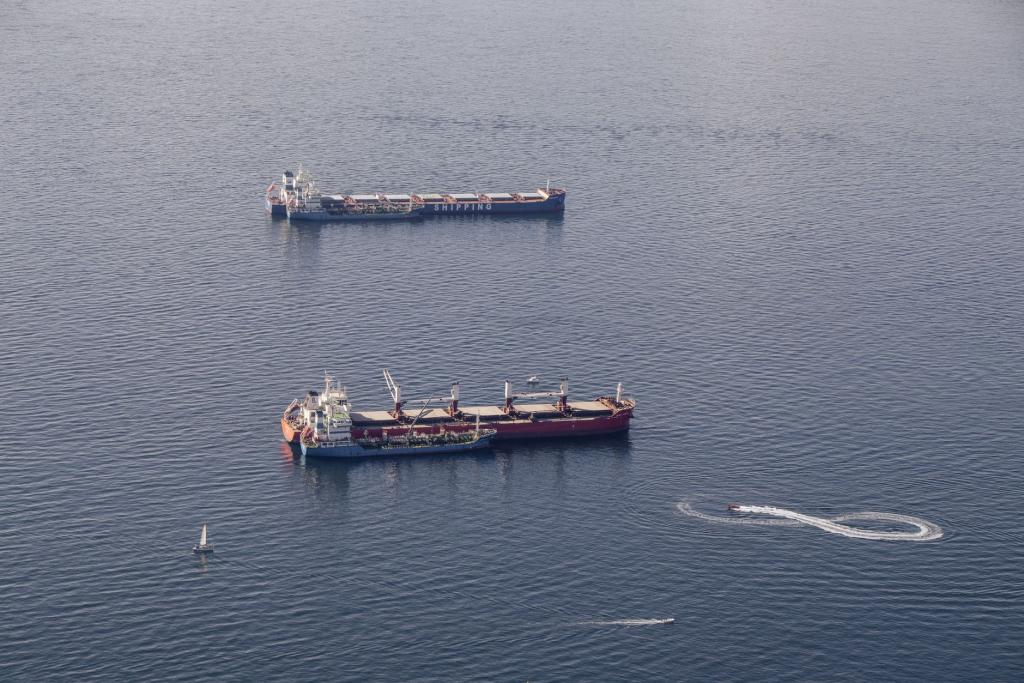
Two cargo ships sank near the Strait of Hormuz within about 24 hours of each other after being struck by unidentified projectiles in separate incidents, a sharp escalation in attacks on commercial traffic through the waterway. The sinkings were confirmed Wednesday, October 14. They are only the second and third in the Middle East since the Iran war began in February, according to International Maritime Organization data, CNN reported.
The Singapore-registered container ship GFS Pride was struck Tuesday while transiting the strait, caught fire, and later sank, according to Singapore's Maritime and Port Authority. All 21 crew members were evacuated safely. Videos verified by CNN showed black smoke rising from the ship as it took on water; later footage and satellite images showed cargo scattered across the water and a small oil slick near the wreck site.
What happened to the ships
The other vessel, the bulk carrier Cape Dao, sails under the flag of Antigua and Barbuda. It sank after damage from a projectile strike on September 23, according to the International Maritime Organization, which did not give a date for the foundering. An Indian crew member was killed in the earlier attack.
Iranian state media gave a different account of the GFS Pride sinking. Press TV reported that the ship had "hit a sea mine on an unauthorized route." Maritime experts questioned that explanation, saying a drone attack was more likely, CNN reported. The ship is owned by Global Feeder Shipping, a United Arab Emirates-based company that did not immediately answer a request for comment, according to Bloomberg.
Tankers are not the only targets. Greek maritime monitor Marisks said Thursday that vessels in the strait remain exposed to "indiscriminate attacks" regardless of flag, cargo, direction of travel, or whether crews switch off their tracking devices. The firm confirmed three merchant vessels were hit by unidentified projectiles on Tuesday alone. A second Singapore-flagged freighter, the GFS Giselle, was hit the same day and suffered hull damage, but reached a safe anchorage under its own power with none of its 22 crew hurt, the Maritime and Port Authority said in a statement. Losing a container ship outright is rare: Allianz Commercial recorded only 33 such total losses between 2016 and 2025, Bloomberg reported.
Why the strait matters
The Strait of Hormuz links the Persian Gulf to the Gulf of Oman and carried about one-fifth of the world's traded oil and liquefied natural gas before the current conflict. Attacks have intensified since the end of September, and the seven-day average flow of oil out of the region has fallen steeply since early October. Iranian strikes on tankers have added a sizable risk premium to crude prices and pushed the cost of hiring vessels sharply higher around the world.
Singapore's Maritime and Port Authority called the attacks "unprovoked, unjustifiable, and a breach of international law." Charlie Brown, a former US Navy officer and senior adviser to United Against Nuclear Iran, said the sinking of the GFS Pride "marks a dangerous escalation after weeks of near-daily attacks on commercial shipping." He questioned how long the world would tolerate threats to shipping, seafarers and freedom of navigation.
Attacks intensify as US midterms approach
Iran has expanded its maritime operations in response to a United States blockade of its ports and further economic sanctions, while Washington maintains military pressure on Tehran. Last week the US military said it destroyed an "Iranian-affiliated boat" in the Gulf of Oman. CNN reported that Tehran has stepped up the attacks in an effort to reassert influence over the waterway with the US midterm elections approaching.
The disruption is a running problem for President Donald Trump, as rising fuel prices add to the cost-of-living pressures weighing on American voters. Last week his administration announced a deal to ease some sanctions on Russia to import a relatively small amount of Russian diesel, hoping to bring prices down. The agreement has drawn criticism from both parties, and analysts cited by CNN have warned diesel prices could approach record highs by November.
Comments 0
No comments yet. Be the first to share your thoughts!
Leave a comment
Share your thoughts. Your email will not be published.