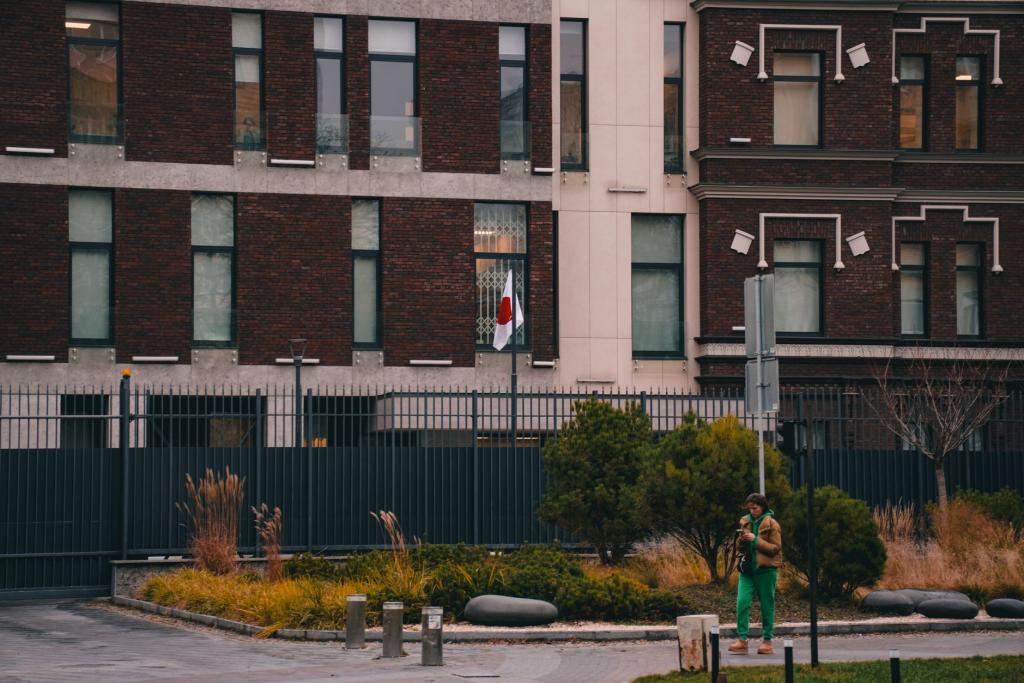
US Secretary of State Marco Rubio sat down with the foreign ministers of Japan and South Korea in New York on Monday, in a meeting aimed at calming two allies growing anxious about what President Donald Trump might concede at the Trump-Xi Summit, the White House meeting with Chinese leader Xi Jinping set for Thursday. According to Reuters, which reported on the session from New York, Rubio met South Korea's Cho Hyun and Japan's Toshimitsu Motegi at a Manhattan hotel ahead of a summit between Trump and Xi that has put America's Asian partners on edge.
The three diplomats posed for photographs but took no questions from reporters before their closed-door talks, a format that kept the substance of the meeting private while its timing spoke loudly. Trump is scheduled to host Xi at the White House on Thursday for a Trump-Xi Summit that analysts say could reshape the economic and security terms of the US-China relationship. For Tokyo and Seoul, the meeting is a high-stakes moment: both capitals want reassurance that Washington will not trade away their interests in exchange for an economic headline with Beijing.
Allies seek Trump's ear before Thursday
Japanese Prime Minister Sanae Takaichi and South Korean President Lee Jae Myung are both pushing for face time with Trump on the sidelines of the UN General Assembly in New York, according to officials cited by Reuters. All three leaders, along with Trump, are scheduled to address the General Assembly on Tuesday, turning this year's gathering into a diplomatic pressure cooker. MuseWire previously covered what to expect as world leaders arrived in New York for the session.
Takaichi's outreach carries extra weight because of her rocky history with Beijing. Last year she angered Chinese officials by saying Tokyo could be drawn into a conflict over Taiwan, a remark that drew sharp rebukes from Beijing and froze parts of the Japan-China relationship. Japanese government sources told Reuters she has been trying to get Trump's ear ahead of his meeting with Xi, a sign that Tokyo wants its concerns heard before any deals are struck.
Lee, for his part, is seeking a bilateral meeting with Trump during the UN gathering, according to South Korea's government. The request comes as Seoul and Washington negotiate the details of a $350 billion South Korean investment package in the United States, part of a trade deal the two allies struck last year. On Monday, a South Korean opposition lawmaker called for parliamentary scrutiny of the package, warning that negotiations over energy projects could leave Seoul carrying disproportionate financial risks. The domestic pressure gives Lee another reason to want clarity from Trump in person.
Taiwan and trade top the worry list
The core anxiety among US allies, according to analysts, is that Trump could offer Xi concessions on Taiwan and trade in return for an economic win. Taiwan remains the most sensitive flashpoint in the relationship: Beijing claims the democratically governed island, and any softening of Washington's support would alarm both Tokyo and Taipei. As reported by Traders Union ahead of the summit, analysts say China enters the meeting from a position of relative confidence and that both leaders currently value stability over confrontation.
Trade is the other front where allies are watching nervously. Analysts cited by Reuters said even a modest reduction in trade barriers for Beijing could erode the competitive position of Japan and South Korea, whose export economies depend heavily on access to the American market. The same analysis noted that potential Chinese concessions at the summit could include purchases of Boeing jets and American farm goods, along with steps to curb the flow of fentanyl precursor chemicals tied to the opioid crisis in the United States.
The backdrop is further complicated by the fragile US-China trade truce, which has calmed tariff threats on both sides but has yet to be extended on a long-term basis. Treasury talks in New York this past weekend produced an agreement to keep talking and a proposed AI security dialogue, but punted on the trade truce itself, as MuseWire reported on the Bessent-He meeting. That leaves Thursday's meeting as the forum where the biggest economic questions could be decided at the Trump-Xi Summit, with allies hoping for a seat at the table rather than a surprise announcement.
Tuesday's speeches will offer an early read on the tone each leader brings to the Trump-Xi Summit. Trump, Xi, Takaichi and Lee are all expected to use the General Assembly stage to frame their positions publicly, and diplomats in New York will parse every line for hints about what might be negotiable on Thursday. For the allies, a strong public reaffirmation of alliance commitments would be the clearest signal that their Monday meeting with Rubio paid off.
For now, Rubio's Monday meeting appears designed to deliver a simple message to Tokyo and Seoul: their concerns are registered. Whether that reassurance holds through Thursday's White House summit will depend on what Trump and Xi actually agree to, and on whether the allies' warnings about Taiwan and trade barriers make it into the room. With Tuesday's General Assembly speeches set to lay out each leader's public position, the week ahead will show whether quiet diplomacy or public pressure shapes the Trump-Xi Summit's outcome.
Comments 0
No comments yet. Be the first to share your thoughts!
Leave a comment
Share your thoughts. Your email will not be published.