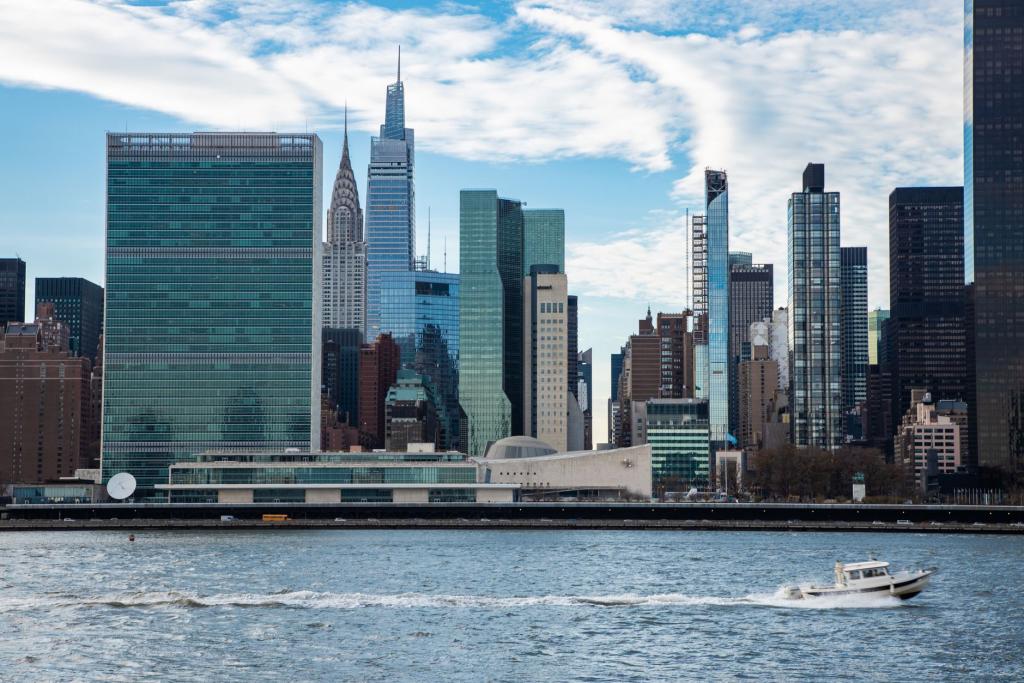
The UN General Assembly 2026 opens its General Debate on Tuesday, September 22, with roughly 130 heads of state and government converging on New York for a week of speeches, sideline deals and diplomatic theater. The session's theme, "Restoring trust, managing transformation: A United Nations that delivers for all," arrives as the institution faces open questions about its relevance and its bank balance. Outgoing Secretary-General Antonio Guterres, who leaves office at year-end, used his final pre-assembly press conference to joke that the headquarters escalator had been repaired, a nod to last year's viral moment when an escalator carrying United States President Donald Trump malfunctioned on his way to the hall. According to CNN, Guterres told reporters that extra measures had been taken so no leader would suffer a bad encounter with a people-mover this time around.
Trump's own schedule sets the tempo for the week. He arrives in New York on Monday afternoon for political events at Trump Tower, then addresses the assembly on Tuesday morning, right after Brazilian President Luiz Inacio Lula da Silva, who speaks first in keeping with a longstanding tradition. Reuters reports that Trump's bilateral calendar includes Ukrainian President Volodymyr Zelenskyy, who said the two agreed to meet in New York with Tuesday the likely day, along with British Prime Minister Andy Burnham in their first in-person meeting, Japanese Prime Minister Sanae Takaichi and Iraqi Prime Minister Ali Faleh al-Zaidi. Trump is also expected to meet Democratic New York Mayor Zohran Mamdani at Gracie Mansion on Monday to discuss issues affecting the city, a notable sit-down between two politicians who hold sharply different worldviews yet described their earlier encounters as friendly and productive.
The sideline deals to watch
Much of the week's real business happens away from the famous green podium. Two United States officials told CNN that Trump will meet Gulf leaders on Tuesday to discuss the next phase of the war with Iran, now more than six months old, with Yemen's Houthi militants attacking Saudi Arabia and threatening a crucial shipping route. A reception for the Gulf Cooperation Council is expected to produce Trump's first in-person meeting with Delcy Rodriguez, the interim president of Venezuela backed by Washington after the United States military ousted Nicolas Maduro, who now sits in jail in Brooklyn. There will also be a high-level briefing for Trump's Board of Peace, the body meant to oversee Gaza's reconstruction that Trump once suggested might eventually replace the United Nations itself.
France plans to convene a follow-up meeting on the two-state solution to the Israeli-Palestinian conflict, diplomatic sources told CNN, a year after France and several other Western countries announced recognition of the State of Palestine during last year's proceedings. Months after threatening to annex Greenland by force, Trump is expected to sign an agreement negotiated with Denmark and Greenland handing the United States what he has called permanent control over Greenlandic security, though how the arrangement would differ from the existing American military presence on the island remains unclear. Russian Foreign Minister Sergey Lavrov said he would meet United States Secretary of State Marco Rubio, according to Russian state media, while Zelenskyy arrives seeking to shore up support ahead of another difficult winter.
The speeches that will set the tone
The order of speakers often matters as much as the words. Lula opens the debate on Tuesday, Israeli Prime Minister Benjamin Netanyahu speaks on Thursday, and Palestinian Authority President Mahmoud Abbas holds a Thursday slot just before him. The Trump administration has again refused Abbas a visa, so he will almost certainly address the chamber by video for the second year running after the assembly voted to allow it. Even as it denies visas to Palestinian officials, Washington will admit Iran's core delegation, which would likely include President Masoud Pezeshkian, under travel restrictions and a ban on luxury purchases. Pezeshkian speaking in New York while his country is actively engaged in combat with the United States would be virtually unprecedented, with the closest parallel the 1977 visit of Egypt's Anwar Sadat to Israel while the two countries were technically at war.
Rodriguez makes her United Nations debut on Thursday. Lavrov speaks on Saturday. Chinese leader Xi Jinping is expected to skip New York entirely and meet Trump in Washington on September 24 instead, a split screen that analysts say could embarrass the institution, though Guterres said he was unconcerned about Xi's commitment to multilateralism. The week also carries farewells: France's Emmanuel Macron makes his final appearance, and Guterres delivers his last address after a decade in the job. An informal straw poll on his successor was held Friday, with sources telling Reuters that Costa Rica's former vice president Rebeca Grynspan holds a narrow lead. The Trump-Xi dynamic will hang over the week even in Xi's absence, following their recent state dinner in Washington.
Why this week matters for young people
Artificial intelligence has become a top-billed issue at this year's gathering. Guterres devoted more than half of his final press conference to the technology, saying it would feature in his discussions with leaders throughout the week. On Monday, tech figures, diplomats and actor Joseph Gordon-Levitt meet for a conference on digital cooperation, the Security Council holds a session on AI on Wednesday, and the United States hosts another AI event the same day. The assembly's program also lists climate action, rising sea levels, pandemic preparedness and racial justice among roughly 168 scheduled events, with member states submitting about one thousand requests for bilateral meetings.
Money talk will shadow the speeches. The United Nations finds itself on firmer financial footing than last year, when it faced a severe budget crisis. The Trump administration sent the organization 827 million dollars in dues ahead of the assembly, a fraction of the roughly four billion dollars the United States owes but a meaningful sum for a body that warned in January of imminent financial collapse. The State Department says any new secretary-general must commit publicly to returning the institution to its primary purpose of maintaining peace and security. Last year Trump asked the assembly point-blank what the purpose of the United Nations was, calling its output empty words that solve nothing. Whether this year's gathering answers that question may decide how much the institution matters to the generation now coming of age.
Comments 0
No comments yet. Be the first to share your thoughts!
Leave a comment
Share your thoughts. Your email will not be published.