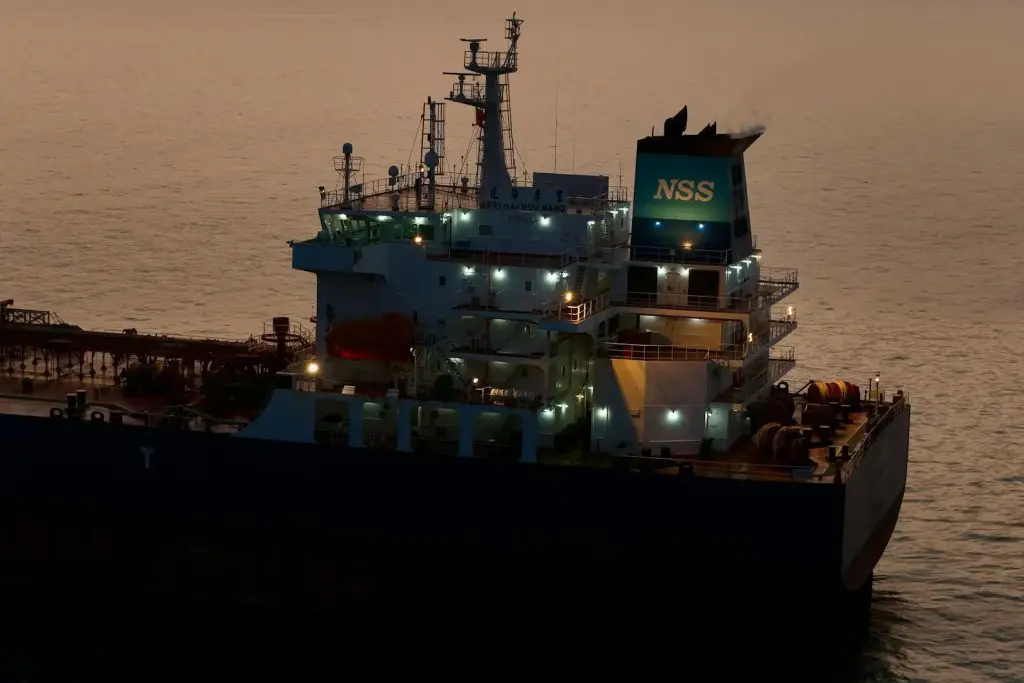
President Donald Trump has announced that the U.S. Navy will begin blockading the Strait of Hormuz after ceasefire talks with Iran collapsed in Pakistan on April 12, 2026. The blockade, described as "effective immediately" in a Truth Social post, threatens to disrupt one of the world's most critical oil shipping lanes. The news sent shockwaves through global energy markets, with Brent crude briefly topping $100 per barrel during the crisis. Trump Strait of Hormuz blockade threats have now become a reality, and the world is watching closely.
"Effective immediately, the United States Navy, the finest in the world, will begin the process of BLOCKADING any and all Ships trying to enter, or leave, the Strait of Hormuz," Trump wrote on Truth Social, according to multiple reports. The announcement came after approximately 20 hours of negotiations in Pakistan ended without any agreement between the U.S. and Iranian delegations. The breakdown marks a significant escalation in already tense U.S.-Iran relations and has raised serious concerns among global shipping companies and energy traders.
Peace Talks Collapse Over Nuclear Program
The U.S.-Iran peace talks fell apart primarily over Tehran's refusal to abandon its nuclear ambitions, reported by the Los Angeles Times. Vice President J.D. Vance, who led the American delegation, stated plainly that Iran would not compromise on its nuclear program. Meanwhile, Iran's parliament speaker Mohammad Bagher Qalibaf, who headed Tehran's team, said the U.S. must now "decide whether it can gain our trust or not." The two sides appeared to be miles apart on fundamental issues, with the U.S. proposing a 15-point plan requiring Iran to roll back its nuclear capabilities while Iran countered with its own 10-point proposal calling for a guaranteed end to the war and control over the Strait.
The current ceasefire is set to expire on April 22, 2026, leaving a narrow window for any last-minute diplomatic efforts. According to AP News, both sides have dug in hard, and observers are not optimistic about a breakthrough before the deadline. The failed negotiations represent a major setback for Trump's diplomatic legacy, which had previously included high-profile peace deals in the Middle East. Gen Z voters, many of whom grew up during the Iraq and Afghanistan wars, are particularly attuned to the human cost of escalating military tensions.
20% of Global Oil Now Under Threat
The Strait of Hormuz is one of the most strategically important waterways on the planet, handling roughly 20% of the world's oil and gas supply, according to TIME. Any disruption to traffic through this narrow passage between Oman and Iran can send oil prices spiking globally. The blockade threat has already forced major shipping companies to rethink their routes, with logistics giant DHL warning that shipping patterns may not normalize for four to six months even if the situation de-escalates quickly.
For everyday consumers, the implications are straightforward: higher gas prices at the pump, more expensive flights, and potentially higher costs for virtually everything shipped by sea. Gen Z, many of whom are already dealing with student loan burdens and soaring housing costs, are particularly vulnerable to these economic shocks. Energy prices directly impact food costs, transportation, and manufacturing, creating a ripple effect that hits lower-income communities hardest. Experts are already comparing the potential disruption to the 1973 oil crisis.
Naval Tensions and Mine Concerns
Beyond the economic fallout, there are serious military concerns as well. According to Ynet News, Trump warned that Iran may have laid mines throughout the strait, and that the U.S. military would begin destroying them. Iranian state media has reported exchanges between Iran's Revolutionary Guard and U.S. warships, with Iranian forces warning American vessels not to pass through. The situation is incredibly volatile, and a single miscalculation could lead to a full-blown naval conflict.
The strait is only about 21 miles wide at its narrowest point, making it relatively easy to blockade but also increasing the risk of direct confrontation. Any mining operation or attempt to clear mines could result in accidental damage to civilian vessels, further escalating tensions. The U.S. Navy has experience clearing mines in the Persian Gulf from the Iran-Iraq war era, but modern Iranian minesweeping capabilities and anti-ship missiles add a new layer of danger. Military analysts are urging both sides to exercise maximum restraint to avoid a catastrophic incident that could draw in other nations.
What Happens Next?
The ceasefire deadline of April 22 is looming, and international mediators are scrambling to find common ground. The European Union has called for an emergency session, while China and Russia have urged both sides to return to the negotiating table. Shipping companies are reportedly rerouting vessels around the Cape of Good Hope, which adds significant time and cost to journeys between Asia and Europe. The blockade, if fully implemented, would represent one of the most aggressive U.S. military actions since the wars in Iraq and Afghanistan.
For Gen Z, this crisis is another reminder of how quickly global events can disrupt everyday life. From climate change impacts to supply chain shortages, this generation has seen more disruption in their young lives than most. The Strait of Hormuz blockade is not just a geopolitical story; it is a story about the price of gas, the cost of living, and the world we are inheriting. We will continue to monitor this developing story and bring you updates as the situation evolves.
For more coverage on how global conflicts affect the economy, check out our business news section and AI news for analysis on how artificial intelligence is changing global security discussions.
Comments 0
No comments yet. Be the first to share your thoughts!
Leave a comment
Share your thoughts. Your email will not be published.